Applied to Technology-Based Bidding and Private Investment Projects
Appropriate Unit Prices to Be Reflected in Total Project Cost
Memorandum of Understanding Signed for BIM-Based Collaboration Platform
Seoul City is taking the lead as the first local government to introduce smart construction technology to improve the structure of the construction industry. This measure aims to address the shortage of skilled workers and the decline in productivity recently experienced by the construction sector.
On the 13th, Seoul City announced the "Seoul-type Smart Construction Transition and Activation Plan," which focuses on establishing a systematic approach to smart construction technology.
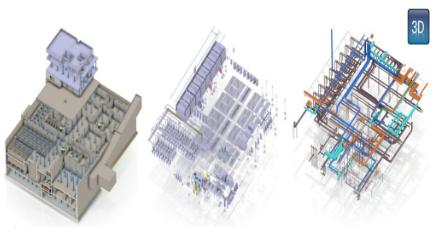
The city plans to implement Seoul-type Building Information Modeling (BIM) design standards and apply them to new public facility orders. BIM is a technology that reflects information generated at every stage of construction work into a 3D model, enabling integrated management of information by phase. It is also considered the core of smart construction technology.
First, starting this month, BIM will be immediately applied to technology-based bidding construction projects and private investment projects newly ordered by the city. For other general construction projects, BIM application will be gradually expanded considering the readiness of private companies. The application for general construction projects with a construction cost of 30 billion KRW or more and those with 10 billion KRW or more will be reviewed starting from 2027 and 2029, respectively. The goal is to apply smart construction technology to all construction projects ordered by Seoul City by 2030.
Additionally, to reduce the burden on the industry, the city plans to reflect appropriate unit prices for smart construction technology in the total project cost. For construction projects subject to mandatory application of smart construction technology, BIM data will also be utilized in supervision, and appropriate compensation will be reflected. Accordingly, the city will revise the "Construction Engineering Business Performance Evaluation Criteria" within the first half of the year and incorporate these criteria when selecting companies for supervision service bids in the future.
Within the first half of the year, the city will also produce and distribute the "Seoul-type BIM Application Guidelines," which serve as BIM design standards. These guidelines will include procedures for conducting BIM tasks considering the characteristics of roads, railways, and buildings within Seoul.
A system for digital information management will also be established. Seoul City and the Korea Institute of Civil Engineering and Building Technology will sign a Memorandum of Understanding (MOU) for the "BIM-based Collaboration Platform Demonstration Project" to efficiently manage data. The BIM-based collaboration platform is a digital space where BIM information can be shared and used collaboratively.
Construction projects applying BIM will accumulate digital data. The city plans to build a "BIM Deliverables Management System" to collect digital data and utilize the BIM data throughout the entire construction process.
Kim Seung-won, Director of Construction Technology Policy at Seoul City, stated, "Bold initial investment and attempts are necessary for the stable establishment of innovative technology. We will minimize the industry's burden by reflecting appropriate compensation and improve any issues during implementation through monitoring and expert consultations."
© The Asia Business Daily(www.asiae.co.kr). All rights reserved.

















