Discussion on Solutions at the SME Level and Other Measures
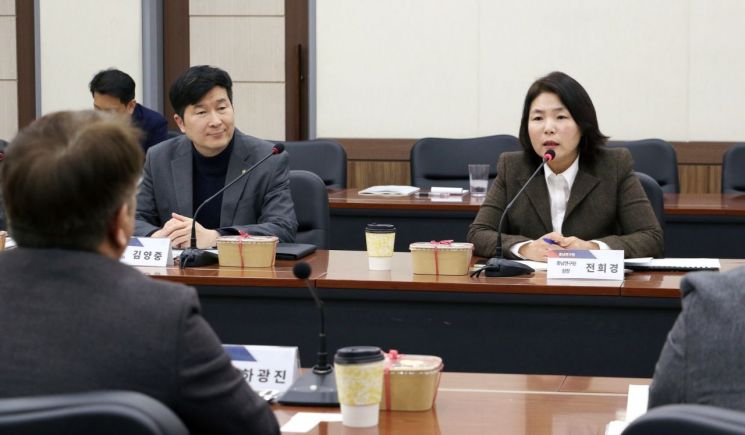
Chungnam Institute held a policy seminar on June 12 at the institute under the theme of "Response of Small and Medium-sized Enterprises in Chungnam to Carbon Emission Regulations."
This policy seminar was organized to assess the current status of solutions being prepared by individual SMEs and to discuss policy support measures in anticipation of the implementation of carbon emission regulations in 2026, such as the European Carbon Border Adjustment Mechanism (CBAM).
The seminar was moderated by Lee Minjung, a research fellow at Chungnam Institute, and attended by Lee Seunghyuk, senior researcher at Chungnam Industry-Academia Convergence Institute; Bae Kyunghwa, senior manager at Sejong Branch of Korea SMEs and Startups Agency; Kim Jonggwan, head of K-ICT Entrepreneurs Association; Kim Yangjung, senior research fellow at Chungnam Institute; and Hong Wonpyo, research fellow, among others. They discussed the response and support strategies for SMEs in Chungnam regarding carbon emission regulations.
Kwon Hyukjun, executive director at IBM Consulting, stated, "The European Carbon Border Adjustment Mechanism, which will take full effect from 2026, is a type of trade tariff that will significantly impact companies exporting to Europe. Rather than responses at the individual company level, it is necessary to establish a national supply chain carbon regulation response system, operate capacity-building programs for SMEs and mid-sized companies, and ensure a stable and economical supply of carbon-free energy."
Kim Nakhyun, CEO of Greeners, said, "To achieve carbon neutrality, the management system is shifting from workplace-centered management to a Life Cycle Assessment (LCA)-based system that includes embedded carbon emissions. In particular, collaboration among the government, local governments, and companies is most important for achieving carbon neutrality in the construction sector, which accounts for 35% of energy consumption and 38% of carbon emissions."
Jeon Heekyung, president of Chungnam Institute, remarked, "At a time when carbon neutrality regulations are becoming real trade barriers, policy support for SMEs, which are relatively less capable of responding, is more urgent than ever. I hope that this seminar will serve as an opportunity to develop timely response measures that reflect the industrial characteristics of each sector and region in Chungnam Province, turning the crisis facing the region into an opportunity."
© The Asia Business Daily(www.asiae.co.kr). All rights reserved.

















