Government to Develop Specialized AI Models in Eight Promising Technology Fields
The government will develop specialized artificial intelligence (AI) models in eight promising future technology fields. The developed AI models will support high-level research in each field, such as discovering new structures and new material properties, and conducting repetitive experiments.
On the 12th, the Ministry of Science and ICT announced that it discussed the 'AI+S&T (Science & Technology) Activation Plan' at the National Agenda Ministers' Meeting, Economic Ministers' Meeting, and Industrial Competitiveness Enhancement Ministers' Meeting.
This plan was prepared to expand the use of AI throughout science and technology domestically in response to the trend of innovative cases using AI in the science and technology field, such as AI-based protein structure research winning the Nobel Prize in Chemistry last year.
Instead of experiencing trial and error through numerous experiments in material development, the plan aims to apply AI across science and technology to discover new structures and new material properties through AI reverse engineering or to solve challenges in high-level research requiring long-term experiments by accelerating simulation speeds.
The government decided to develop AI models specialized in a total of eight fields, including existing areas where AI is utilized such as innovative new drugs and next-generation new materials, as well as semiconductors, secondary batteries, space, eco-friendly technologies, future energy, and quantum computing.
Additionally, it will promote the development of next-generation AI-based technologies specialized in creating new scientific and technological knowledge such as supercomputing and principle elucidation. AI-based research and development (R&D) will also be expanded in public safety fields including safe nuclear reactor operation, climate change prediction, disasters, and crime.
To this end, dedicated computing resources and high-quality data will be expanded, and specialized personnel for each field will be trained. In addition to the 6th supercomputer with a performance of 600 petaflops (PF; 1 quadrillion operations per second) scheduled to be built within the year, a 40PF-class infrastructure specialized for small-scale computational research will also be established.
A system will be established for domestic industry-academia-research researchers to share and utilize research data and AI models, and high-quality data will be expanded centered on existing data platforms in the materials and bio fields. Education will be provided so that researchers in each field can acquire AI utilization capabilities, and AI adoption will be promoted throughout research management administration to reduce researchers' administrative burdens.
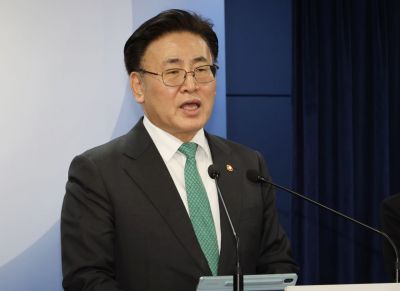
Yoo Sang-im, Minister of Science and ICT, said, "Based on this strategy, we will secure differentiated core technology competitiveness through the internalization of AI in research sites and take the lead in future new industries."
© The Asia Business Daily(www.asiae.co.kr). All rights reserved.

















