Mobile Carriers Announce Legal Action Over 114 Billion KRW Fine
Fair Trade Commission: "Clear Collusion in Restricting Number Portability for Seven Years"
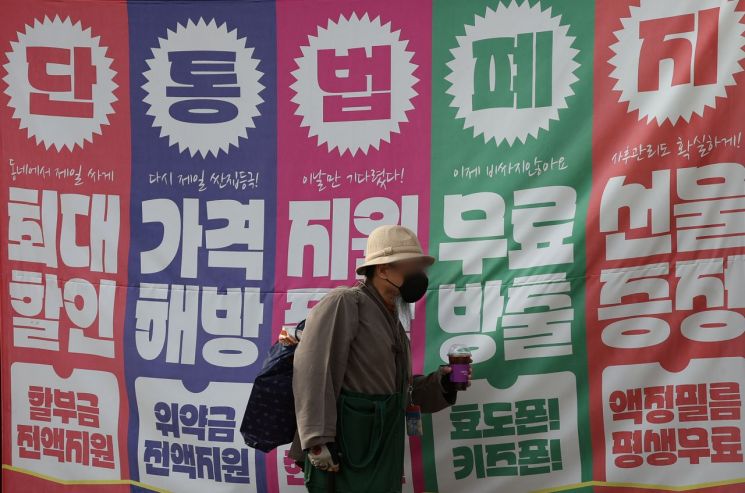
SK Telecom, KT, LG Uplus, and the other three major mobile carriers have expressed their intention to consider legal measures against the Fair Trade Commission's decision to impose a fine of 114 billion KRW, stating that "they merely complied with the enforcement of the Telecommunications Business Act by the Korea Communications Commission and did not collude." Accordingly, a legal battle over alleged collusion in adjusting the number portability subscribers is expected.
On the 12th, the Fair Trade Commission decided to issue corrective orders and impose fines on the three carriers for agreeing and executing a mutual adjustment of the net number portability transactions over about seven years from November 2015 to September 2022, to prevent the net number portability transactions from being concentrated on a specific operator. According to the FTC, they adjusted the net number portability transactions by raising or lowering sales incentives through the 'Market Situation Team' operated jointly with the Korea Association for ICT Promotion (KAIT).
However, on the same day, the three carriers each released statements expressing "regret over the FTC's decision to sanction the telecom companies for collusion," stating, "Our company only complied with the enforcement of the Telecommunications Business Act by the Korea Communications Commission and did not collude with other companies. After receiving the FTC's resolution document, we will explore various options, including legal action," effectively signaling an administrative lawsuit.
The basis for the FTC's determination of collusion was that the average daily net number portability transactions of the three carriers sharply decreased from about 3,000 cases in 2014 to within 200 cases in 2016. Additionally, the total average daily number portability transactions dropped by 45.7%, from 28,872 cases in 2014 to 15,664 cases in 2016, and continued to decline to 7,210 cases in 2022. If the reduction was due to the Telecommunications Business Act, the decrease should have occurred immediately after its enforcement in October 2014, but since there was about a one-year lag, this was considered evidence of collusion.
The FTC confirmed the agreement through work records of KAIT employees who attended the Market Situation Team meetings and comprehensively analyzed SNS and chatroom records where employees of the three carriers exchanged opinions, thereby proving collusion.
Regarding why the fine, which could have been as high as 5.5 trillion KRW, was reduced to 114 billion KRW, Director Moon explained, "The agreement among the three carriers was part of a voluntary regulation process to prevent violations of the Telecommunications Business Act, and the Korea Communications Commission's administrative guidance was involved." The fine was calculated as 1% of the revenue generated from number portability subscribers by the three carriers.
The Korea Communications Commission reportedly submitted a statement during the FTC's investigation asserting that "there was no collusion." The FTC explained, "We held seven rounds of working-level consultations with the Korea Communications Commission, and the opinions they submitted were reflected in the committee's consensus process."
Regarding the conflict of opinions between the two regulatory agencies, Director Moon stated, "It is not a conflict. Even in cases of collusion involving administrative guidance, if the principles established by laws and Supreme Court precedents are not met, the act is punishable under the Fair Trade Act." He added, "The Korea Communications Commission's fine sanction is a penalty against a specific carrier's unilateral decision to pay discriminatory or excessive sales incentives under the Telecommunications Business Act, which is clearly different from the FTC's disposition."
© The Asia Business Daily(www.asiae.co.kr). All rights reserved.

















