Nanjing University Study on Microplastics
"Soil Needed for Plant Growth Is Contaminated"
"Photosynthesis Decreases by 12% in Terrestrial Plants, 7% in Seaweed"
A study has found that microplastics interfere with plant photosynthesis, potentially having a serious impact on the global food supply.
The Guardian of the UK reported on the 11th (local time), citing research from Nanjing University in China, stating that "microplastics can harm plants in various ways, such as blocking sunlight from reaching plant leaves or contaminating the soil necessary for plant growth." Microplastics absorbed by plants block nutrient and water pathways, causing unstable molecules that damage cells and release toxic chemicals, which can lead to a decrease in chlorophyll levels, the pigment responsible for photosynthesis.
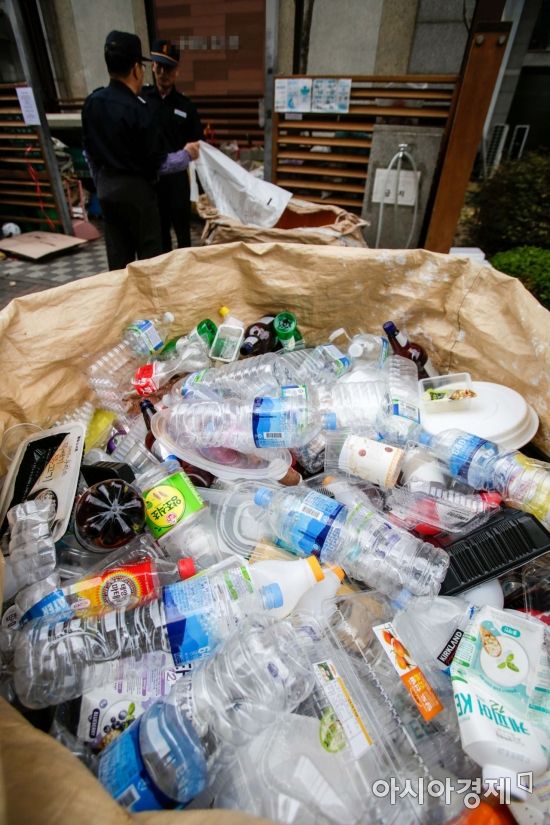 Collected plastic recyclables. Photo by Asia Economy
According to a paper published in the international academic journal Proceedings of the National Academy of Sciences (PNAS), researchers from Nanjing University analyzed 3,286 observational data points from 157 existing studies related to the effects of microplastics on plants. The researchers warned, "Between 4% and 14% of the world's major crops such as wheat, rice, and corn are already declining due to the impact of microplastics," adding, "If more microplastics continue to flow into the environment, the situation could become severe."
The reduction in photosynthesis caused by microplastics was analyzed to be about 12% for terrestrial plants and about 7% for seaweed. Based on these findings, the researchers estimated that annual crop losses in Asia could range from 54 million tons to 177 million tons, while losses of fish and seafood in the ocean could reach between 1 million tons and 24 million tons annually.
The researchers stated, "Annual crop losses caused by microplastic impacts could be comparable in scale to crop losses caused by the climate crisis over recent decades," and projected that "food insecurity due to microplastic pollution could increase the population suffering from hunger by 400 million more people within 20 years." According to the United Nations, as of 2022, the global population suffering from hunger was approximately 700 million.
However, while this study helps raise awareness of the dangers of microplastics, additional data and more detailed research are needed to confirm the findings.
Microplastics Affect Reproductive Function Decline and Colorectal Cancer
Microplastics are particles with a length or diameter of 5 mm or less, originating from commonly used plastic items such as plastic bags and PET bottles. They enter the human body through food, water, and respiration. Microplastics have been found in human blood, brain, breast milk, placenta, and bone marrow. They have also been detected throughout the Earth, from the summit of Mount Everest to the deepest parts of the ocean, highlighting their severity.
On the 27th of last month, researchers from the National Pukyong University revealed a molecular mechanism by which continuous ingestion of microplastics broadly suppresses the expression of genes related to male hormones and meiosis, analyzing that long-term exposure to microplastics can directly affect reproductive function decline.
Additionally, a report published in the journal Environmental Science & Technology revealed potential links between microplastics and infertility, colorectal cancer, reduced lung function, and chronic lung inflammation. Last year, research also showed that plastic particles penetrate the brain and testes, transfer from pregnant women to fetuses, and may interfere with antibiotic action.
© The Asia Business Daily(www.asiae.co.kr). All rights reserved.
















