Sovereign Wealth Funds Aim for Transparent Management
Korean Capital Market Already Highly Liquid
Focus Should Shift from Government Intervention to Empowering Workers and R&D
Lee Jae-myung, leader of the Democratic Party of Korea, proposed the establishment of a sovereign wealth fund and a national fund to create a Korean version of Nvidia. However, Lee Hoseok, a researcher at the European Center for International Political Economy (ECIPE), predicted that it would be difficult to achieve the intended effects with a sovereign wealth fund. Lee, an expert in trade who participated in the 2011 Korea-European Union (EU) Free Trade Agreement (FTA), has also served as an independent advisor on capital market regulation and corporate competition policies for the EU, the World Trade Organization (WTO), and the Swedish government.
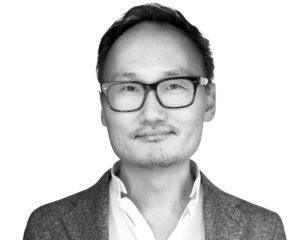
In a recent interview with Asia Economy, he mentioned that Korean politics has been troubled by multiple corruption issues, making the political environment unsuitable for fostering specific industries through the establishment of sovereign and national funds. The researcher stated, "Temasek of Singapore and Norway's Government Pension Fund are representative cases of public funds growing through prudent and independent management," but added, "(sovereign wealth funds) were created for purposes completely different from what the Democratic Party or Lee Jae-myung envisions." He continued, "They were established for the purpose of managing public funds," and "because of this, public funds often hesitate to invest domestically."
Both Temasek and Norway's Government Pension Fund are 100% government-owned, but their management entities are separate. Temasek was formed during Singapore's independence when the British military base and factories left behind were privatized, while Norway's fund was launched to manage surplus export revenues from natural resources (mainly oil and natural gas). Since military bases and natural resources are fundamentally state-owned, the asset shares fully belong to the government, but governance is entrusted to committees that guarantee independence.
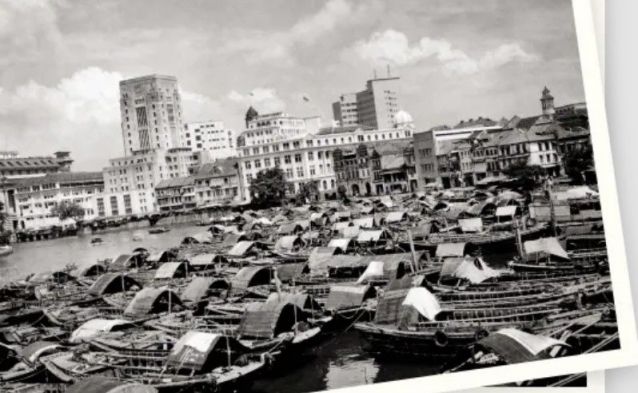 Temasek was established in the process of converting military factories and naval bases into private enterprises after the British forces stationed in Singapore left in the 1960s. Temasek official website
Notably, Norway's Government Pension Fund rarely invests in domestic stocks, infrastructure, or real estate. This is a measure to prevent surplus funds from overheating the domestic economy and to block the possibility of public funds being swayed by specific lobbying groups or interest groups. Temasek has also maintained the proportion of Singaporean companies in its asset portfolio below 30% over the past decade. Korea Investment Corporation (KIC), Korea's only sovereign wealth fund managing domestic foreign exchange reserves, operates foreign currency-denominated assets overseas under the Korea Investment Corporation Act.
Moreover, successful sovereign wealth funds often strictly limit asset expenditures (distribution to citizens). Norway's pension fund allows withdrawals of up to 3% of total asset value annually, saving the rest for future generations.
 The Central Bank of Norway, home to the world's largest sovereign wealth fund, the Norwegian Government Pension Fund. Photo by Reuters and Yonhap News.
The researcher said, "Given Korea's political structure, a government fund investing in private companies to foster industries is not a good option." He explained, "(In the post-war developing country era) when capital was scarce, government-led investment could successfully develop industries, but now that the economy has grown, the interests between industrial groups and politicians are intricately entangled, making it inefficient."
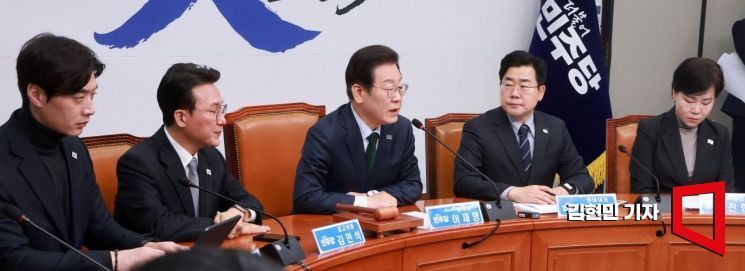 Lee Jae-myung, leader of the Democratic Party of Korea, is speaking at the Supreme Council meeting held at the National Assembly on March 5, 2025. Photo by Kim Hyun-min
Singapore, effectively a one-party state, maintains the highest level of public official integrity worldwide by paying civil servants salaries higher than those in private companies and employing strong anti-corruption policies. Norway's Government Pension Fund, in a multi-party democratic country, had to take strong measures to limit domestic asset investments to enhance transparency in fund management.
The researcher emphasized the most appropriate way to support tech companies in Korea's political environment, saying, "Korea's capital market is already liquid," and "adding government capital on top of this is an unnecessary policy."
He advised, "Policies such as easing corporate loan requirements, supporting basic research, enhancing workers' internationalization and job competencies, and strengthening incentives for research and development (R&D) investment would be more effective than injecting public funds."
Meanwhile, the political sphere has been abuzz with the 'K-Nvidia fund' debate. On the 2nd, during an AI expert discussion hosted by the Democratic Research Institute, Lee proposed establishing a sovereign and national fund to create a 'Korean version of Nvidia,' suggesting, "If 70% of the shares are held by the private sector and 30% by the public, wouldn't it be possible without collecting taxes?" When some ruling party members criticized this as a "socialist idea," Lee rebutted by citing successful overseas sovereign wealth fund cases like Singapore's Temasek. Since then, the controversy has grown with participation from both ruling and opposition parties, startup founders, and the venture capital (VC) industry.
Lee emphasized that as competition among major powers over technological dominance intensifies, national capital intervention is essential to maintain industrial competitiveness. At the Supreme Council meeting of the National Assembly on the 5th, he stated, "Securing 100,000 graphics processing units (GPUs) costs 5 trillion won," and added, "Private companies cannot handle such large-scale investments, so the sovereign wealth fund or a new form of national fund could allow citizens to invest and share the results."
© The Asia Business Daily(www.asiae.co.kr). All rights reserved.



















