Confirmed as Stolen Property in 2016 Police Investigation
Private Museum Director Sentenced to 3 Years in Prison for Purchase
Cultural Heritage Administration Failed to Properly Verify Acquisition Process
The 'Daemyeongryul (大明律)', which was once a stolen item and later designated as a treasure, is set to have its status revoked. According to the Cultural Heritage Administration on the 11th, the Movable Cultural Heritage Subcommittee under the Cultural Heritage Committee recently held a meeting where they discussed and approved a plan to cancel the administrative disposition for revoking the treasure designation. An official explained, "This is a measure to proceed with follow-up actions after the sentence was executed due to the false designation of the (treasure)."
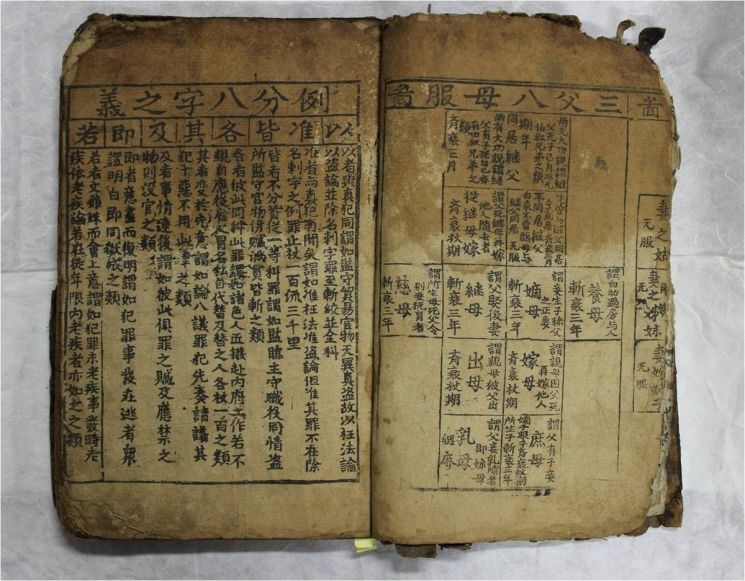
'Daemyeongryul' is a foundational material for criminal law during the Joseon Dynasty. It is a legal text from the Ming Dynasty concerning criminal law (刑律, the system of laws related to crimes and punishments), believed to have been published in 1389. It is rare as it was known that no copies had been passed down domestically or internationally. This book became embroiled in controversy just over four months after being designated as a treasure. This was because the Gyeonggi Northern Provincial Police Agency (then Gyeonggi Northern Regional Police Agency) confirmed it as 'stolen goods' during the arrest of tomb raiders and thieves who had stolen cultural heritage from temples, historic sites, and old houses nationwide in 2016. In fact, 'Daemyeongryul' had been reported stolen in 2011.
According to the investigation at the time, a private museum director in the Gyeongbuk region purchased the stolen item in 2012 from a dealer handling stolen goods for 15 million won and then applied for its designation as a treasure. It is reported that he deceived authorities by claiming the artifact was inherited from his late father. When the fact that he had purchased stolen goods was exposed, he was prosecuted for violating the Cultural Heritage Protection Act and was sentenced to three years in prison, which was finalized.
The Cultural Heritage Administration has been considering follow-up measures since the court ruling. They judged that there were significant defects in the treasure designation process and decided to issue a cancellation order based on the 'Framework Act on Administrative Procedures,' which allows for the cancellation of illegal or unjust administrative dispositions. This is the first time that a national designated heritage such as a national treasure or treasure has been revoked. An official stated, "There have been cases where designations were lifted because the value of cultural heritage was deemed changed or lost, but this is the first decision to cancel the designation of a national treasure or treasure-level cultural heritage."
There were several opportunities to thoroughly examine the acquisition process and ownership facts during the treasure designation process. When the owner applies for a national treasure or treasure, the relevant local government compiles the necessary documents and reports to the Cultural Heritage Administration, followed by deliberations by the city/provincial cultural heritage committee and the Cultural Heritage Committee. 'Daemyeongryul' also applied for treasure designation through Yeongcheon City, Gyeongbuk Province in 2013 and underwent deliberation by the Gyeongbuk Provincial Cultural Heritage Committee. Subsequently, it passed through the Cultural Heritage Committee after investigations by three or more related experts.
Currently, 'Daemyeongryul' is temporarily stored at the National Palace Museum of Korea. The Cultural Heritage Administration plans to announce the cancellation of the treasure designation soon.
© The Asia Business Daily(www.asiae.co.kr). All rights reserved.

















