"Need to Expand Local Production and Investment in the U.S."
Focus on AI, Defense, and Energy Sectors
As the second Trump administration pursues a tough tariff policy, there is a suggestion that Korean companies should seek breakthroughs by expanding production and investment in the United States in the automobile, semiconductor, steel, and bio sectors.
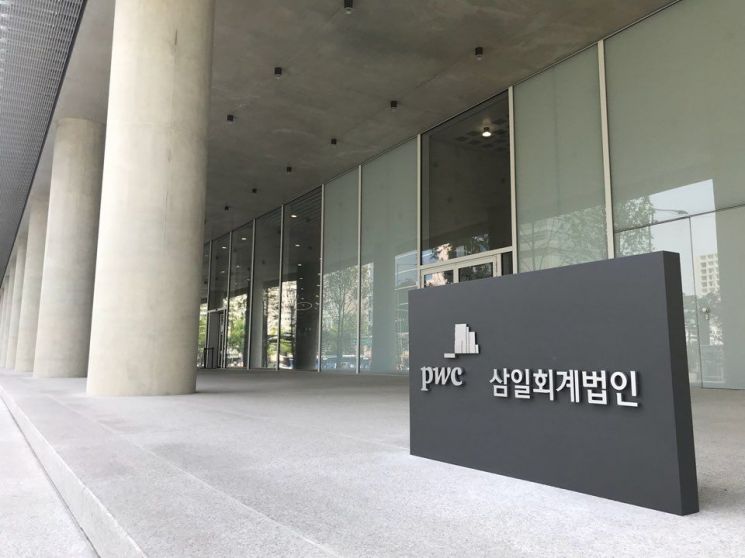
Samil PwC announced this content on the 11th through the report titled ‘50 Days Since Trump’s Inauguration, Reality Beyond Imagination ? The Breakthrough Lies Inside the U.S.’ The report analyzed the economic and trade policies of the Trump administration 50 days after inauguration and presented directions for Korean companies’ responses.
The report stated, “The second Trump administration issued 26 executive orders on the inauguration day alone, including imposing tariffs and easing fossil fuel regulations, and formed a cabinet centered on tariff expansion advocates and hardliners against China, implementing policies relentlessly,” adding, “Unlike the first term, which only targeted China, the second term is characterized by expanding the trade war front against all countries.”
It continued, “Since Trump plans to apply high tariffs mainly to countries with trade deficits, Korea, which caused a $66 billion trade deficit with the U.S. this year alone, will find it difficult to avoid a tariff bomb.” U.S. President Donald Trump recently announced in a joint session of Congress that he would impose tariffs of over 25% on Korea’s top five export items to the U.S.: ▲automobiles ▲semiconductors ▲steel and aluminum ▲pharmaceuticals.
The report advised, “Although there are opinions that Trump’s high tariff policy may be difficult to realize due to concerns such as inflation, thorough countermeasures are necessary,” and recommended, “Strategically considering expanding production and attracting investment within the U.S. in the automobile, semiconductor, steel and aluminum, and bio-pharmaceutical sectors.” It also suggested that the Trump administration’s strong push for fossil fuel energy could be used as a card in trade negotiations. Expanding imports of U.S.-made fossil fuels could ease tariff pressures on other items.
In particular, the report mentioned that considering the policy direction of the second Trump administration, Korean companies have high potential to benefit in fields related to liquefied natural gas (LNG), small modular reactors (SMR), and artificial intelligence (AI). Regarding the shipbuilding industry, since President Trump has shown interest in projects such as the Alaska LNG project and the U.S. Navy’s maintenance, repair, and overhaul (MRO) business, future orders are expected to be significant.
Hong Jun-gi, head of the Audit Division at Samil PwC, said, “It is necessary to recognize that ways to avoid Trump-induced high tariffs and mitigate risks lie within the U.S., such as relocating factories or localizing production and investing in the U.S., and to proceed with trade negotiations accordingly,” adding, “Korean companies must respond quickly and thoroughly amid the fast-paced policies of Trump’s second term.”
© The Asia Business Daily(www.asiae.co.kr). All rights reserved.

















