If the Summit Takes Place, a "Birthday Meeting" Between the Leaders
China Prefers to Hold the Meeting in Beijing
Expected to Discuss Overall Trade Issues
The Wall Street Journal (WSJ) reported on the 10th (local time) that the United States and China have begun discussions on holding the first summit between President Donald Trump and President Xi Jinping in the United States this coming June. Amid escalating trade tensions with retaliatory tariffs being exchanged, if the June summit takes place, it will mark the first meeting between the U.S. and China since President Trump took office at the White House. This move is interpreted as an effort to resolve the economic situations both countries face, such as recession concerns, stock market crashes caused by tariff aftershocks, and inflation triggers.
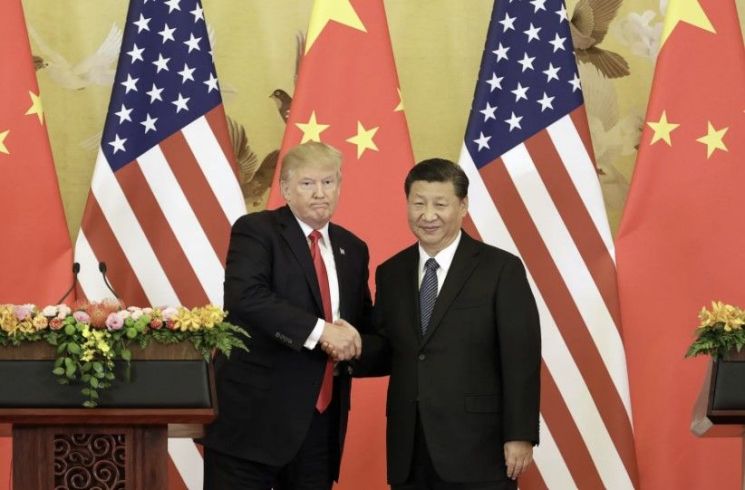
WSJ cited sources saying that discussions about the U.S.-China summit are still in the early stages. The newspaper also noted that since both President Trump and President Xi have birthdays in June, the summit could have the significance of a birthday meeting.
However, regarding the venue, WSJ reported that China prefers to hold the summit in Beijing. China hopes the meeting will take place with President Trump visiting China rather than President Xi boarding a plane to the U.S. This is interpreted as a concern that, amid increasing economic pressure on China, President Xi might appear as if pleading with President Trump.
Discussions about the summit come as the Trump administration strengthens tariffs and trade measures against China. Since taking office in January, President Trump threatened to impose tariffs on Mexico and Canada but postponed them, and announced plans to impose import tariffs on Europe and other trade partners. So far, China is the only country where President Trump’s tariff bomb has actually been dropped. Earlier this month, the White House cited China as the main culprit in the U.S. fentanyl crisis and announced an additional 10% tariff on China following the tariffs imposed in February. As a result, the average tariff rate on Chinese imports in 2023 has increased from about 14.5% to 35%.
WSJ also reported that the Trump administration is considering additional measures beyond tariffs, such as restrictions on U.S.-bound and China-bound investments, targeting industries led by China like shipbuilding, and sales restrictions on Chinese high-tech companies.
Considering these circumstances, if the summit between President Trump and President Xi is realized, it is expected that consultations on overall trade issues, including tariffs, will proceed between the two sides. If the trade war between the world’s first and second largest economies by GDP, the U.S. and China, is resolved, it is anticipated that the global economic shock caused by tariffs will be alleviated.
© The Asia Business Daily(www.asiae.co.kr). All rights reserved.

















