Judgment Based on Supreme Court's Full Bench Legal Principle in December Last Year
Abolition of the "Fixity" Criterion for Wages
The Supreme Court has ruled that conditional bonuses, which vary in amount based on the number of days worked within a certain period, also qualify as ordinary wages. Ordinary wages refer to "monetary compensation paid for prescribed labor," and the allowances and severance pay that workers can receive are determined based on ordinary wages.
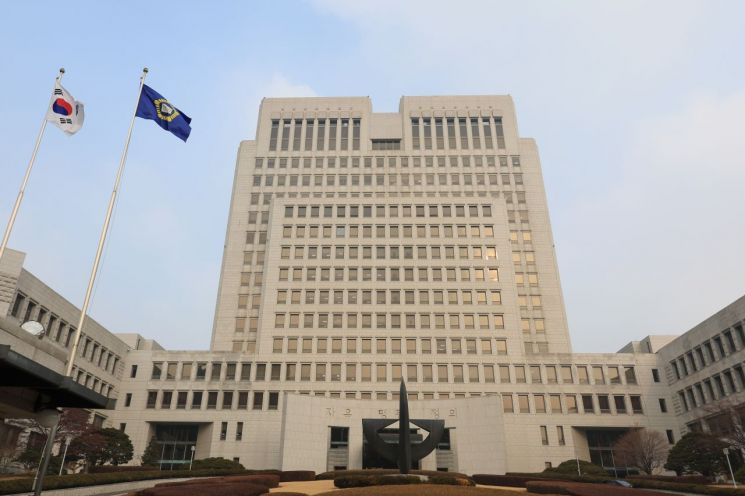
According to the legal community on the 10th, the Supreme Court's First Division (Presiding Justice No Tae-ak) finalized the partial victory ruling for the sanitation workers in a wage lawsuit on the 20th of last month.
Previously, current and former sanitation workers belonging to the Cleaning Administration Department in Gangnam-gu, Seoul, filed a lawsuit claiming that commuting allowances should be included in ordinary wages along with bonuses such as year-end bonuses, regular attendance allowances, fitness training expenses, and holiday vacation pay, which were paid according to the collective agreement.
The first and second trials mostly accepted the sanitation workers' claims and ruled that Gangnam-gu must pay additional wages. However, Gangnam-gu appealed, and the case was brought to the Supreme Court in 2021. In the appeal, Gangnam-gu argued that "bonuses are paid differentially based on work performance and thus lack fixity," claiming they are not ordinary wages.
In response, the Supreme Court dismissed the appeal, stating that bonuses qualify as ordinary wages regardless of whether they are conditional on attendance rates. This ruling follows the new legal principle established by the Supreme Court's full bench on December 19 of last year.
At that time, the Supreme Court stated, "Wages that are regularly and uniformly paid as compensation when a worker fully performs prescribed labor qualify as ordinary wages regardless of the presence or achievability of attached conditions," thereby abolishing the fixity criterion among the three standards for ordinary wages.
© The Asia Business Daily(www.asiae.co.kr). All rights reserved.

















