Review of New Semester Education Reform at the 5th Livelihood Economy Inspection Meeting on the 10th
Neulbom School Expanded to Second Graders... Participation Rate Slightly Decreases
Safety Measures Strengthened... Principle of Face-to-Face Handover, Expanded CCTV, and More
AI Textbook Adoption Rate at 33.4%... Schools Selected on a Rolling Basis
High School Credit System Begins with First-Year Students, Online Schools Expanded to 19
The government will expand the target group for the after-school program 'Neulbom School' from first graders to second graders starting this new semester, and strengthen school safety measures to prevent incidents like the death of an elementary student in Daejeon from recurring. The newly introduced 'AI Digital Textbook (AIDT)' and 'High School Credit System' will be supported for successful implementation through infrastructure improvements, training, and counseling support for teachers and students.
On the 10th, the government held the '5th Livelihood Economy Inspection Meeting' at the Government Seoul Office to review the progress of education reform for the new semester and discuss future plans.
According to the Ministry of Education, the number of participants in Neulbom School for the first semester this year is 513,000 in total, with 254,000 first graders (79.8%) and 259,000 second graders (74.5%), resulting in an average participation rate of 77.0%. This is a slight decrease compared to last year’s 83.4% participation rate when only first graders were targeted. This decline is interpreted as a response to increased concerns about student safety following the elementary student murder incident at Neulbom School in Daejeon.
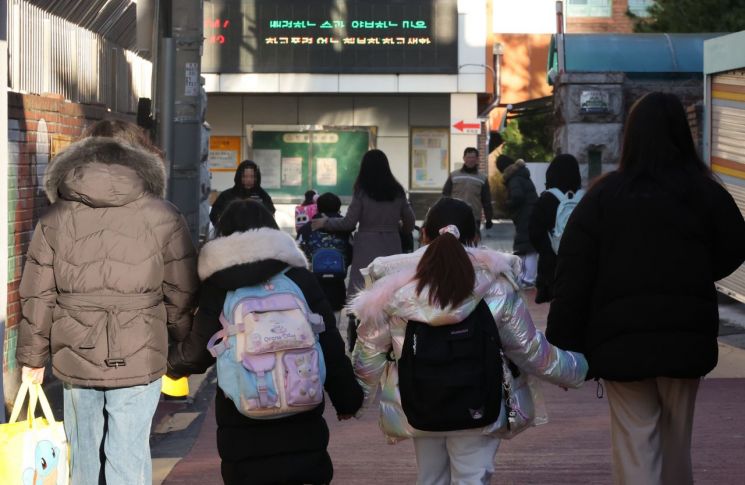
Neulbom School is a government program designed to address care gaps and reduce private education expenses by allowing elementary students to use a two-hour customized program free of charge after regular classes. Last year, it was implemented for first graders, expanded to second graders this year, and will be extended to all grades next year.
The Ministry of Education has decided to apply the principle of 'face-to-face handover and accompaniment during return home' for Neulbom School students. However, to improve understanding of detailed matters on the ground, issues with frequent misunderstandings such as 'autonomous return home if strongly requested by parents' will be re-communicated to education offices and schools. Additionally, 1,200 Neulbom support managers and 6,834 Neulbom operational staff will be deployed, with an additional 7,200 personnel assigned to support students’ return home.
For teachers who are expected to have difficulty performing their duties properly, grounds for suspension or removal from duty will be established. The previously differently operated Teacher Health Review Committees in each education office will be legislated as the 'Teacher Duty Performance Suitability Committee,' expanding its functions to include reinstatement reviews. Counseling and treatment will be supported at centers such as the Education Activity Protection Center for teachers’ mental health. Since the Daejeon elementary school incident occurred while the student was moving outside the classroom, CCTV installation will be expanded focusing on blind spots within the school such as hallways, stairs, and areas around after-school care rooms.
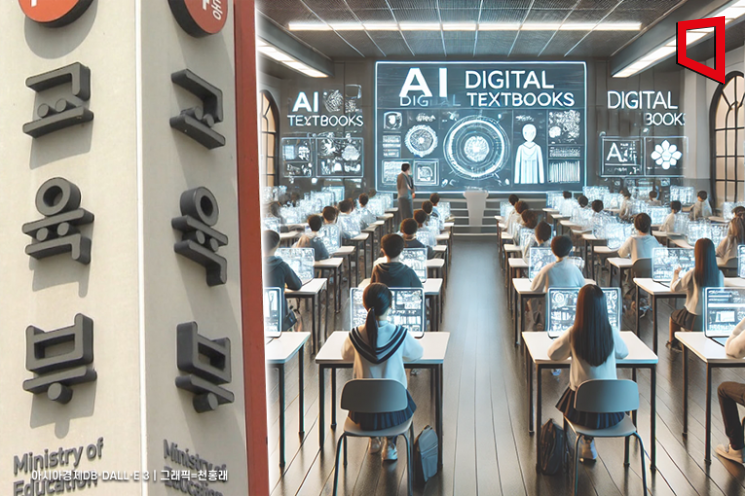
Starting this year, AI textbooks will be newly introduced for some grades in elementary, middle, and high schools. As of the 28th of last month, the adoption rate of AI textbooks was recorded at 33.4%.
The Ministry of Education plans to select schools wishing to use AI textbooks on a rolling basis this year to allow all interested schools to utilize them, and will actively respond to complaints through the operation of the AIDT Central Counseling Center. A total of 4.09 million devices have been distributed to 1.7 million students in grades 3 and 4 of elementary school, grade 1 of middle school, and grade 1 of high school, which are the grades applying AI textbooks this year. For the grades to be expanded next year?grades 5 and 6 of elementary school and grade 2 of middle school?one device per student will also be fully provided.
To prevent system failures during simultaneous access, a 10-gigabit network is being established in 4,000 large-scale schools. Dedicated personnel will also be expanded, with plans to train 2,000 digital tutors and 1,500 new tutors this year.
The High School Credit System will also be implemented for the first time this year. This system allows students to select subjects and earn credits according to their career paths and aptitudes, moving away from the traditional operation of identical timetables by class. Students can graduate if they accumulate 192 or more credits over three years of high school.
If students want to take classes not offered at their school, they can attend remote classes through the 'Online School.' The Ministry of Education plans to increase the number of online schools from 9 last year to 17 this year to guarantee a wider range of subject choices. By June, 'High School-University Linked Credit Recognition Courses' will be opened at regional universities that have agreements with metropolitan and provincial education offices, and actual classes will be conducted by the end of the year.
© The Asia Business Daily(www.asiae.co.kr). All rights reserved.
![Clutching a Stolen Dior Bag, Saying "I Hate Being Poor but Real"... The Grotesque Con of a "Human Knockoff" [Slate]](https://cwcontent.asiae.co.kr/asiaresize/183/2026021902243444107_1771435474.jpg)

















