Creating a Pleasant Urban Environment and Enhancing Public Welfare:
Urban Development Projects Progress Smoothly
Development Leveraging Regional Characteristics...
Urban Growth that Benefits Citizens
Singok 6 District, Hyangsan District, and Gomak-ri Land Development
Scheduled for Completion This Year
Gimpo City Transforming into a City Where Everyone Wants to Live
Gimpo City, Gyeonggi Province (Mayor Kim Byung-su) is transforming its urban landscape toward becoming a city of 700,000 residents through systematic and professional planning since the 8th term of the elected government.
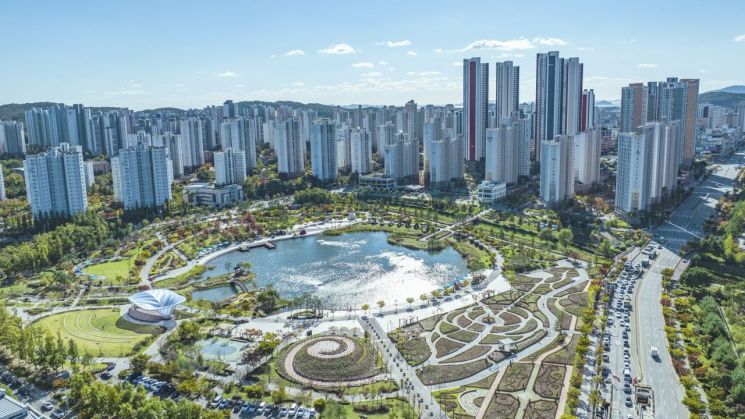
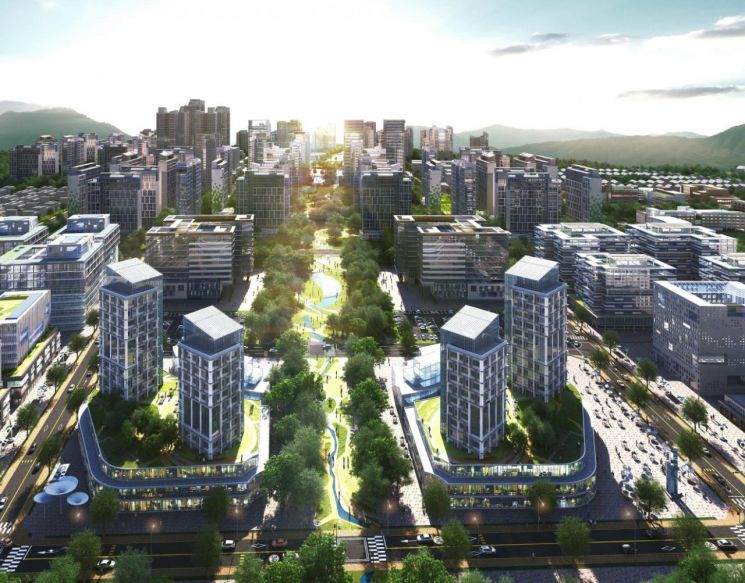
According to Gimpo City on the 8th, the city is accelerating projects such as the Gimpo Hangang 2 Compact City, which will complete the Hangang New Town, and the 6 trillion won-scale Gimpo Environmental Regeneration Innovation Complex as the two pillars of future Gimpo. Other projects gaining momentum include the Pungmu Station Area Urban Development Project, Hangang Cinepolis Complex Development Project, Gamjeong District, and Geolpo District urban development.
Gimpo City views the path toward becoming a city of 700,000 as one that must lead balanced development through “growth considering the locational characteristics of the region.” The policy is to leverage the strengths of each zone according to its characteristics while advancing urban development that maximizes benefits for citizens.
In this context, the southern region is approaching the completion of urban development projects in Singok 6 District (5,487 households) and Hyangsan District (3,879 households) this year. In the northern region, the Gomak-ri project (154 households), which creates an eco-friendly detached housing village, is scheduled for completion this year, and in the southern region, the Gamjeong 5 District project (700 households) has completed construction.
Along with balanced development, environmental improvements in development blind spots are progressing smoothly. As part of improving living conditions for residents within the development restriction zone, since 2018, 10 billion won has been invested in the Punggok Urban Planning Road project, divided into two phases, with a width of 8?10 meters and a total length of 1.7 km.
The first phase, section 1, was completed in October 2022 with an investment of 3.5 billion won. The first phase, section 2 project, completed compensation in the first half of this year, with construction starting in the second half and scheduled for completion in 2026. The second phase project (sections 3?4) is currently underway, with detailed design services to be completed by August and a target completion year of 2028.
Gimpo City is accelerating the formation of a large city through distinctive balanced development while also improving the actual quality of life for citizens through meticulous management of apartment complexes. Currently, there are 233 apartment complexes in Gimpo City, with over 70% of the 520,000 population living in apartments. The city prevents safety accidents through joint safety inspections with private experts and supplies high-quality apartment housing.
Conflicts between residents and management entities within apartment complexes are also receiving tailored consulting audits supported by professional auditors, which have been highly well-received. This approach is popular for protecting residents’ rights and enhancing transparency.
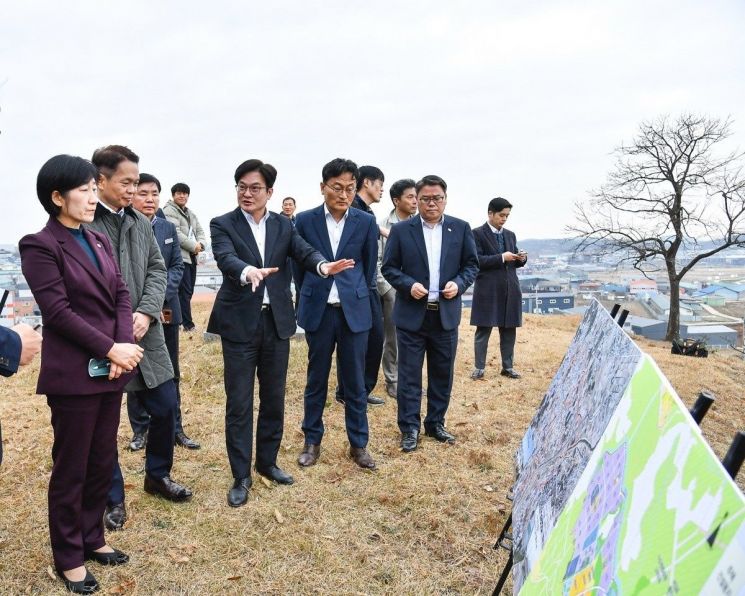 Mayor Kim Byung-su is visiting the site after leading the preliminary feasibility study approval for the Gimpo Environmental Regeneration Innovation Complex Project in the Geomul-dae-ri area. Provided by Gimpo City
Efforts to ensure stable housing environments for vulnerable residential groups continue. Alongside managing rental businesses for low-income housing stability and supporting public electricity bills for permanent rental housing, the city is conducting tenant benefits and temporary special support for youth monthly rent, housing repair maintenance benefits for low-income and vulnerable groups, and housing remodeling projects for the disabled.
In 2024, 22.3 billion won was provided to about 8,700 households, and this year, support will increase by 4.6 billion won to 26.9 billion won. The city plans to actively promote housing upgrade support for vulnerable groups living in poor housing conditions such as small rooms and semi-basements.
© The Asia Business Daily(www.asiae.co.kr). All rights reserved.
![Clutching a Stolen Dior Bag, Saying "I Hate Being Poor but Real"... The Grotesque Con of a "Human Knockoff" [Slate]](https://cwcontent.asiae.co.kr/asiaresize/183/2026021902243444107_1771435474.jpg)


















