Filtered Tap Water Recommended Instead of Plastic Bottled Water
Limit Heating Food in Plastic Containers and Consumption of Ultra-Processed Foods
As concerns rise over health deterioration caused by microplastics, experts have proposed ways to reduce microplastic intake.
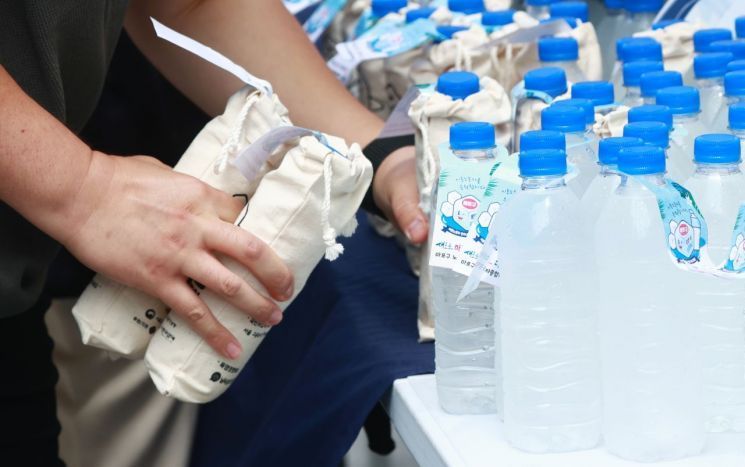
On the 5th (local time), foreign media including the Daily Mail reported that Dr. Lou Canada from the University of Toronto and other researchers compiled previously published studies on microplastics and suggested ways to reduce daily exposure to microplastics through changes in diet and lifestyle.
The researchers emphasized that while it is impossible to completely avoid microplastic exposure given that microplastics are widely dispersed in food, water, and air as plastic products break down, it is realistically possible to reduce major sources of microplastics. For example, drinking filtered tap water instead of bottled water can reduce microplastic intake from 90,000 particles per year to 4,000 particles.
Dr. Lou stated, "Switching from bottled water to tap water can reduce exposure to microplastics by nearly 90%," adding, "This is one of the simplest ways to reduce microplastic intake."
Additionally, the researchers stressed the need to stop heating food in plastic containers. Heating food in plastic containers in a microwave for just 3 minutes was found to release up to 4.22 million microplastic particles per 1㎠. Therefore, the researchers recommended using glass or stainless steel containers instead of plastic for food storage.
Finally, they advised limiting the consumption of canned foods and highly processed foods. The researchers pointed out, "Highly processed foods such as chicken nuggets contain 30 times more microplastics per gram than chicken breast."
On the 27th of last month, a research team from the Department of Food and Nutrition at Pukyong National University, including PhD candidates Seungjin Jeong and Surye Park (co-first authors) and professors Bomi Ryu and Seungjun Lee (co-corresponding authors), revealed a molecular mechanism by which continuous intake of microplastics broadly suppresses the expression of male hormone and meiosis-related genes, demonstrating that long-term exposure to microplastics can directly affect reproductive function decline.
Research from the Autonomous University of Barcelona, Sohag University in Egypt, and the Helmholtz Environmental Research Center in Leipzig, Germany explained that microplastics are absorbed by intestinal cells, enter the bloodstream, and circulate throughout the human body.
With a sharp increase in cancer incidence among young people recently, microplastics have been identified as a potential cause. A report published in the renowned journal Environmental Science & Technology concluded that there is a potential link between microplastics and infertility, colorectal cancer, reduced lung function, and chronic lung inflammation. A study published last year also revealed that plastic particles penetrate the brain and testes, transfer from pregnant women to fetuses, and may interfere with antibiotic action.
© The Asia Business Daily(www.asiae.co.kr). All rights reserved.

















