Seoul Central District Court's Decision at 1:50 p.m. on the 7th... Prosecution Announces "Various Reviews" at 4:30 a.m. on the 8th
Careful Deliberation on the Seriousness and Potential Impact of the Case
Concerns Over the Constitutional Court's Past Ruling on Immediate Appeals for 'Suspension of Detention Execution'
Some Point to Excessive Competition Among Investigative Agencies as the Cause
The prosecution, having received the court's decision to cancel the detention of President Yoon Seok-yeol, has been deliberating for two days on whether to file an immediate appeal. Although it was expected that the decision on the immediate appeal would be made right after the court's ruling, it appears that the prosecution is carefully considering the gravity of the matter and its potential repercussions.
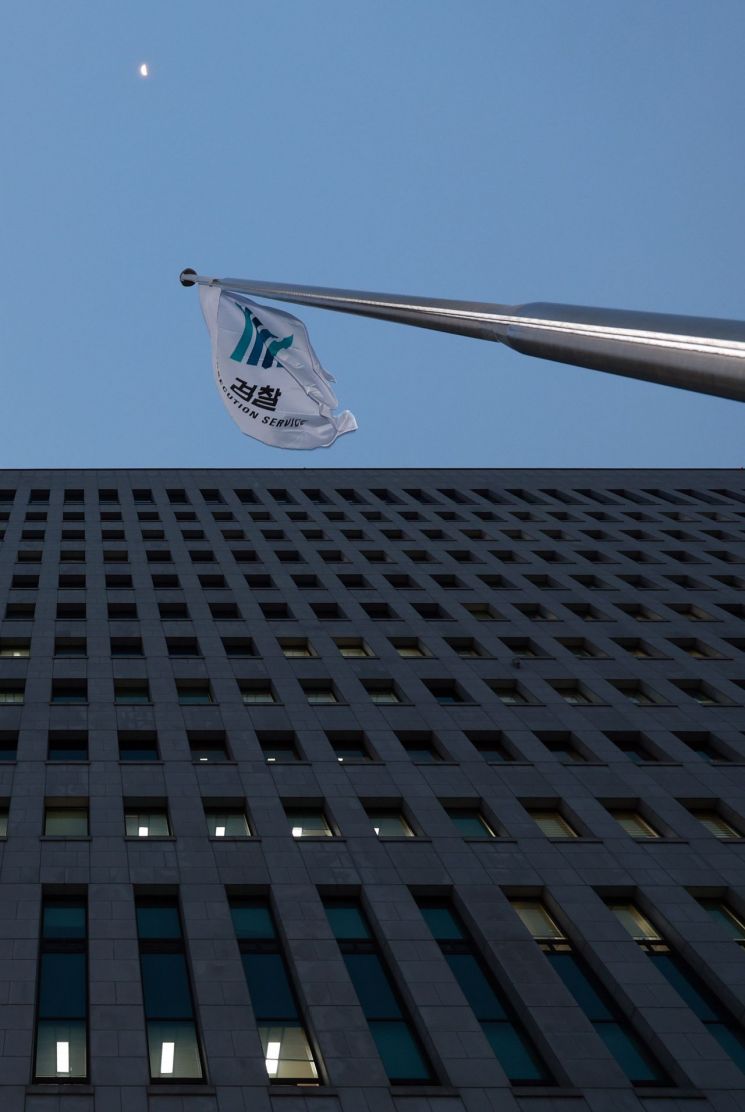
According to the legal community on the 8th, the prosecution has not reached a conclusion for over 20 hours since 1:50 p.m. the previous day, when the Seoul Central District Court Criminal Division 25 (Presiding Judge Ji Gui-yeon) issued the decision to cancel President Yoon's detention, on whether to file an immediate appeal or to send a release order. The Special Investigation Headquarters for Emergency Martial Law under the prosecution (Head Park Se-hyun, Seoul High Prosecutors' Office Chief) also announced to the press at 4:30 a.m. that they were continuing to review various aspects related to the cancellation decision.
According to the Criminal Procedure Act, prosecutors may file an immediate appeal within seven days after a detention cancellation decision. The immediate appeal procedure allows for a swift objection to court decisions and orders, and the execution of the court's decision or order is suspended immediately after the appeal is filed.
If the prosecution sends a release order without filing an immediate appeal, President Yoon, who is detained at Seoul Detention Center, will be released following the prescribed procedures. However, if the prosecution files an immediate appeal, the execution of President Yoon's release will be postponed until a higher court's judgment is made.
In response, President Yoon's side has raised their voice demanding the prompt execution of the release order. They particularly argue that the same legal principle should apply to the current 'detention cancellation decision' for President Yoon, citing the Constitutional Court's unanimous 2012 ruling that declared unconstitutional the provision in the Criminal Procedure Act allowing prosecutors to file immediate appeals against past court decisions on 'suspension of detention execution.'
On the other hand, there is also a strong argument that the prosecution should file an immediate appeal. Since the court found issues with the usual method used by the High-ranking Officials' Crime Investigation Office (Gongu-cheo) and the prosecution in calculating detention periods based on 'days,' it is argued that this should be contested. There are also voices calling for scrutiny of the court's doubts regarding the consultation process between Gongu-cheo and the prosecution, including the scope of Gongu-cheo's investigation.
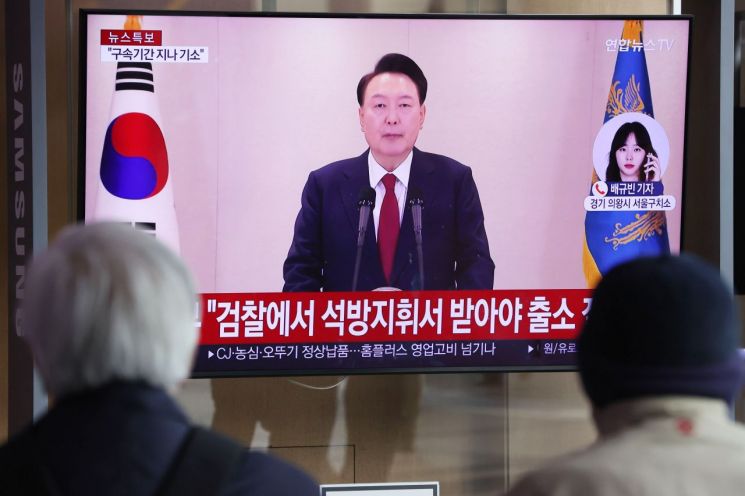
Some suggest that the prosecution, facing a difficult situation, might first issue the release order and then file a regular appeal. This would mean releasing President Yoon first and then proceeding with the appeal process. From the prosecution's perspective, this could be a compromise decision that respects the court's ruling while separately pursuing a challenge.
Regarding the decision to cancel President Yoon's detention, there are criticisms both inside and outside the legal community that excessive competition among investigative agencies such as Gongu-cheo, the prosecution, and the police has caused procedural flaws that could be controversial. Although the police have jurisdiction over the investigation of the crime of rebellion, Gongu-cheo launched a joint investigation headquarters and accelerated the arrest and investigation of President Yoon. Gongu-cheo arrested President Yoon on January 15 after two attempts and requested an arrest warrant on January 17. The warrant was issued on January 19.
Subsequently, the prosecution, which holds the right to prosecute, took over the case from Gongu-cheo on January 23 and applied to the court for an extension of the detention period, citing the need for additional investigation. However, the court dismissed the request, stating there was no provision for supplementary investigation. After various twists and turns, the prosecution held a nationwide prosecutors' meeting on January 26 and indicted President Yoon only at 6:52 p.m. Based on the court's calculation method that decided to cancel President Yoon's detention, the indictment was made 9 hours and 45 minutes after the detention period expired.
© The Asia Business Daily(www.asiae.co.kr). All rights reserved.