'When in Doubt, Interpret in Favor of the Defendant'
No Clear Standard for Calculating 'Detention Extension'... Court Accepts Yoon's Argument for 'Time-Based' Calculation
Court: "Detention Expiration Time Is January 26 at 9:07 a.m."
Prosecution Indicted More Than 9 Hours After Detention Expired
Court: Uncertainty and Legality of Cooperation Between Gong-su-cheo and Prosecution Must Be Resolved First
The decision by the Seoul Central District Court to cancel the detention of President Yoon Suk-yeol is the result of the fundamental principle of criminal law that "when in doubt, interpret in favor of the defendant." Since there is no clear basis to resolve the contentious issues and additional interpretation is required, the court strictly applied this fundamental principle, which mandates interpreting matters favorably to the defendant or suspect.
In particular, regarding the scope of investigation by the High-ranking Officials' Crime Investigation Office (Gong-su-cheo) and the cooperation procedures between Gong-su-cheo and the prosecution, the court clearly stated that since there are no laws or precedents, resolving any doubts can prevent grounds for reversal in higher courts as well as the possibility of retrial in the future.
On the 7th, the 25th Criminal Division of the Seoul Central District Court (Presiding Judge Ji Gui-yeon) issued a ruling in the afternoon accepting President Yoon's request to cancel his detention. This came about a month after President Yoon's side filed the request with the court on January 4. It has also been 51 days since President Yoon was detained on charges of "leading a rebellion" and 40 days since he was formally indicted while in detention.
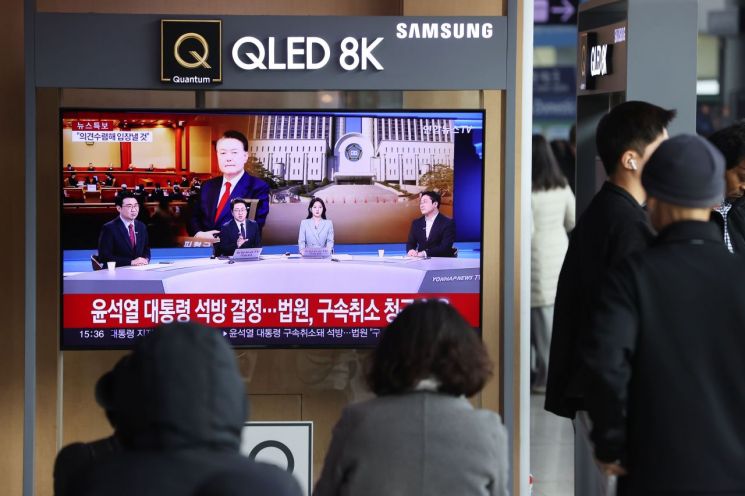
Court: "Yoon's detention expiration time is January 26 at 9:07 a.m."... Prosecution indicted 9 hours later
The court mainly examined whether the prosecution indicted after the detention period expired and the legality of the investigative procedures between Gong-su-cheo and the prosecution. Regarding the detention expiration time, the court agreed with President Yoon's side that "it is reasonable to calculate the detention period in actual hours rather than days," and found that the detention period had expired when the prosecution indicted him.
The Criminal Procedure Act broadly regulates how to calculate detention periods and adjust them when circumstances change, but it does not cover every possible case. Therefore, the court interpreted the law in a way that is not disadvantageous to the detained suspect.
Typically, the prosecution can detain a suspect for 10 days, and with court approval, extend the period once for up to another 10 days. The time when investigation-related documents are submitted to the court for the suspect's pre-detention hearing (warrant review) is not counted in the detention period, effectively extending it.
Gong-su-cheo and the prosecution, following precedent, calculated the extended period in units of "days," and excluded the detention review hearing from the detention period, similar to the warrant review. Accordingly, they considered the expiration of President Yoon's detention period, who was arrested at 10:33 a.m. on January 15, to be January 27. This date is three days later than the original expiration date of January 24.
However, President Yoon's side argued that the extension effect should be interpreted strictly, and that the detention period had already expired before the indictment. When converted to "hours" rather than "days," the detention expiration time was January 26 at 9:07 a.m., which was before Prosecutor General Shim Woo-jung held a meeting of chief prosecutors regarding Yoon's indictment. The prosecution indicted President Yoon only at 6:52 p.m. on January 26 after the meeting.
The court sided with President Yoon's side. The court judged that "in light of the constitutional and criminal procedure law provisions on personal liberty and the principle of non-detention investigation, it is reasonable to interpret that only the time when investigation-related documents were with the court should be excluded from the detention period." The court added that this interpretation avoids the unfairness that would arise if the detention period varied depending on when the documents were submitted to or returned from the court.
The court further stated, "With technological advances, it is possible to accurately confirm the times of document submission and return, and managing this is not difficult," emphasizing that "this will not impose a significant burden on investigative agencies in managing detained suspects or conducting detention investigations."
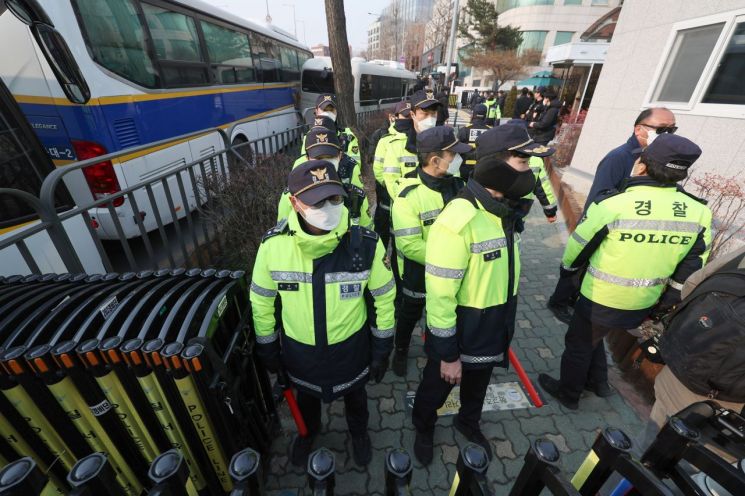
Uncertainty and legality of cooperation procedures between Gong-su-cheo and prosecution... 'Resolving doubts first'
The court also ruled that the ambiguity regarding the scope of Gong-su-cheo's investigation and the cooperation procedures between Gong-su-cheo and the prosecution should be interpreted in favor of the suspect. It noted that if these controversies remain unresolved during the criminal trial process, they could become grounds for reversal in higher courts or reasons for retrial in the future.
The court stated that even if the indictment was filed before the detention period expired, there are grounds for canceling the detention, and found no substantial evidence to accept the claims of Gong-su-cheo and the prosecution. Previously, President Yoon's side argued, "Gong-su-cheo claims it has investigative authority over the crime of abuse of power under the Gong-su-cheo Act and thus has jurisdiction over the crime of rebellion, but there is no evidence or material to suggest that Gong-su-cheo recognized the crime of rebellion during the investigation of abuse of power."
The court also mentioned the defense's claim that "the crime of rebellion is not included in Gong-su-cheo's investigative scope, Gong-su-cheo and the prosecution are independent investigative agencies, yet they divided and used the detention period set by the Criminal Procedure Act through mutual agreement without any legal basis, and the procedure for transferring custody was not followed."
Since there are no laws or Supreme Court rulings to reject President Yoon's claims, the court judged that resolving doubts about the legality of the investigation process should come first. The court cited the recent "10.26 Kim Jae-gyu case retrial decision" as an example, explaining that "it is desirable to ensure procedural clarity and resolve doubts about the legality of the investigation process, so canceling the detention is appropriate." It added, "If these controversies remain unresolved and the criminal trial proceeds, they could become grounds for reversal in higher courts or reasons for retrial even after a long time."
Meanwhile, the court's decision to cancel detention does not mean President Yoon will be immediately released. Seok Dong-hyun, a lawyer representing President Yoon, stated, "The Seoul Central District Prosecutors' Office, which filed the indictment, can file an immediate appeal within seven days, and if they waive the immediate appeal or do not file it within the period, release will follow." He added, "Since the immediate appeal system for this decision has been declared unconstitutional, it is appropriate to order the immediate release of the president."
© The Asia Business Daily(www.asiae.co.kr). All rights reserved.
![Clutching a Stolen Dior Bag, Saying "I Hate Being Poor but Real"... The Grotesque Con of a "Human Knockoff" [Slate]](https://cwcontent.asiae.co.kr/asiaresize/183/2026021902243444107_1771435474.jpg)












