Popular as a Healthy Snack Abroad
Gimbap Gains Attention Alongside K-Drama Boom
Kim, known as the 'black semiconductor' and a key player in K-food, has emerged as a star export product. Its annual export growth rate has reached double digits, reflecting its global popularity.
According to the report "10 Years of K-Food Export Trends and Implications," analyzed by the Korea Chamber of Commerce and Industry and commissioned to the Korea Trade Statistics Promotion Institute on the 6th, last year's seasoned seaweed (jomi gim) export value reached $630 million (approximately 910 billion KRW). The annual average export growth rate of seasoned seaweed is 11.3%.
Seaweed is the top export item among seafood products. According to the Ministry of Oceans and Fisheries last month, seaweed exports accounted for about one-third of the total seafood export value of $3.03 billion (4.3 trillion KRW) last year, amounting to $997 million (1.4 trillion KRW). This far surpasses the second-ranked tuna ($590 million) and third-ranked mackerel ($90 million).
Korean seaweed also recorded a 73% market share in the global seaweed market last year, ranking first. It overwhelmingly outperformed competitors such as China (24%) and Japan (2%). The number of export countries increased from 60 in 2010 to 124 as of last year.
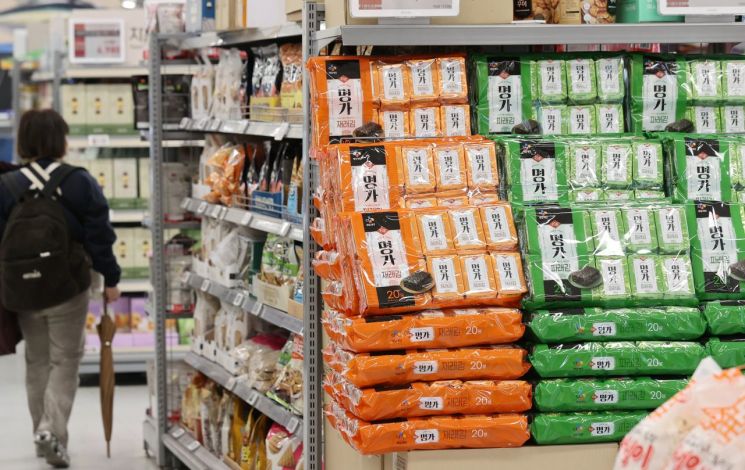
While countries in Northeast Asia, including Korea, consider seaweed a familiar side dish, it was relatively unfamiliar food overseas. However, as seaweed gained attention for its benefits in blood sugar control and anti-cancer effects, it became known internationally as a healthy snack. Consequently, domestic food companies like CJ CheilJedang and Daesang are challenging overseas markets not only with savory seasoned seaweed but also with seaweed snacks coated in locally tailored sauces such as chili, BBQ, and wasabi flavors.
The popularity of processed seaweed products like gimbap also played a significant role in the increase in seaweed export value. In August 2023, TikToker 'Sera An,' who reviews Korean food, went viral with a video of her tasting Korean gimbap with her mother, surpassing 10 million views. This led to a frozen gimbap shortage in the United States. In the video, Sera An introduced how to eat frozen gimbap sold at the American grocery chain Trader Joe’s.
At that time, NBC cited a Trader Joe’s representative saying, "With the K-pop and K-drama craze, cultural exposure to K-food like gimbap has been enormous." They added, "Trader Joe’s staff were very surprised by the blockbuster-level popularity of frozen gimbap. As frozen gimbap sold out nationwide, Americans began visiting Korean markets like H Mart. The shortage is expected to continue."
In fact, the export value of rice-processed foods, including gimbap, grew significantly last year. According to the Ministry of Agriculture, Food and Rural Affairs in December last year, the export value of rice-processed foods reached $299.2 million, a 38% increase from the previous year ($217 million). Especially, exports to the U.S. market alone increased by 51.0% last year.
© The Asia Business Daily(www.asiae.co.kr). All rights reserved.

![Clutching a Stolen Dior Bag, Saying "I Hate Being Poor but Real"... The Grotesque Con of a "Human Knockoff" [Slate]](https://cwcontent.asiae.co.kr/asiaresize/183/2026021902243444107_1771435474.jpg)














