[Silicon Shield: Into the Heart ⑩]
Interview with Yang Ruijin, Chief Research Officer at Taiwan's Industrial Technology Research Institute
"Future technologies require comprehensive national strategies"
"A contest among small countries will unfold under U.S.-China leadership"
"Samsung prioritizes internal logic over market logic"
<1> TSMC, the God... Visiting the '2nm' Sanctuary
<2> The 'Six Knots' Holding Back TSMC and Technology Security
<3> The Opening of Obscure Taiwan
<4> Korea and Taiwan, Between Deterrence and Cooperation

Yang Ruijin, Chief Research Officer (CRO) of the Industrial Economics Knowledge Center at Taiwan's Industrial Technology Research Institute (ITRI), pointed out the crisis factors faced by Korean companies and Samsung Electronics with a consistently firm expression. He stated that the problems facing Korean semiconductors are the result of decades of accumulated 'wrong decisions,' and that there is an urgent need to respond quickly to geopolitical changes considering upcoming market shifts.
ITRI, where Yang is affiliated, is currently the strongest force behind Taiwan holding a partial hegemony in the global semiconductor market. Yang is regarded as a highly influential figure in the industry, often called the 'behind-the-scenes advisor' in Taiwan's semiconductor sector. During Tsai Ing-wen's second term, when TSMC's business rapidly expanded, the Taiwanese government published a 'Semiconductor White Paper,' which Yang authored. This is his first exclusive interview with Korean media.
Yang identified the core of the recent crisis faced by Korean semiconductors, including foundry and memory, as 'straddling both the U.S. and China.' He emphasized, "TSMC has been cautious about the U.S. government's trends since Trump's first term and has been very careful in accessing the Chinese market," adding, "Korea's straddling of both the U.S. and China has contributed to today's differences." He also compared that "Taiwanese companies, including TSMC, are undergoing decoupling from China and have entered the relatively vulnerable European Union (EU) market, unlike Korea." Regarding Samsung Electronics, he evaluated it as a company that prioritizes 'internal logic' over 'market logic.' Yang diagnosed that while TSMC supplies semiconductors and services to companies worldwide, Samsung has a structural limitation of working primarily for internal demand.
ITRI is considered the cradle of today's TSMC. It all began with a technology transfer contract with the U.S. electronics company RCA, paying $2.5 million (about 360 million KRW) in royalties and $1 million in technology usage fees for a 10-year technology transfer agreement. TSMC was born from the large-scale Very Large Scale Integration (VLSI) development project under ITRI's Electronics Research and Service Organization in 1984. The founder, Morris Chang, also served as ITRI's director before entering the market and becoming TSMC's chairman, and former TSMC Vice Chairman Cheng Pan-ching was the head of ITRI's pilot factory. This makes ITRI the core of Taiwan's competitiveness and response strategy.
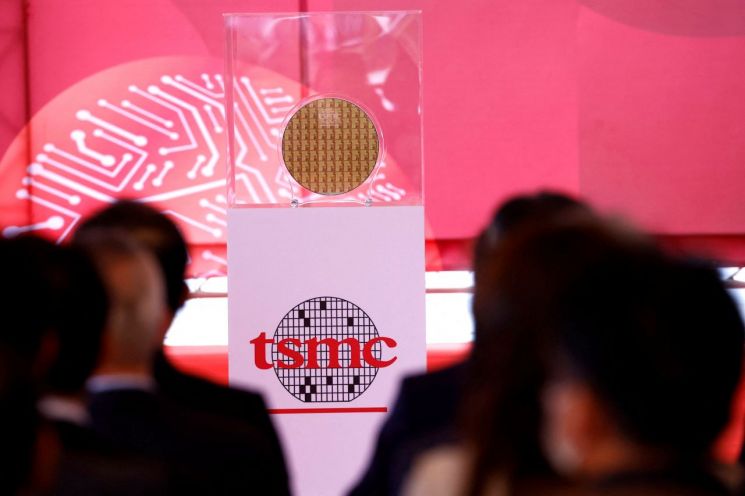
Yang warned above all to be cautious about accessing the Chinese market. He explained, "(Samsung) has become internally difficult to control technology leaks after forming joint ventures (JVs) with Chinese capital," adding, "Both Samsung and TSMC have been obsessed with the Chinese market for the past 20 years, but TSMC thoroughly protects its trade secrets and know-how." From a technical perspective, he explained that memory semiconductors such as DRAM and NAND flash, where Samsung has competitiveness, are becoming easier to imitate, while logic semiconductors will become more difficult.
Regarding the foundry sector, he also suggested that Samsung should consider a 'second place strategy.' This means establishing detailed plans with the realistic recognition of remaining second rather than aiming to catch up with the first. However, he predicted, "Since TSMC's customers are wary of monopolies, the market will continue to allow Samsung to survive as number two." He also criticized the importance of hiring the 'right person' for talent acquisition. Yang analyzed, "Many competitors employ unqualified personnel," adding, "The current semiconductor ecosystem is like the 'Era of Seven Warlords' (a fierce survival-of-the-fittest era)."
He also assessed that Taiwan's industrial growth model is not the 'correct answer.' He self-evaluated, "Taiwan has only succeeded in the foundry sector and lacks global brands." He added, "TSMC often faces heavy workloads and pressure, with work assignment targets sometimes seeming impossible," and said, "The way TSMC manages to get through this is its unique approach."
Yang expects further intensification of decoupling between the U.S. and China in the future. He predicted that a competition among smaller countries (which he referred to as 'small countries') will emerge amid the technological hegemony war centered on these two nations. He sees the core of this process as the comprehensive national strategies surrounding future technologies.
He explained, "Key future technologies such as artificial intelligence (AI), quantum technology, and 6G are all interconnected," adding, "Semiconductors are necessary for their implementation, and it is practically impossible for a single country to secure all related technologies." He emphasized, "Therefore, comprehensive national strategies are inevitable, and the current issue is which countries to cooperate with and how."
Yang said that the role of the state is important in setting the direction for companies because companies can only follow once the state establishes strategies. He pointed out, "Taiwan has established a comprehensive national strategy including supply chains," and noted, "Countries are currently rushing to secure even a corner in areas such as AI, quantum technology, and 6G."
© The Asia Business Daily(www.asiae.co.kr). All rights reserved.
![Clutching a Stolen Dior Bag, Saying "I Hate Being Poor but Real"... The Grotesque Con of a "Human Knockoff" [Slate]](https://cwcontent.asiae.co.kr/asiaresize/183/2026021902243444107_1771435474.jpg)

















