"Not Enough to Cause a Recession,
But a Blow to the Labor Market"
Due to policy changes following the downsizing of the federal government under the Donald Trump administration in the United States, it is projected that more than 500,000 jobs could disappear this year.
On the 6th (local time), Bloomberg News reported that Comerica Bank, Evercore ISI, Barclays, and others made this prediction.
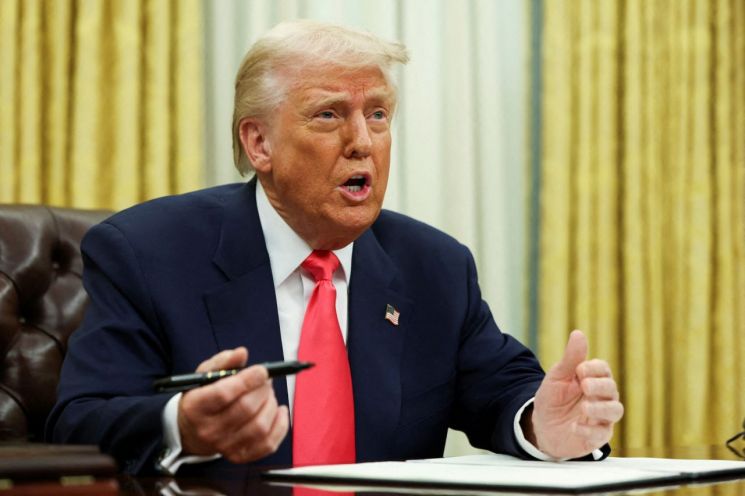
Earlier, Bloomberg Economics estimated that tens of thousands of federal jobs had been cut within six weeks of President Trump's inauguration.
The U.S. Department of Labor will release the February employment report on the 7th. Bloomberg predicted that the impact of the Trump administration's policies would be limited in the February report. This is because data was collected during the second week of February, and layoffs at the Department of Government Efficiency (DOGE) began in mid-February, so the effects are expected to be more clearly reflected in the March and April statistics. Last month, the White House instructed federal agencies to submit large-scale workforce reduction plans by March 13.
According to a report released on the same day by Challenger, Gray & Christmas, a reemployment support firm, the job cuts announced by employers last month were the highest since 2020.
Harry Holzer, a former chief economist at the Department of Labor and a professor at Georgetown University, said, "If the figures for federal employees prove accurate and include those receiving government subsidies or working through government contracts, the number will be substantial."
The Department of Government Efficiency, led by Tesla CEO Elon Musk, has pressured government agencies to cancel contracts, and private companies dealing with the government have also begun cutting salaries. DAI Global, a contractor for the U.S. Agency for International Development (USAID), stated that it laid off more than 500 employees after the federal government refused to pay for completed work.
Bloomberg reported that cuts in research funding and international development aid are also changing hiring plans at universities and nonprofit organizations, and service providers such as restaurants and hotels in areas where the federal government dispatches many employees are expected to be hit as well.
Samuel Tombs and Oliver Allen, senior economists at Pantheon Macroeconomics, stated in a report on the 25th of last month that they expect a net decrease of 100,000 jobs in the private sector by October.
However, the Trump administration continues its federal workforce reduction policy. The Wall Street Journal (WSJ) reported that President Trump said that each department must make personnel decisions before CEO Musk and stated, "If they don't cut, Elon will."
The New York Times (NYT) reported that the U.S. State Department is considering closing 12 consulates mainly in Western Europe and laying off locally employed staff at overseas missions.
Bloomberg analyzed that such policies could lead to higher unemployment rates and reduced consumer spending, posing additional downside risks to the U.S. economy.
Pantheon Macroeconomics economists said, "We do not think the Department of Government Efficiency's actions so far are aggressive enough to cause a recession, but it is highly likely that significant damage to the labor market will soon appear in the indicators."
© The Asia Business Daily(www.asiae.co.kr). All rights reserved.

















