A total project cost of 89.2 billion KRW invested in the construction of an integrated biogas facility
Upon completion, the facility will process 190 tons of organic waste per day
Plan to build the nation’s only ‘Comprehensive Wood Education Center’ by 2026
Gwangju City, Gyeonggi Province (Mayor Bang Se-hwan) announced on the 7th that it will actively promote various eco-friendly policies for a sustainable future.
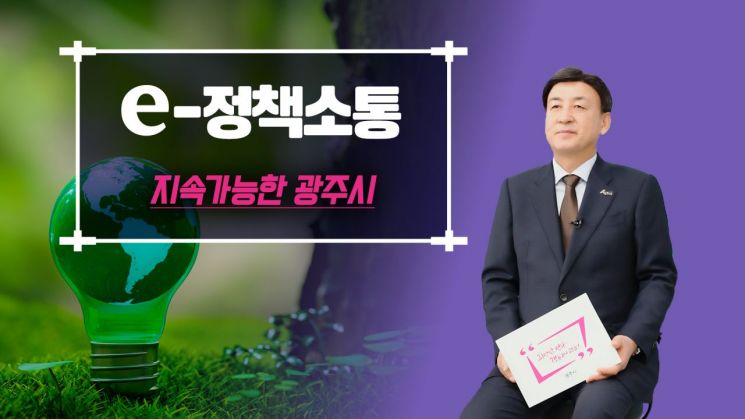 Gwangju City, Gyeonggi Province, is actively implementing various eco-friendly policies for a sustainable future. Photo by Gwangju City, Gyeonggi Province
The integrated biogas facility to be installed in 423 Suyang-ri, Gonjiam-eup, will involve a total project cost of 89.2 billion KRW, and it is a project that secured the largest-ever national and provincial funding of 58.8 billion KRW through a public contest last year.
Once completed, the facility will process 190 tons of organic waste daily to produce 14,600 N㎥ of biogas, which will be supplied as city gas and to fuel cells. This is expected to establish itself as an eco-friendly infrastructure that simultaneously achieves the dual goals of resource circulation and energy production.
Additionally, the city plans to build the nation’s only ‘Comprehensive Wood Education Center’ in the Mokhyeon-dong area by 2026. The center will be developed as a complex space leading the wood industry, education, and culture, and is expected to contribute to achieving carbon neutrality.
Along with this, the city will actively promote the ‘Mokhyeoncheon Ecological Stream Restoration Project,’ aiming to restore the local ecosystem and provide nature-friendly spaces, thereby contributing to improving citizens’ living environment and enhancing ecological diversity.
Furthermore, according to the ‘Gwangju City Carbon Neutral Green Growth Basic Plan’ established last year, the city is implementing various detailed projects such as utilizing solar energy, promoting eco-friendly vehicles, and constructing bicycle paths.
In particular, the city plans to strengthen local eco-friendly capabilities through the expansion of the Carbon Point System, a citizen participation-type carbon neutrality practice program, and the operation of customized carbon neutrality education programs.
Mayor Bang Se-hwan stated, “Through various eco-friendly policies, we will improve the quality of life for citizens and create a sustainable city where future generations can be happy.”
© The Asia Business Daily(www.asiae.co.kr). All rights reserved.

















