At the Two Sessions: "Korean Historical Dramas Plunder Chinese Cultural Heritage"
Claim That Artisan Kim Eunyoung Learned Knotting in China
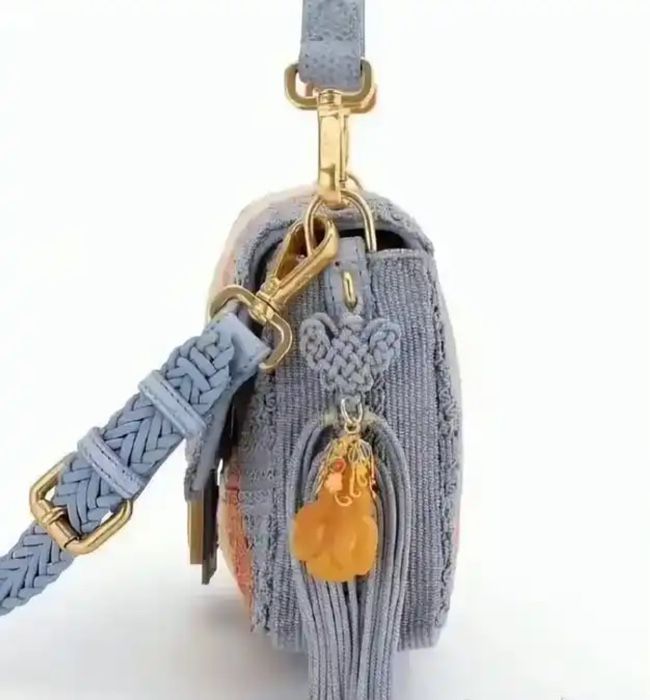
A famous screenwriter attending China's largest annual political event, the Two Sessions (Lianghui), recently claimed on social media (SNS) that the Korean knot handbag by the global luxury brand 'Fendi,' which has sparked controversy, originated from Chinese culture.
Local media such as Jiupai News (九派新聞) reported on the 6th that Zhang Changnan, a Chinese screenwriter attending the Two Sessions as a member of the Chinese People's Political Consultative Conference (CPPCC), made this claim during an interview with domestic reporters the day before.
Zhang Changnan said, "I found materials stating that a Korean student came to China, learned Chinese knots, then returned and visited an elderly woman, claiming it was passed down from her (the grandmother's household)." He added, "We might have given up the market and the right to interpret civilization."
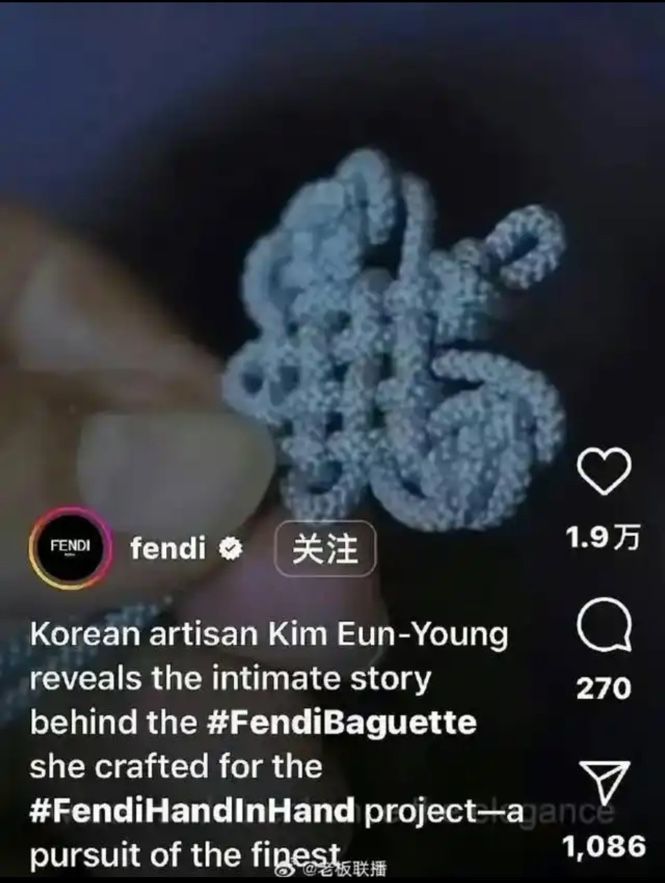
This claim came amid recent criticism from Chinese netizens accusing Fendi of 'cultural appropriation' after the brand unveiled a handbag at the end of last year that incorporated the handiwork of Kim Eun-young, holder of Seoul City Intangible Cultural Property No. 13 for knotting.
Kim Eun-young, who majored in life arts at Ewha Womans University, has been creating traditional knots since 1966 under the tutelage of Kim Hee-jin, holder of Important Intangible Cultural Property No. 22.
Some Chinese individuals directly protested to Fendi, the company that released the handbag. At the end of last month, the hashtag '#FendiChineseKnot#' ranked first among popular searches on Weibo (China's version of X).
Nationalistic state media defended the claim, stating, "Chinese knots began as folk art during the Tang and Song dynasties and became popular decorative handicrafts during the Ming and Qing dynasties."
Amid protests from Chinese netizens, Fendi deleted related promotional content from Instagram.
Zhang Changnan's remarks are interpreted as suggesting that although Kim Eun-young learned knotting in China, it was portrayed as if she had inherited traditional Korean knots.
Zhang also stated at this year's Two Sessions that he brought a proposal to support high-quality historical dramas. He said, "Historical themes are important mediums for spreading Chinese culture, but the creation and dissemination of historical dramas currently face severe challenges. While overseas market demand is strong, the proportion of historical dramas that truly embody the essence of Chinese civilization and convey shared cultural memories is not large."
He further said, "When we lament that 'Korean historical dramas are plundering the heritage of Chinese culture' or 'Japanese epic dramas export values,' we should be aware that the production and dissemination of historical dramas are related to the contest over the right to interpret civilization," Jiupai News reported.
© The Asia Business Daily(www.asiae.co.kr). All rights reserved.
![Clutching a Stolen Dior Bag, Saying "I Hate Being Poor but Real"... The Grotesque Con of a "Human Knockoff" [Slate]](https://cwcontent.asiae.co.kr/asiaresize/183/2026021902243444107_1771435474.jpg)












