[Corporate Research Institute] ① Fiskars, Established in 1649 and Operating for 376 Years
Invented the First Plastic-Handled Scissors in 1967
Acquired Iittala, Royal Copenhagen, Wedgwood, and More
Grew into a Lifestyle Group... Achieved Net Profit Exceeding KRW 1 Trillion
What product is commonly found in pencil holders, kitchen drawers, and toolboxes? It is the 'scissors.' Scissors, which even young children can easily use, are utilized everywhere. They cut paper, food, fabric, or leather, and can also cut plastic sheets or thin metal plates.
The scissors with plastic handles that led to popularization were first invented in Finland in 1967. Fiskars, established in 1649, was the first in the world to produce scissors with orange plastic handles instead of metal ones.
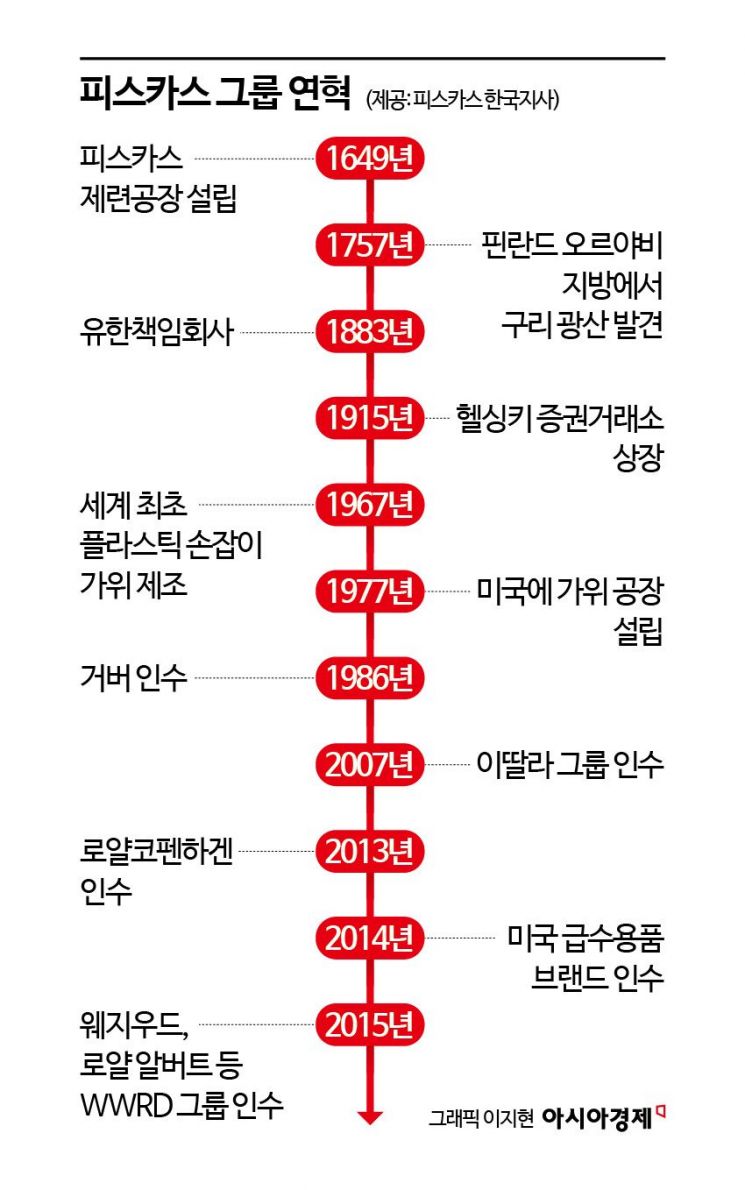
The history of Fiskars began in a small village called 'Fiskars Bruk,' located 100 km west of Helsinki. At that time, Finland had many ironworks established to manufacture weapons due to frequent wars with neighboring countries. Fiskars expanded its ironworks business centered around the village and established its first kitchen knife factory in 1832. Later, it expanded production to forks and scissors. Fiskars became a limited company in 1883 and was listed on the Helsinki Stock Exchange in 1915. It achieved success by establishing a rolling mill and Finland's first metal spring factory.
Fiskars' fate changed dramatically when it created the world's first scissors with plastic handles. The plastic scissors overcame the inconvenience of the existing heavy and uncomfortable metal-handled scissors and were sold worldwide. In 1977, Fiskars established a scissors factory in the United States and actively engaged in overseas trade.
Fiskars cites two main reasons for the success of its scissors, which were very innovative designs at the time. First is consideration for people. Fiskars scissors are ergonomically designed, taking into account joint movement. When holding the scissors, they fit snugly in the hand, providing excellent comfort. The second is color. The previously colorless metal handles were transformed into orange handles. The orange tools stood out well in any space such as kitchens or storage cabinets.
Fiskars scissors undergo rigorous processes including cutting, performance, strength, durability, and rotation tests. The cutting test involves using the scissors in the air to check if the blades make the correct sound when they collide. Next, they test cutting thick fabric. The strength test involves dropping the product from heights of 1m, 1.5m, and 2m to check for damage and safety. They also conduct multiple rotation drop tests to simulate scissors falling in kitchens or living room tables.
Even globally renowned luxury brands use Fiskars scissors for tailoring. The Italian supercar brand Ferrari uses them to cut leather seats, and the luxury bag brand Chanel is also known to use these scissors.
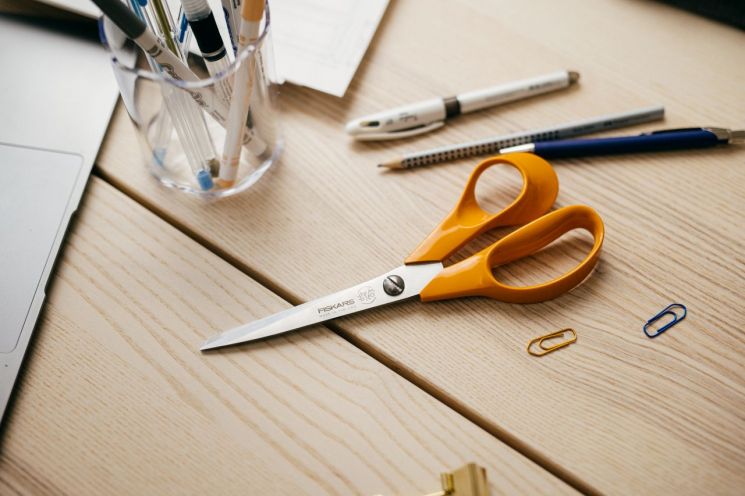 Orange plastic handle scissors, the world's first invented in 1967. Provided by Fiskars Korea office
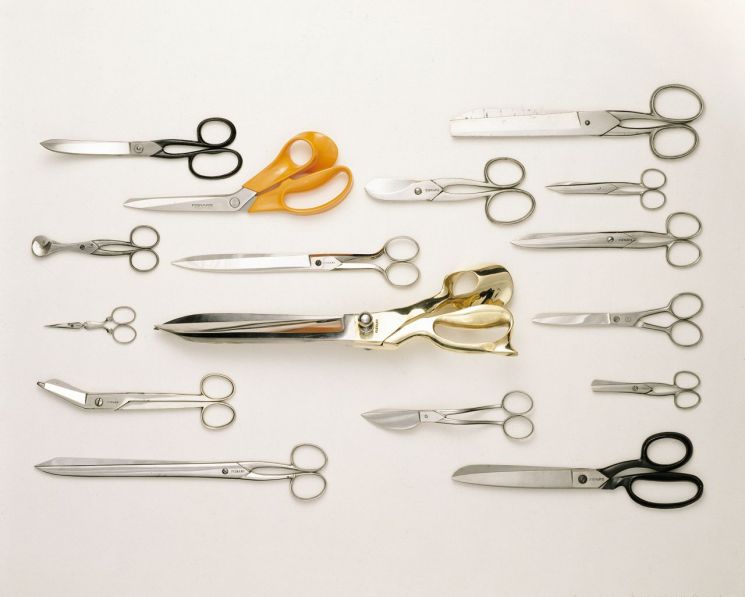
Fiskars attributes its growth engine that has maintained its unique position for over 300 years to innovation. Fiskars, which created the orange plastic scissors, continuously develops products with unique designs and functionalities. Fiskars sells more than 90 different types of scissors, including those designed for left-handed users.
Since the 2000s, Fiskars has focused on business expansion through acquisitions. It has acquired famous brands such as Iittala, Royal Copenhagen, Wedgwood, and Royal Albert, offering a wide range of products including kitchenware and living room items. The main innovation strategy is to develop together while preserving the unique traditions and core values of each brand.
In South Korea, YouTuber 'Chimchakman' gained attention by comparing everyday products, using both regular scissors and Fiskars scissors. Chimchakman demonstrated the superior quality of Fiskars scissors by cutting through 12 layers of stacked jeans in one go.
Fiskars' net profit exceeded KRW 1 trillion as of 2023. Its stock price was recorded at 15.40 euros (about KRW 24,000) as of the 5th.
© The Asia Business Daily(www.asiae.co.kr). All rights reserved.



















