BOK: Analysis of the Impact of Inflation Experience on Housing Demand
Core Perceived Inflation Has a Major Effect... Demand-Side Factor and Long-Term Characteristic
Mainly Among Those Under 30, Males, Married Individuals, Families with Four or More Members, and Households with Small Total Assets
High Possibility of Housing Inflation Hedging Observed
It was found that individuals' past experienced inflation actually increases domestic real estate demand. In particular, the impact of core perceived inflation was significant. It means that housing demand was driven by core experienced inflation, which is a long-term and demand-side factor, rather than non-core experienced inflation, which is a supply-side factor with high volatility. By household characteristics, 'the behavior of buying houses to cope with rising prices' (housing inflation hedging) was mainly observed among those under 30, males, married individuals, families with four or more members, and households with small total assets. This suggests that efforts to stabilize prices should focus on core inflation to prevent an increase in housing demand due to high experienced inflation.
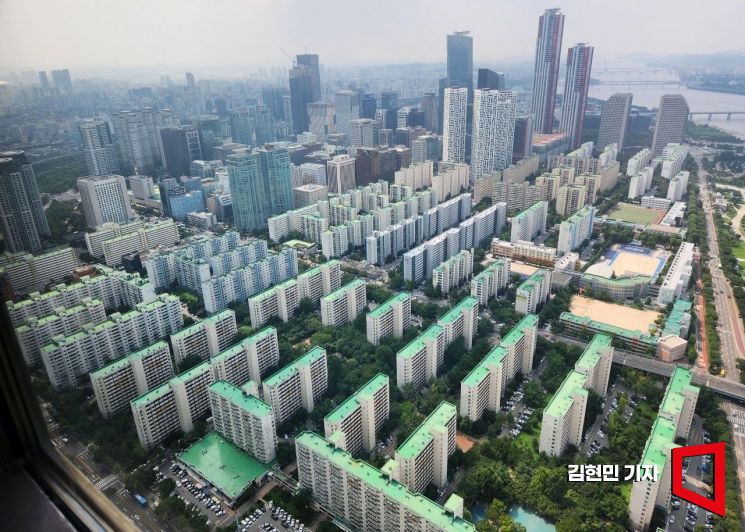
On the 4th, the Bank of Korea revealed this in a report titled 'BOK Economic Research - Analysis of the Impact of Inflation Experience on Housing Demand.' Choi Young-jun, a research fellow at the Macroeconomic Research Office of the Bank of Korea Economic Research Institute, said, "When core experienced inflation rises by 1 percentage point, the probability of owning a self-owned house nationwide is predicted to increase by 6.0 percentage points," adding, "It was found that an increase in core experienced inflation statistically significantly raises the probability of owning a self-owned house."
The younger the age, the higher the probability of owning a self-owned house due to rising experienced inflation. He said, "by household head age, the probability of owning a self-owned house significantly increased among those in their teens, twenties, and thirties with rising core experienced inflation," adding, "it is predicted that when core experienced inflation rises by 1 percentage point, the probability of owning a self-owned house will increase by 7.4 percentage points for these groups."
When divided by gender, males were more affected by the rise in experienced inflation. For males, when core experienced inflation rises by 1 percentage point, the probability of owning a self-owned house is expected to increase by 8.0 percentage points. By marital status, the impact was greater for married individuals. For married household heads, when core experienced inflation rises by 1 percentage point, the probability of owning a self-owned house is expected to jump by 9.0 percentage points.
By family size, 'four or more members' showed significant results. This means that the larger the family size, the higher the probability of owning a self-owned house with rising experienced inflation. Family size was classified as three or fewer and four or more based on estimation feasibility. The smaller the total assets, the greater the impact. Researcher Choi explained, "Households with smaller total assets, who find it difficult to purchase expensive houses, greatly increased their probability of owning a house to prepare for the possibility of housing price increases due to inflation." It is predicted that for the first and second quintiles of total assets, the probability of owning a self-owned house will increase by 16.6 percentage points when core experienced inflation rises by 1 percentage point.
Conversely, the higher the total assets, the lower the probability of owning a self-owned house. Researcher Choi explained, "Considering restrictions on multi-home purchases and policies encouraging self-owned housing for the homeless in Korea, it can be seen that the probability of owning a self-owned house decreases for households with large total assets according to inflation experience."
© The Asia Business Daily(www.asiae.co.kr). All rights reserved.

















