Korea's Tourism Deficit Exceeds $10 Billion Last Year
"Far More Koreans Traveled Abroad Than Foreigners Visited Korea"
"Tourism Income Recovery Lags Behind Tourism Expenditure"
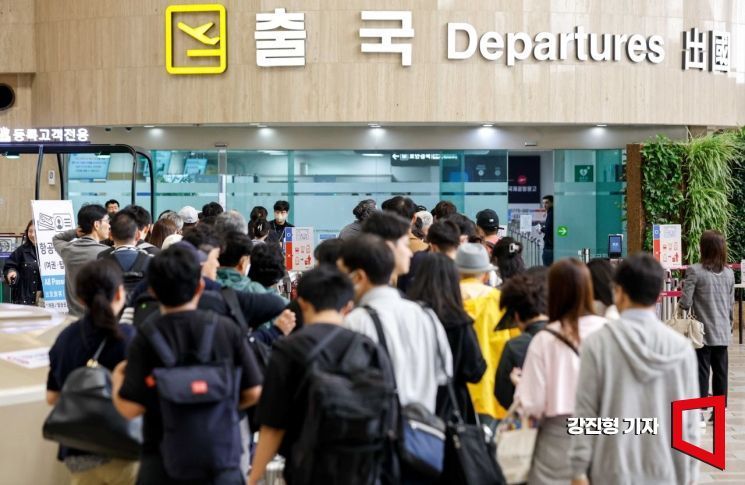
As the number of citizens traveling abroad surges, the travel balance deficit is accelerating, with projections indicating that last year's tourism balance deficit exceeded $10 billion. Although the number of foreign tourists visiting Korea, which had sharply declined due to the COVID-19 pandemic, has recovered to 93.5% of pre-pandemic levels, the tourism balance deficit has actually worsened. This is because the recovery rate of tourism income has not kept pace with the recovery rate of tourism expenditure, leading to an expanded deficit. Calls for urgent improvement in the tourism balance are growing.
According to the '2024 Korea Inbound and Outbound Tourism Performance Analysis' report released by Yanolja Research on the 3rd, the number of foreign tourists visiting Korea last year reached 16.37 million, recovering to 93.5% of the record high in 2019. This represents a 48.4% increase compared to 2023, showing a rapid recovery in Korea's inbound tourism demand following the COVID-19 pandemic.
However, despite the increase in foreign tourists, tourism income amounted to only $16.45 billion, which is 80% of the 2019 level just before the COVID-19 outbreak. Compared to 2023, it increased by only 9.2%, indicating that the recovery speed of tourism income is somewhat slower than the growth in tourist numbers. Yanolja Research pointed to a decline in duty-free store sales as one of the main reasons for the underperformance in tourism income. Foreign sales at domestic duty-free stores reached $17.84 billion in 2019 but halved to $8.47 billion in 2023 and further decreased to $8.16 billion last year. Additionally, the short stays of cruise travelers were identified as a significant factor.
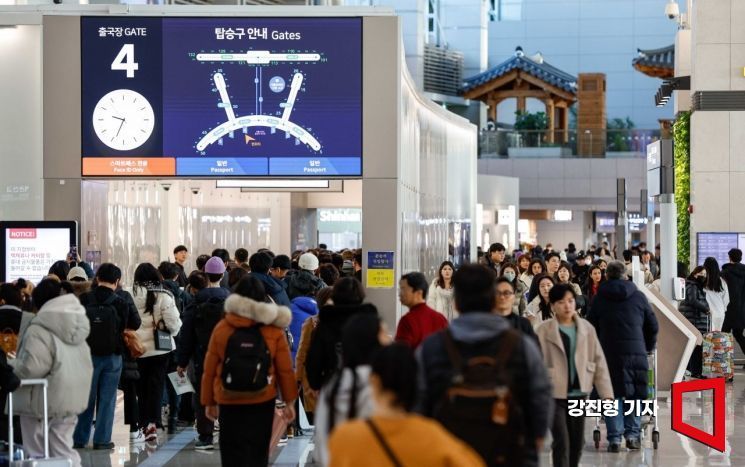
The problem is that tourism income has not kept up with expenditure, leading to an expanded deficit. Overseas travel expenditure by Korean citizens reached $26.49 billion, recovering to 90.5% of the 2019 level. This is a 6.1% increase compared to 2023. As the recovery rate of tourism income fails to catch up with that of tourism expenditure, the tourism balance deficit is widening.
Compared to 2019, the recovery rates of tourism expenditure were 84.6% in 2023 and 90.5% in 2024, while the recovery rates of tourism income were only 72.6% and 79.3%, respectively, widening the gap further. The tourism balance deficit, which was $8.52 billion in 2019, worsened to $9.69 billion in 2023 and increased further to $10.04 billion last year.

Yanolja Research identified the decline in Chinese tourists as a major cause. Last year, 4.6 million Chinese visitors came to Korea, which is only 76.4% of the 2019 figure, and across Asia, the number of Chinese visitors dropped by 36.4% to 25.83 million.
Hong Seok-won, chief researcher at Yanolja Research, stated, "Chinese tourists account for about 30% of Korea's inbound tourists, and it is necessary to shift this China-dependent structure to a more stable and diversified one. If inbound tourists from various countries other than China are actively attracted, there is a strong possibility of surpassing the record number of tourists in 2019. To achieve this, customized marketing strategies aligned with global tourism trends and diversified tourism product development are required," he emphasized.
© The Asia Business Daily(www.asiae.co.kr). All rights reserved.



















