Comprehensive Measures in Six Key Areas Including Facility and Gas Safety Management
Gangbuk-gu, Seoul (District Mayor Lee Soon-hee) is implementing the "2025 Comprehensive Thawing Season Measures" by the end of this month to ensure the safety management of facilities in the area during the spring thaw period, dedicating full efforts to the safety of residents.
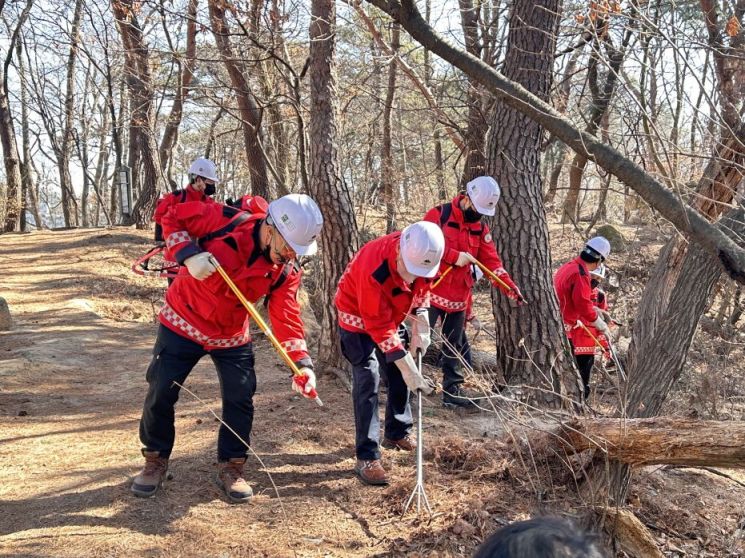 The Gangbuk-gu Wildfire Prevention and Suppression Team is conducting patrol activities in wildfire-prone areas. Provided by Gangbuk-gu.
This comprehensive plan is carried out comprehensively with the participation of 16 district office departments across six major areas: facility safety management, housing and construction safety management, gas facility safety management, flood control and flood damage vulnerable facility safety management, cleaning measures, and wildfire prevention measures.
In particular, this year, the scope of facilities and inspection areas for safety checks has been expanded and reorganized. The number of alley-type shopping districts subject to inspection increased from 4 to 7, elderly welfare facilities from 156 to 158, and various road facilities subject to safety inspections from 48 to 49.
In the field of facility safety management, to proactively eliminate risk factors in houses and buildings, the target for safety inspections of apartment complexes has been expanded from 98 complexes with 500 buildings to 99 complexes with 515 buildings. The number of disaster-vulnerable facilities such as small-scale aging buildings subject to safety inspections also increased from 52 to 78, and the safety inspection checklist for private construction sites was improved to strengthen supervision and inspection.
Public facilities subject to inspection include the district office building, 13 community service centers and autonomous community halls, comprehensive social welfare centers, parks and green spaces, and road facilities. Major inspection items include cracks in building structural parts, deterioration of load-bearing capacity, subsidence, risk of collapse, and aging conditions of electrical and plumbing facilities. For the 49 road facilities, an emergency restoration team will be formed to promptly remove risk factors through rapid emergency repairs. Especially considering recent cases of electric vehicle fires, the maintenance status of electric vehicle charging facilities will also be a focus of inspection.
Neighborhood sports facilities, traditional markets, alley-type shopping districts, daycare centers, facilities for the disabled, and senior centers, which are multi-use facilities, are also included in the inspection targets. The process involves a first-stage self-inspection by facility managers, followed by a second-stage on-site inspection by responsible public officials or joint inspections with facility managers. The 16 traditional markets are divided into construction and water supply facilities, fire safety, electrical, and gas sectors to check the condition of facilities and equipment and verify their proper operation.
In the housing and construction safety management sector, 98 apartment complexes with 20 or more households and steep slopes are intensively inspected. Joint inspections are conducted by professional architects and responsible public officials for apartment buildings rated C or below in safety diagnosis and for steep slopes.
Additionally, inspections of private construction sites and hazardous facilities with high risks of ground subsidence and collapse are strengthened. External experts from the Seoul City Building Safety Advisory Group and responsible public officials jointly inspect thawing season risk factors, notify construction companies of the inspection results, and request repair and reinforcement measures. If necessary, construction may be halted and corrective orders issued.
Gas facility safety management involves joint inspections by the district office and the Korea Gas Safety Corporation targeting 31 urban gas and LPG supply facilities. They check for ground subsidence, facility damage, gas leaks in gas pipelines, pressure regulation rooms, valve rooms, and verify the normal operation of automatic monitoring systems.
Flood control facility inspections will thoroughly investigate structural cracks, collapse, and overturning risks in river facilities, rainwater pumping stations, various construction sites, slope facilities, protruding structures, and underground parking lots of apartment complexes.
Cleaning measures include collecting long-accumulated winter waste, inspecting cleaning facilities and vehicles, and operating cleaning mobile teams and illegal dumping control teams to maintain road cleanliness.
For wildfire prevention, a wildfire prevention headquarters has been established, and a specialized wildfire prevention and suppression team is also operating. The suppression team patrols wildfire-prone areas, carries out preventive projects such as removing flammable materials, is responsible for rapid initial response and equipment maintenance in case of wildfire occurrence, and focuses on wildfire prevention and early suppression through regular forest patrols.
District Mayor Lee Soon-hee stated, “We will thoroughly conduct safety inspections during the thawing season to ensure that residents can live safely,” and added, “We will continue to implement policies prioritizing residents’ safety to make Gangbuk-gu an even safer and more comfortable place to live.”
© The Asia Business Daily(www.asiae.co.kr). All rights reserved.
![Clutching a Stolen Dior Bag, Saying "I Hate Being Poor but Real"... The Grotesque Con of a "Human Knockoff" [Slate]](https://cwcontent.asiae.co.kr/asiaresize/183/2026021902243444107_1771435474.jpg)











