U.S. to Impose Tariffs on Mexico, Canada, and China Starting March 4
Trump’s Push for Cryptocurrency Strategic Reserve Boosts Related Stocks
U.S. Department of Labor’s February Employment Report in Focus on March 7
The three major indices of the U.S. New York stock market showed mixed trends in the early trading session on March 3rd (local time), the first trading day of March. As the tariffs on Mexico, Canada, and China, announced by U.S. President Donald Trump to be imposed on the 4th, approach just one day away, investors are cautiously watching the market. Leading cryptocurrencies like Bitcoin and related stocks are all rising.
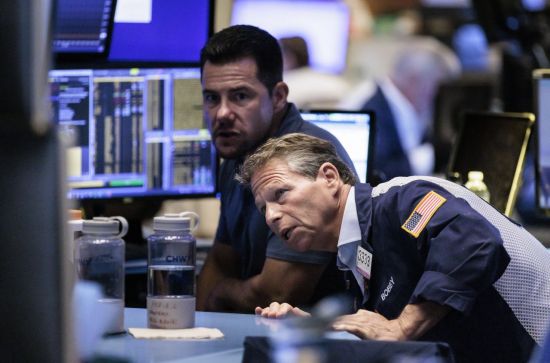
As of 9:53 a.m. in the New York stock market on this day, the Dow Jones Industrial Average (Dow), centered on blue-chip stocks, was trading at 43,937.5, up 0.22% from the previous day. The S&P 500, focused on large-cap stocks, was down 0.06% at 5951.02, and the Nasdaq, centered on tech stocks, was down 0.34% at 18,783.87.
By individual stocks, Tesla was up 0.42%. Tesla’s stock price rose slightly after Adam Jonas, an analyst at U.S. investment bank Morgan Stanley, forecasted that Tesla’s stock price has about 50% upside potential. The AI leader Nvidia was down 4.03%. Bitcoin is strong as President Trump announced plans to promote a cryptocurrency strategic reserve. According to Coinbase, the largest U.S. cryptocurrency exchange, as of 9:53 a.m. Eastern Time, Bitcoin was trading at $91,325.52, up 7.43% from the previous trading day. Cryptocurrency-related stocks are also rising. Coinbase was up 2.63%, and MicroStrategy, which holds the largest amount of Bitcoin among single companies, was up 6.59%.
As investors watch President Trump’s tariff policies, market uncertainty is increasing. Earlier, President Trump announced that starting March 4th, 25% tariffs would be imposed on Mexico and Canada as planned, and that an additional 10% tariff would be added on top of the existing 10% tariff on China. There remains room for negotiation. U.S. Commerce Secretary Gina Raimondo said in an interview with Fox News the day before that when asked if tariff rates on Mexico and Canada could be lowered, "there is definitely a possibility." However, she stated that the additional 10% tariff on Chinese imports has been "set." U.S. Treasury Secretary Janet Yellen also mentioned in an interview with CBS News that Mexico is considering imposing tariffs on China in line with the U.S., suggesting that this plan could help lower the U.S. tariff rate on Mexico.
Chris Lukki, Chief Economist at FWD Bonds, analyzed regarding tariffs, "We need to see if the stock market can survive this change," adding, "Tariffs will impact the economy in some way."
This week, major employment indicators will be released. On the 7th, the U.S. Department of Labor will release the February employment report. Nonfarm payrolls are expected to have increased by 156,000 last month, exceeding January’s figure of 143,000. Two days earlier, on the 5th, ADP, a private U.S. labor market research firm, will release its February nonfarm employment report. With the Fed repeatedly confirming a cautious stance on rate cuts, the labor market status, along with inflation, is a key economic indicator closely watched by monetary authorities. On the same day, the Federal Reserve’s Beige Book, a report on economic conditions, will also be released.
U.S. Treasury yields are rising. The 10-year U.S. Treasury yield, a global bond yield benchmark, rose 1 basis point (1 bp = 0.01 percentage point) from the previous trading day to 4.24%, while the 2-year U.S. Treasury yield, sensitive to monetary policy, moved up 3 basis points to around 4.02%.
© The Asia Business Daily(www.asiae.co.kr). All rights reserved.
![Clutching a Stolen Dior Bag, Saying "I Hate Being Poor but Real"... The Grotesque Con of a "Human Knockoff" [Slate]](https://cwcontent.asiae.co.kr/asiaresize/183/2026021902243444107_1771435474.jpg)
















