Only 275 Jeju Black Pigs Are Designated as Natural Monuments
Restaurant Black Pigs Are Crossbred Varieties
This year marks the 10th anniversary of the designation of Jeju Black Pig as a natural monument, serving as an opportunity to reflect on the special value of the Jeju Black Pig.
The Jeju Black Pig is distinguished from pigs in other regions by its characteristic deep black color, small ears that stand upright, and sturdy physique. Its taste is also exceptional, captivating the palates of tourists and gourmets alike. Numerous restaurants in Jeju thrive by featuring Jeju Black Pig as their main menu item.
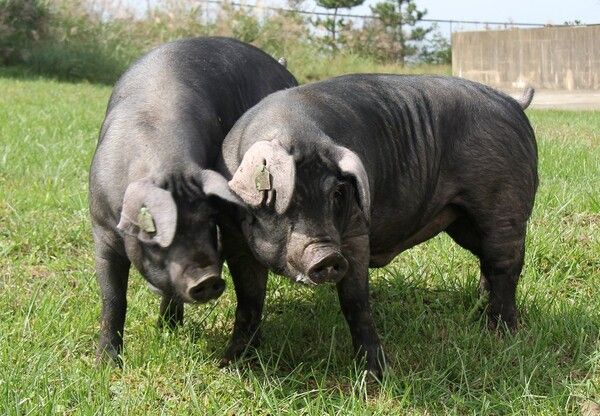
So, is it permissible to eat the natural monument Jeju Black Pig freely at restaurants? On the 2nd, Yonhap News summarized various questions regarding the Jeju Black Pig.
In Jeju, black pigs are more than just food ingredients. In the past, villagers shared black pig meat as the most precious food during weddings, funerals, major family events, and village rituals praying for the safety and good harvest of the village.
Raised in outhouses surrounded by stone walls called 'Dottongsi,' they played a role in producing farm compost and cleaning toilets, earning the nickname 'Dung Pig.' The origin of the Jeju Black Pig is unclear. However, it is estimated that small pigs from the Manchurian region entered and settled on the Korean Peninsula about 2,000 years ago.
Ancient texts, including the 3rd-century Chinese record "Records of the Three Kingdoms" (Samgukji) in the "Wei Zhi Dongyi Zhuan" section and the 18th-century late Joseon record "Seongho Saseol" by Yi Ik, contain brief descriptions of the appearance of the Jeju Black Pig.
Currently, the Jeju Livestock Promotion Institute has been managing the pure bloodline by securing five native pigs since 1986. In 2015, the Cultural Heritage Administration designated the Jeju Black Pig as a national cultural heritage natural monument. Its management number is No. 550, the English name is 'Jeju Black Pig,' and the managing organization is Jeju Special Self-Governing Province (Governor).
Then, is it allowed to eat the natural monument Jeju Black Pig? The National Heritage Agency's "Natural Monument Jeju Black Pig Management Guidelines" specify the natural monument Jeju Black Pig as "Jeju Black Pigs within the breeding facilities and pasture protection areas of the Jeju Special Self-Governing Province Livestock Promotion Institute."
Ultimately, the natural monument is limited to purebred Jeju Black Pigs raised at the Jeju Livestock Promotion Institute. Currently, 275 pigs are being raised.
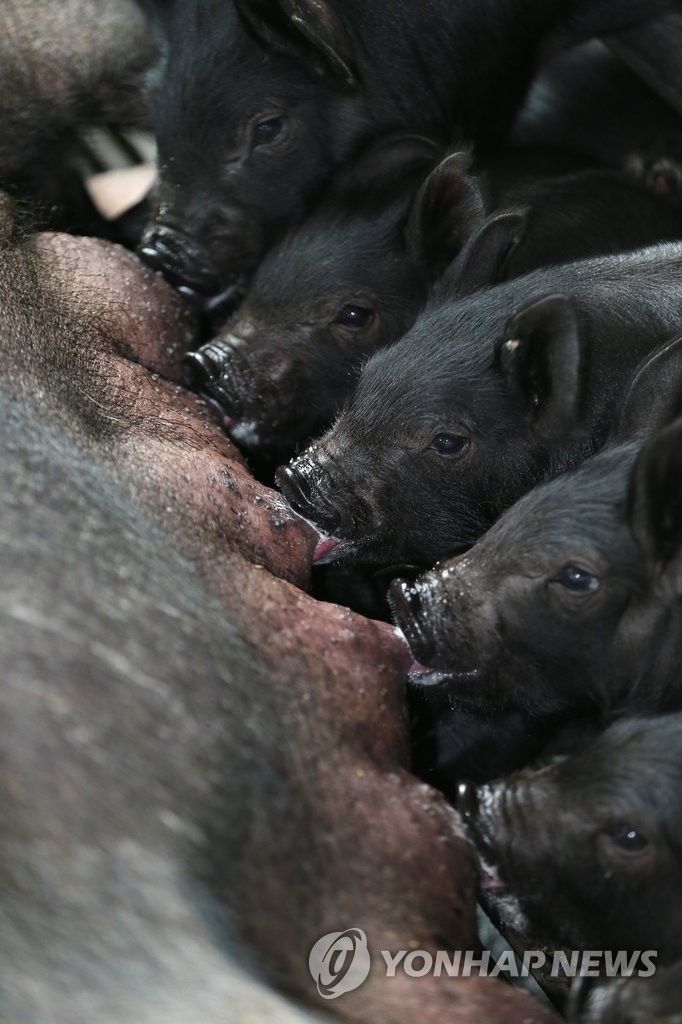
The black pigs available on the market are improved breeds produced by crossbreeding the purebred Jeju Black Pig with other breeds on farms to increase productivity. These improved breeds complement the drawbacks of the Jeju Black Pig, which has thick fat layers and low productivity, while maintaining excellent taste and quality.
The native Jeju Black Pig is highly resistant to diseases, has excellent meat quality, and tastes good, but it has the disadvantages of thick fat layers and low productivity.
Farmers raise synthetic breeding pigs crossbred between the native Jeju Black Pig, which has excellent taste and quality, and larger, superior breeds such as Hampshire, and breeds with tender and soft meat like Berkshire and Duroc. As of the end of last year, a total of 519,209 pigs are raised in 258 pig farms in Jeju, of which 155,446 are black pigs, accounting for 29.9% of the total.
Meanwhile, the Jeju Livestock Life Science Institute announced in January that it will invest a total of 6.1 billion KRW (814 million KRW national funds, 5.292 billion KRW provincial funds) this year to foster Hanwoo (Korean native cattle), Jeju horses, clean breeding pigs, and native livestock. Key investment details include 1.212 billion KRW allocated to the Hanwoo sector. This will be used for protecting and fostering Jeju Black Cattle and establishing an industrial base, expanding production and supply of fertilized eggs, improving genetic ability through breeding systems using excellent sires, enhancing Hanwoo conception rates, and pilot projects for calf management technology.
In the superior breeding pig sector, 2.79 billion KRW will be invested. Through this, the institute plans to introduce foreign original breeding pigs, select and distribute high-performance clean breeding pigs, and promote liquid semen supply projects to establish a high-quality pork production system.
© The Asia Business Daily(www.asiae.co.kr). All rights reserved.


















