"Hegemonic Mindset... Will Become an Isolated Nation"
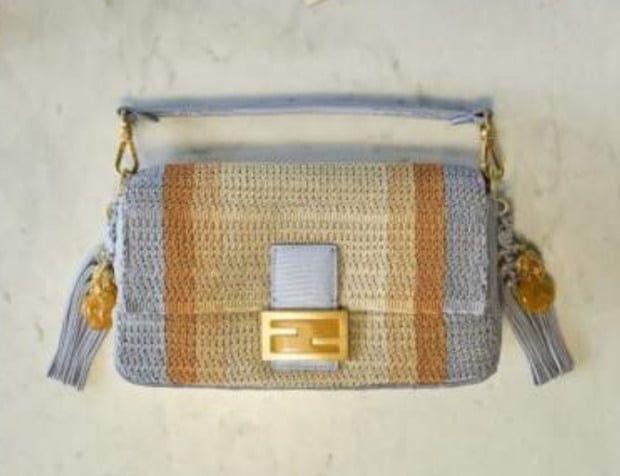
The overseas luxury brand 'Fendi' collaborated with a Korean knot artisan to release a handbag product, which some Chinese netizens have claimed as "cultural appropriation." In response, Professor Seokyung Deok of Sungshin Women's University criticized this as "nonsense."
On the 28th, Professor Seokyung Deok wrote on social media (SNS), "It is truly absurd to insist that Korean traditional knots belong to China," expressing his stance.
He criticized, "Does China have so little culture to boast about?" and called it a "distorted Sinocentrism and cultural hegemonism." He further emphasized, "We must remember that such behavior is isolating China from the world."
Fendi unveiled a handbag developed in collaboration with Kim Eun-young, a knot artisan designated as Seoul City Intangible Cultural Asset No. 13, at the end of last year. The brand is conducting a project to reinterpret the so-called 'Baguette Bag,' designed in 1997, using traditional crafts from various countries, and this handbag is part of that initiative. Artisan Kim is an honorary knot master of Seoul City Intangible Cultural Asset No. 13 and has received numerous awards, including the Traditional Craft Competition starting in 1979, the National Exhibition, the Living Human Treasures Craft Exhibition, and the Traditional Craft Exhibition.
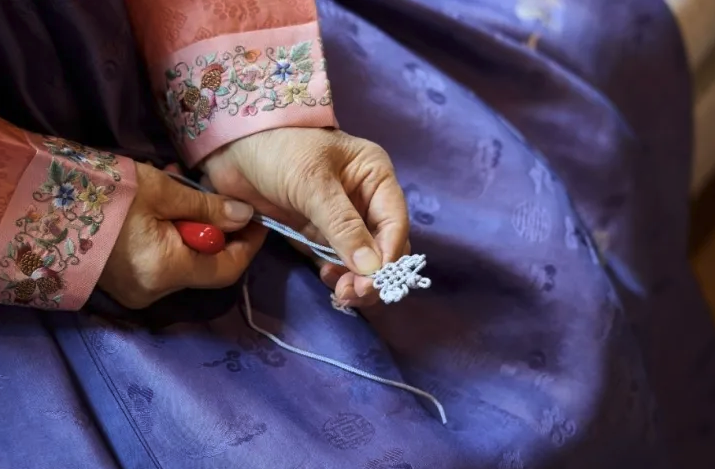
Fendi explained, "In Korea, there is a traditional craft called 'maedeup' (knotting), which has been practiced since 1965, involving tying and fixing a single long cord into various decorative knot shapes," and added, "This product was created in collaboration with local artisan Kim Eun-young."
Some Chinese netizens claimed that knotting originated as a craft in China. Chinese state-run English media such as the 'Global Times' also explained, "Chinese knots began as folk art during the Tang and Song dynasties," and "became popular decorative handicrafts during the Ming and Qing dynasties."
Amid the growing controversy, posts related to the collaboration have been removed from Fendi's official website, Instagram, and other SNS promotional pages.
© The Asia Business Daily(www.asiae.co.kr). All rights reserved.
![Clutching a Stolen Dior Bag, Saying "I Hate Being Poor but Real"... The Grotesque Con of a "Human Knockoff" [Slate]](https://cwcontent.asiae.co.kr/asiaresize/183/2026021902243444107_1771435474.jpg)

















