Records of the Impeachment Trial: ③ Sixteen Diverging Perspectives
Martial Law Commanders Disagree Over the Target of "Pull Them Out"
Cabinet Members Hold Different Views on the Cabinet Meeting
Most Spotlighted Witness: Hong Jangwon
Testifies, "Ordered to Arrest Them All"
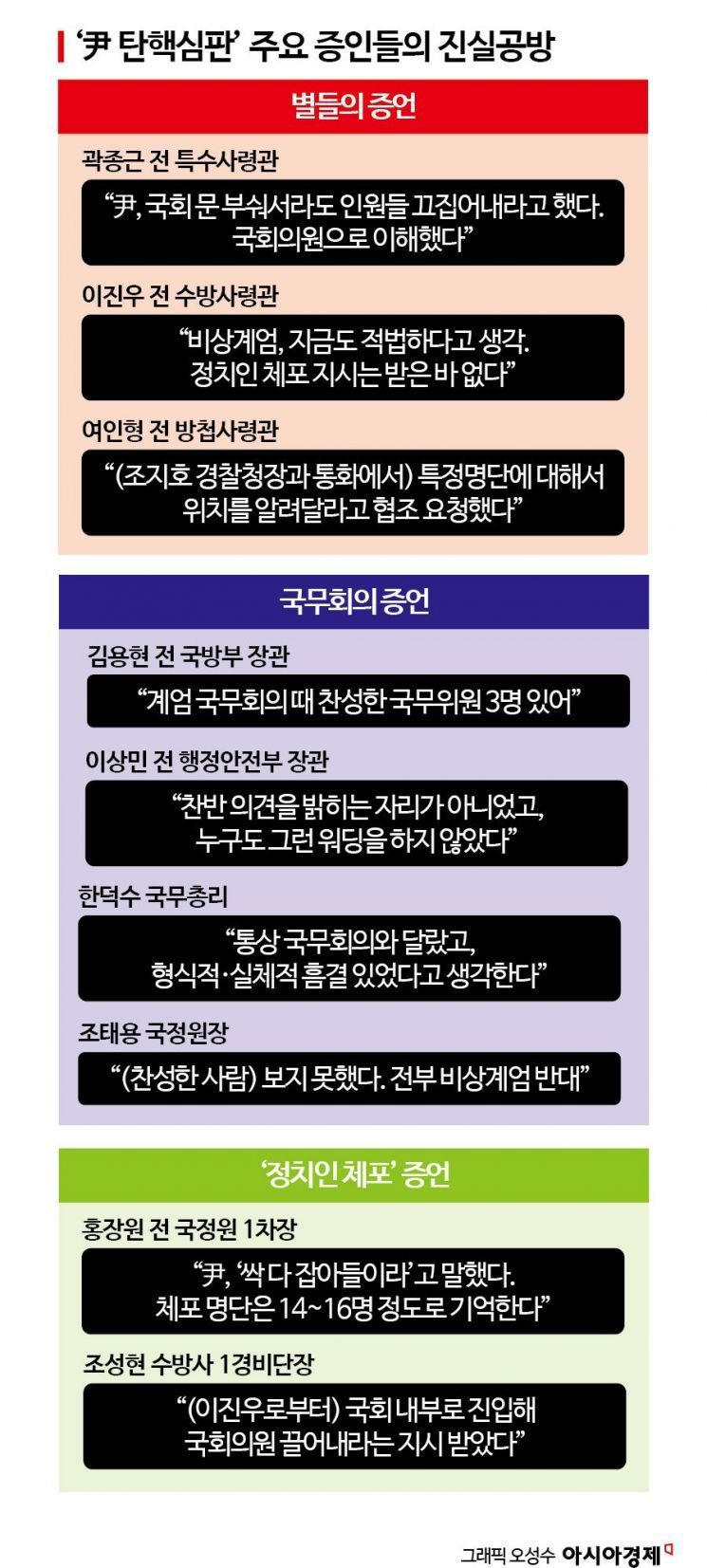
Sixteen individuals, including Cabinet members and military personnel who were at the center of the "Night of Martial Law" on December 3 last year, testified at the Constitutional Court impeachment trial of President Yoon Suk-yeol. Each witness examination session lasted about 90 minutes on average, which must have felt like sitting on pins and needles for all of them. These key figures of the Yoon administration parted ways at the crossroads of impeachment, each taking their own path.
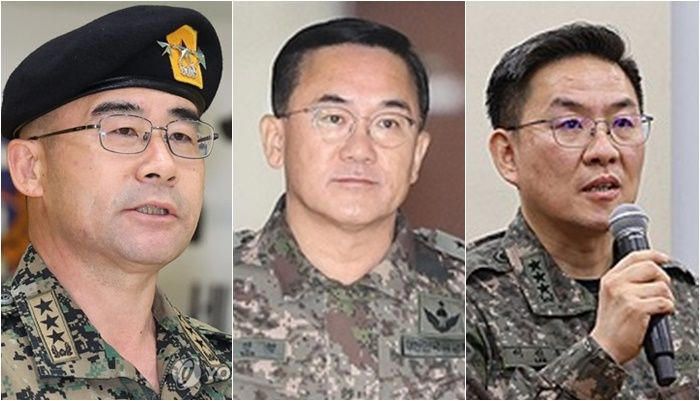
◆ Testimonies of the ‘Martial Law Scene’ Stars= The testimonies and positions of the generals who commanded the troops deployed during the martial law varied significantly. In particular, former Special Forces Commander Kwak Jong-geun took a confrontational stance against President Yoon. At the sixth hearing on the 6th, Kwak testified that the target of the order "pull them out," allegedly given by President Yoon via a burner phone, was a lawmaker trying to enter the National Assembly plenary session to vote on lifting martial law. Despite claims that his superiors, President Yoon and former Defense Minister Kim Yong-hyun, were "agents," Kwak did not retract his testimony. The order to "pull out the lawmakers" physically obstructed the National Assembly’s constitutionally guaranteed right to vote on lifting martial law, which is a core reason for impeachment. The staunch defender of President Yoon was former Defense Minister Kim Yong-hyun, who played a leading role in the martial law alongside the president. Kim stated, "The target of the president’s order to pull out was not lawmakers but agents," and "I drafted the note from Choi Sang-mok and Martial Law Proclamation No. 1." When President Yoon asked, "Do you remember me saying, ‘Let’s leave (the proclamation) as is’?" Kim replied, "I remember as you say," consistently siding with the president.
Former Defense Security Command Commander Lee Jin-woo and former Counterintelligence Command Commander Yeo In-hyung avoided answering almost all questions, citing concerns that their testimonies at the Constitutional Court could affect their criminal trials. However, Lee did provide some favorable testimony for President Yoon by denying that he ever received an order to "pull them out." This contradicted the prosecution’s indictment against Lee, whose defense lawyers have argued in the criminal trial that "the indictment is a fabricated novel."
◆ Cabinet Members at the ‘Cabinet Meeting’= The Cabinet members summoned to Yongsan on the night of martial law had differing views on the so-called ‘Cabinet meeting.’ Lee Sang-min, former Minister of the Interior and Safety, a high school junior of President Yoon and former judge, testified that during his tenure as minister, there had never been such a substantive exchange of opinions as on that day, and other Cabinet members also regarded it as a Cabinet meeting. Another member of the ‘Chungam faction,’ former Minister Kim Yong-hyun, said, "There were more Cabinet members who supported martial law." However, Prime Minister Han Duck-soo, who testified at the 10th hearing, said, "It was different from a regular Cabinet meeting and had substantive flaws." Han had previously stated to investigative agencies that "apart from people gathering, it was more like a meeting or discussion," and when Justice Kim Hyung-doo of the Constitutional Court referred to this and asked for his thoughts, Han said, "(The Cabinet meeting) did not follow proper procedures." Nevertheless, Han also criticized the opposition, saying, "We need to seriously discuss whether the 29 impeachment motions from the opposition align with the public’s expectations. Such a system is rare worldwide."
◆ The Most Spotlighted Witness: Hong Jang-won= Among the 16 witnesses, former National Intelligence Service (NIS) First Deputy Director Hong Jang-won received the most spotlight. Hong testified that he received an order from President Yoon to "arrest them all," and later revealed a ‘memo’ in the impeachment courtroom, which he said was a list dictated by former Counterintelligence Command Commander Yeo In-hyung. His superior, NIS Director Cho Tae-yong, challenged the credibility of the memo and Hong’s testimony, and Hong was the only witness to testify twice (at the 5th and 10th hearings). This underscores his significance as a witness. Outside the courtroom, in media interviews, he even accused President Yoon and Director Cho of "telling outright lies," launching an offensive against them.
There were also witnesses related to the ‘fraudulent election theory.’ Former NIS Third Deputy Director Baek Jong-wook and Kim Yong-bin, Secretary General of the National Election Commission, presented opposing views: Baek stated, "Several vulnerabilities were found that could allow external infiltration into the internal system," while Kim asserted, "Data manipulation is impossible in actual situations."
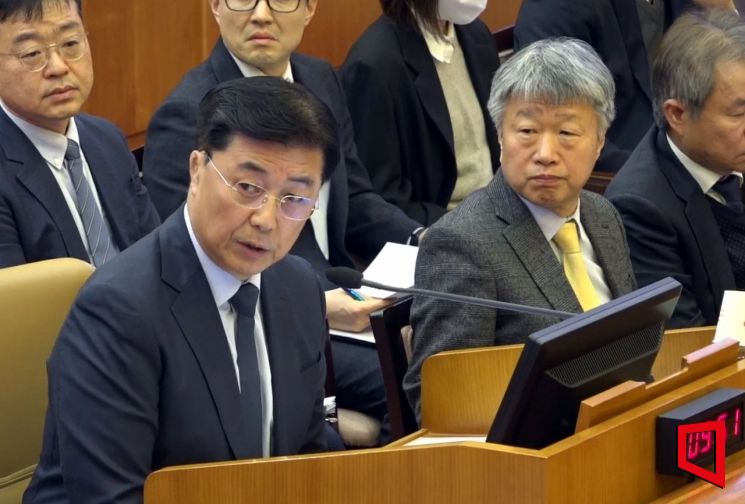 Hong Jang-won, former First Deputy Director of the National Intelligence Service, appeared as a witness and spoke at the 5th hearing of President Yoon Seok-yeol's impeachment trial held on the 4th at the Constitutional Court in Jongno-gu, Seoul. Photo by the Constitutional Court
© The Asia Business Daily(www.asiae.co.kr). All rights reserved.



















