The Korean Sport & Olympic Committee will hold a general assembly of delegates on the 28th to decide the domestic candidate city for hosting the 2036 Summer Olympics between Seoul Special City and Jeonbuk Special Self-Governing Province.
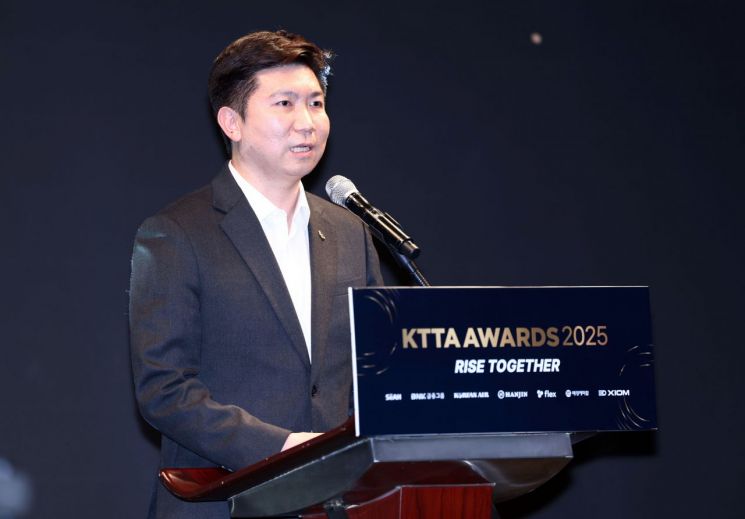
This general assembly of delegates is also the first meeting chaired by Yoo Seung-min, who was elected as the 42nd president of the Korean Sport & Olympic Committee. Yoo Seung-min officially begins his term on this day.
The general assembly of delegates will be held at 3 p.m. in the Olympia Hall on the first floor of the Seoul Olympic Parktel in Songpa-gu, Seoul. The selection of the candidate city for the 2036 Olympics will be the last agenda item.
Seoul and Jeonbuk will each give a 45-minute presentation (PT) in that order, followed by a 15-minute Q&A session. Afterward, immediately following the report of the evaluation committee’s investigation results, the delegates will conduct a secret ballot vote. During the PT, Seoul Mayor Oh Se-hoon and Jeonbuk Governor Kim Kwan-young are expected to present personally.
Seoul emphasizes its experience successfully hosting the 1988 Seoul Olympics and its comprehensive competitiveness as an international city ranked 6th, with well-established sports facilities as well as infrastructure for transportation and accommodation. Seoul highlights the advantage of being able to utilize nearly 100% of existing facilities, and the travel distance between Incheon International Airport and venues is within one hour, meeting the requirements set by the International Olympic Committee (IOC). Additionally, Seoul stresses that in a citizen survey conducted last summer, 85.2% of Seoul citizens supported hosting the Olympics.
Seoul previously attempted to host the 2032 Summer Olympics but failed. In 2019, Seoul was selected as the candidate city for the 2032 Summer Olympics, beating Busan, but the IOC chose Brisbane, Australia, as the 'preferred negotiation city' at the general assembly, preventing Seoul from achieving its goal.
Jeonbuk emphasizes realizing national balanced development through the concept of 'local city solidarity,' which has been a trend among recent Olympic host cities. If Jeonbuk hosts the Olympics, it plans to hold athletics events at Daegu Stadium and distribute other events across Gwangju (International Archery Field, Nambu University Municipal International Swimming Pool), Hongseong in Chungnam (Chungnam International Tennis Court), Cheongju in Chungbuk (Cheongju Multipurpose Indoor Gymnasium), and Goheung in Jeonnam (Namyeol Sunrise Beach). This plan aligns with the IOC’s demand for cost reduction through cooperation among neighboring cities and highlights a new model for balanced development by dispersing infrastructure and economic power concentrated in the metropolitan area.
Jeonbuk also has experience attempting to host the Winter Olympics in 2014 but failed. At that time, Jeonbuk hoped to host by promoting Muju but lost the domestic candidate city position to Pyeongchang in Gangwon Province.
In the candidate city selection vote, delegates from 37 of the 38 Olympic sports organizations each cast one vote. Each sports organization has up to two delegates, so a maximum of 74 votes will be cast. Delegates from the Korea Football Association, which were not included in the voting body due to the delayed presidential election, will not have voting rights.
© The Asia Business Daily(www.asiae.co.kr). All rights reserved.
![Clutching a Stolen Dior Bag, Saying "I Hate Being Poor but Real"... The Grotesque Con of a "Human Knockoff" [Slate]](https://cwcontent.asiae.co.kr/asiaresize/183/2026021902243444107_1771435474.jpg)
















