Due to Economic Downturn, More Small Business Owners Unable to Pay Pension
More People Choose to 'Delay and Receive More'
Jeong (37), who runs a solo pho delivery shop in Seoul, is not paying National Pension insurance premiums. Due to a sharp drop in sales, he was unable to pay premiums for three months and applied for a payment exemption at the end of last year. Payment exemption holders maintain their subscriber status but temporarily postpone payments when they cannot pay premiums due to financial difficulties.
Jeong said, "Business is not going well, but the payment amount remained the same, so I hurriedly filed an objection and reduced the payment from about 300,000 won to 180,000 won," adding, "Even this is a burden, so I am currently holding on with the payment exemption, but I feel hopeless about how long I have to live like this."
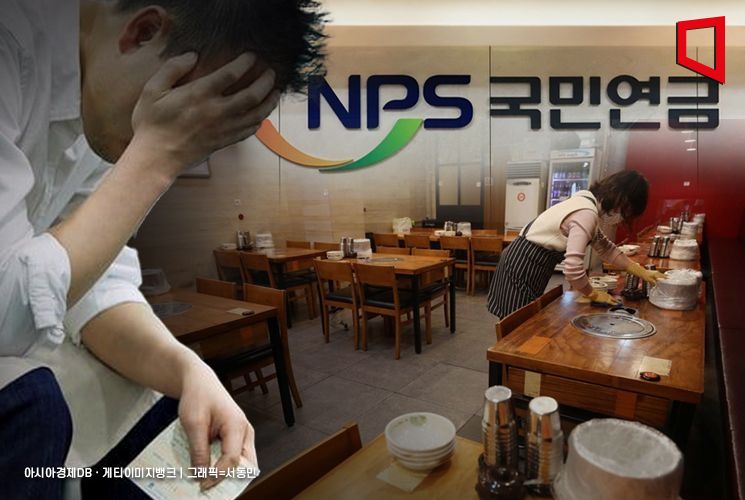
As the number of defaulters and payment exemption holders who fail to pay the National Pension on time increases, the actual number of payers has decreased. On the other hand, those who are financially comfortable and delay their pension receipt have increased, resulting in polarization among National Pension subscribers.
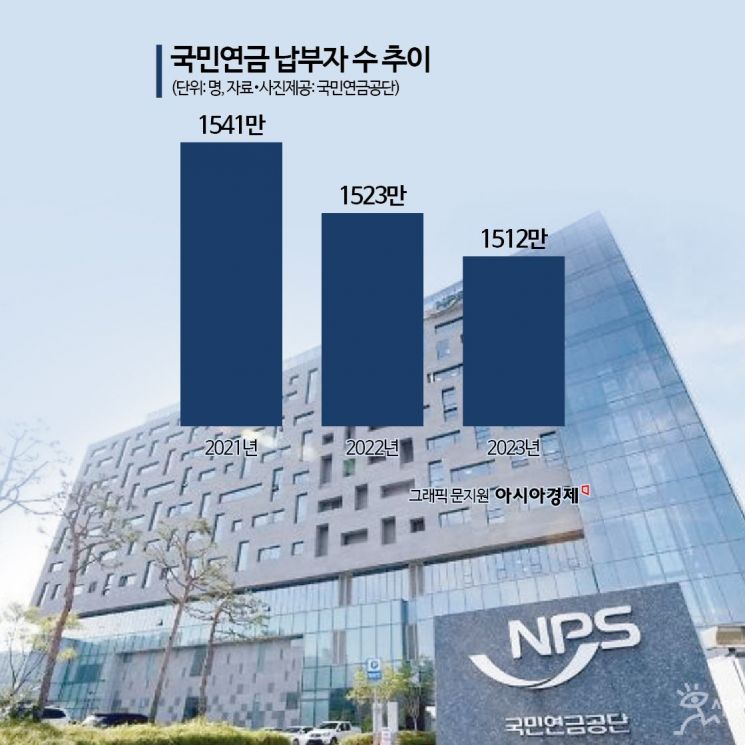
According to the National Pension Service on the 28th, the number of National Pension payers was about 15.41 million in 2021, 15.23 million in 2022, and 15.12 million in 2023, showing a decreasing trend each year. As of October last year, there were 21.82 million pension subscribers, most of whom were workplace subscribers (14.73 million, 67.5%) and regional subscribers (6.28 million, 28.8%). Workplace subscribers include business owners and employees, while regional subscribers include small business owners operating solo businesses. In addition, there are voluntary subscribers who do not belong to a workplace and voluntary continuous subscribers who pay pension premiums until age 65.
The reason for the decrease in the number of National Pension payers is analyzed to be that some regional subscribers fail to pay their pensions on time. This is because many are small self-employed business owners. Yoon Seok-myeong, honorary research fellow at the Korea Institute for Health and Social Affairs, said, "Unlike workplace subscribers, regional subscribers, who can be considered small business owners, have likely experienced many crises such as business closures, leading to a decrease in the number of payers."
In fact, solo self-employed individuals often have low income but have to pay higher pension premiums than office workers. The National Pension premium rate is 9%, but while office workers pay 4.5% themselves and the company covers the other 4.5%, regional subscribers must pay the full 9% themselves. Jeong said, "Recently, I barely earn 2 million won a month," adding, "But the payment amount is nearly twice that of office workers earning the same amount."
On the other hand, those who are financially comfortable are deliberately delaying their pension receipt. They take advantage of the fact that if they postpone payment for up to five years, they can receive up to 136% of the initially agreed pension amount. According to data received by Choi Bo-yoon, a member of the People Power Party, from the National Pension Service in October last year, the number of pension recipients who delayed receipt increased from 14,334 in 2020 to 17,902 in 2021, 23,093 in 2022, and then decreased to 16,366 in 2023.
However, the decrease in 2023 is analyzed to be influenced by the 'increase in pension starting age' that occurs once every five years. For sustainability, the National Pension has different payment start times by age: those born in 1960 start receiving at age 62 (in 2022), but those born between 1961 and 1964 start at age 63 from 2024. As a result, the number of pension recipients itself decreased, which seems to have reduced the number of delayed recipients. In fact, just in the first half of last year, the number of subscribers who delayed pension receipt was 10,434, more than half of the previous year.
Financially comfortable individuals delay pension receipt, while regional subscribers, many of whom are small self-employed business owners, struggle even to pay their pensions, creating polarization. Ryu Pil-seon, a specialist at the Korea Federation of Small and Medium Business, said, "Regional subscribers feel a great burden because they pay more pension premiums than wage earners despite having lower sales," adding, "Since there are practically no support measures for regional subscribers and the economic downturn continues, I hope the government will come up with countermeasures."
© The Asia Business Daily(www.asiae.co.kr). All rights reserved.