From 1,000 Yen to 3,000~5,000 Yen Proposed
"To Be Used for Overtourism Countermeasures"
Foreign media reported that the Japanese government is considering raising the "International Tourist Passenger Tax," collected under the name of an exit tax, from the current 1,000 yen (about 9,660 won) to 3,000?5,000 yen (about 29,000?48,000 won).
On the 27th, the Yomiuri Shimbun reported that the ruling Liberal Democratic Party has begun gathering opinions to decide on the extent of the tax increase and the expansion of its usage. The plan to raise the tax to around 3,000?5,000 yen is gaining attention, referencing cases like Australia and Egypt, which collect higher exit taxes than Japan.
Previously, Japan introduced the International Tourist Passenger Tax in January 2019, collecting an exit tax of 1,000 yen per person from passengers boarding aircraft or cruise ships departing from Japan to foreign countries. Both foreign tourists visiting Japan and Japanese nationals leaving the country are required to pay this tax.
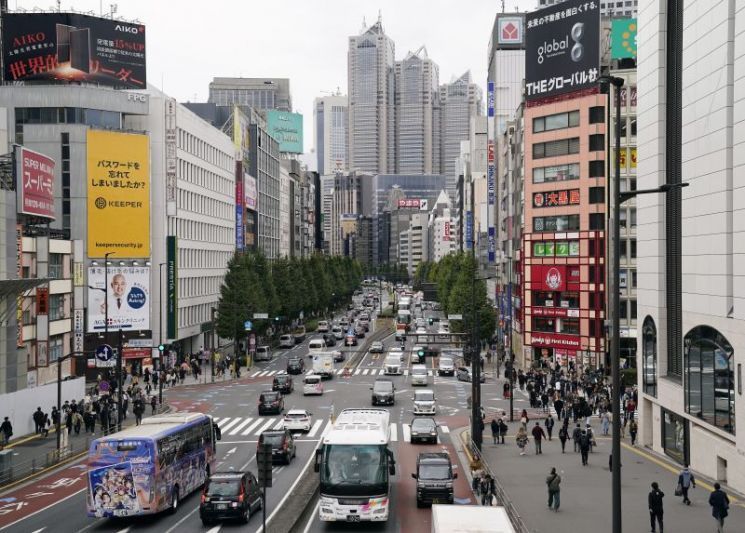
The background for the Japanese government and ruling party's intention to raise the International Tourist Passenger Tax is the issue of overtourism, which has emerged due to the rapid increase in foreign tourists. Last year, the number of foreign visitors to Japan reached a record high of 36.87 million. In January of this year alone, a record monthly high of 3.78 million foreign visitors was recorded.
Accordingly, tax revenue related to the exit tax is also increasing. For the 2023 fiscal year (April 2023 to March 2024), exit tax revenue reached 39.9 billion yen (about 385.4 billion won), approximately tripling compared to the previous year. It is expected to reach 49 billion yen (about 473.3 billion won) in the 2025 fiscal year.
Currently, the use of the International Tourist Passenger Tax is limited to promoting activities to attract foreign tourists and improving resort areas, aimed at fostering the tourism industry. Taking this tax increase as an opportunity, the Japanese government and ruling party are considering expanding its use to include improvements in transportation systems at tourist sites and airport facility maintenance.
In Japan, with the end of the COVID-19 pandemic and the increase in foreign tourists, the number of local governments introducing or planning to introduce accommodation taxes levied on hotel and inn guests is rapidly increasing. As of 2023, only nine local governments in Japan imposed accommodation taxes, but this year, a total of 25 local assemblies have decided to introduce accommodation taxes.
Some local governments have also announced plans to raise the accommodation taxes they have been collecting. Kyoto City, considered one of Japan's representative tourist cities, announced plans to significantly increase its current accommodation tax, which ranges from 200 to 1,000 yen (about 1,800 to 9,400 won), up to 10,000 yen (92,000 won), a tenfold increase.
© The Asia Business Daily(www.asiae.co.kr). All rights reserved.

















