Crackdown on False Origin Labeling of Agricultural and Livestock Products on Major Online Platforms
Inspections Target Baedal Minjok, Yogiyo, Coupang Eats, and TV Home Shopping Channels
Preliminary Cyber Monitoring to Be Conducted Before On-Site Inspections
Violators Face Up to 7 Years in Prison or Fines up to 100 Million KRW
The National Agricultural Products Quality Management Service will conduct a focused crackdown on the origin labeling of agricultural and livestock products on online platforms such as Baedal Minjok and Coupang.
On the 28th, the agency announced that it will carry out inspections from the 4th to the 14th of next month to strengthen the management of origin labeling for mail-order sales, which are widely used by consumers.
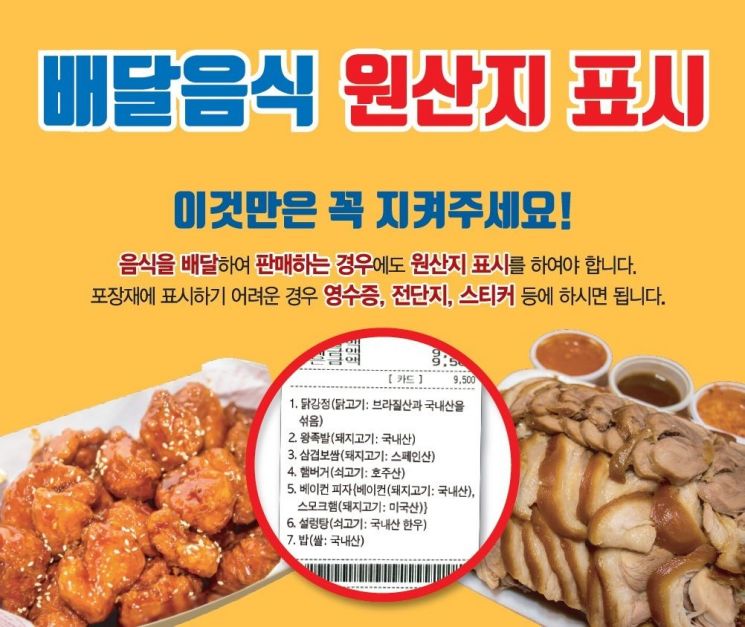
The targets of this crackdown include food delivery apps such as Baedal Minjok, Yogiyo, and Coupang Eats, as well as online platforms, shopping malls, and TV home shopping channels like Naver, Coupang, Gmarket, and 11st. They will focus on false or missing origin labeling of agricultural and livestock products, processed foods, and delivery meals.
The main inspection points are ▲using foreign ingredients while labeling menu items on delivery apps as domestic products ▲displaying "domestic" uniformly at the top where consumers can easily see, but indicating foreign origin in detailed information below ▲marking "separately indicated" at the top but not showing the origin below ▲falsely labeling products as famous regional specialties or domestic products, among others.
Prior to this crackdown, a cyber inspection team of 400 members, including honorary monitors from consumer organizations and cyber monitoring personnel from the agency, will conduct a preliminary check of online origin labeling from the 24th to the 28th of this month.
In particular, the cyber inspection team will directly order agricultural and livestock products suspected of questionable origin and verify them in advance using scientific analysis methods such as beef and pork origin identification kits or near-infrared spectroscopy (NIRS), before the on-site inspection team conducts field inspections.
Companies found violating the origin labeling law by false labeling face criminal penalties of up to 7 years imprisonment or fines up to 100 million KRW. For missing labels or violations of labeling methods, fines of up to 10 million KRW will be imposed.
Park Soon-yeon, head of the National Agricultural Products Quality Management Service, said, "Systematic management of mail-order sales has reduced violations by 11.6% last year," and added, "We will strengthen the management of origin labeling for mail-order sales this year as well to guarantee consumers' right to know, following last year."
© The Asia Business Daily(www.asiae.co.kr). All rights reserved.

















