Audit Board Releases Results Before Constitutional Court Ruling
"We Will Establish the Scope and Targets of Election Commission Audits"
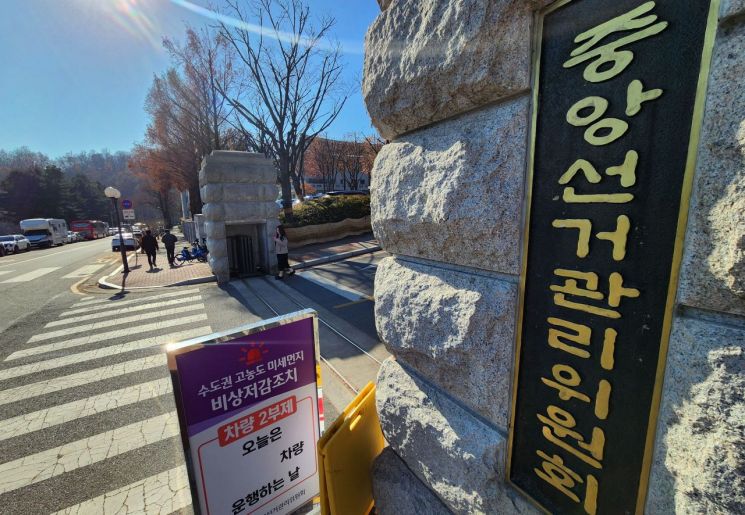
As the Board of Audit and Inspection (BAI) announced the audit results concerning family and relative recruitment requests at the Seoul Election Commission and six other city and provincial election commissions, the Constitutional Court ruled that election commissions are not subject to the BAI's duty inspection. In response, the BAI stated, "Although it is difficult to accept in reality, we respect the Constitutional Court's decision."
On the 27th, the Constitutional Court unanimously decided with all eight justices that "the duty inspection conducted by the BAI on the election commissions infringed upon the election commissions' constitutionally granted authority to perform their duties independently." The court added, "Allowing the BAI, which is under the President, to conduct duty inspections on the election commissions contradicts the constitutional amendment makers' intent to institutionally block the executive branch's influence, including the President's, over election management."
The election commissions are independent constitutional bodies, so the BAI, an executive branch agency, inspecting them is a violation of the Constitution. In other words, the BAI has no inspection authority over the election commissions, making such audits unconstitutional and their results null and void. This is similar to how investigation results from an agency without investigative authority are invalid, leading to dismissal of prosecution.
Meanwhile, just before the Constitutional Court's ruling, the BAI disclosed the audit results on "Personnel Management Practices including Recruitment at the Election Commissions," revealing that personnel officers at the election commissions used various illegal and irregular methods to pass candidates or provide preferential treatment and exclusion to specific individuals. The audit uncovered preferential recruitment through multiple violations such as family and relative recruitment requests, manipulation of interview scores, and falsification of personnel documents, demanding severe disciplinary actions against a total of 32 individuals.
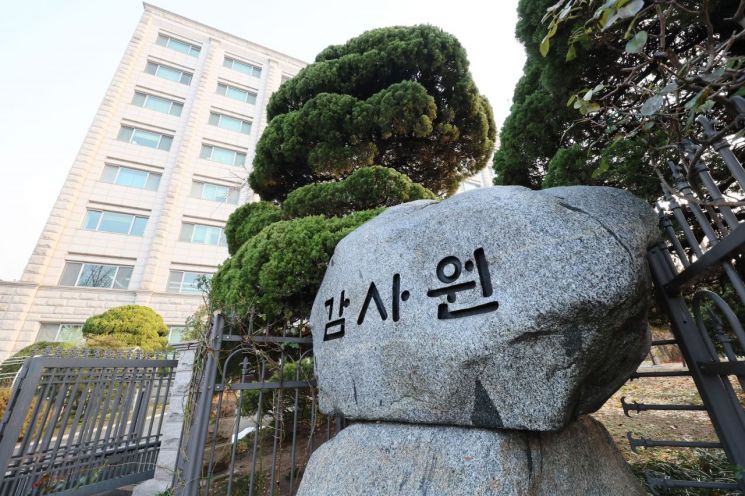
According to the BAI, preferential recruitment at the election commissions mainly occurred in career competitive recruitment. A comprehensive review of 167 career recruitments since 2013 found a total of 662 violations of regulations. The Central Election Commission also had 216 confirmed cases of violations of rules and procedures in 124 career recruitments conducted from 2013 to 2023.
Key officials at the election commissions were investigated for requesting recruitment of their children at regional election commissions. Some admitted to approving the transfer of their children who passed career recruitment without notifying the Central Election Commission, only confessing after reports of preferential recruitment allegations surfaced.
In a statement released that afternoon, the BAI said, "Although it is difficult to accept in light of the legislative intent and history of the BAI Act, the BAI's audit practices regarding the election commissions, and the reality of the election commissions, we respect the Constitutional Court's decision." It added, "We will carefully review the content and intent of the Constitutional Court's ruling and establish the scope and targets of future audits of the election commissions."
© The Asia Business Daily(www.asiae.co.kr). All rights reserved.