Trump Reverses Biden's Decision
Delayed Deportation of Illegal Immigrants
Concerns Over Closer Ties with China and Russia
U.S. President Donald Trump has reversed the previous Joe Biden administration's decision to allow the United States to produce oil in Venezuela. As the U.S. withdraws from Venezuela's oil industry, there are speculations that Venezuela may strengthen its close ties with China and Russia and reinforce its anti-American stance.
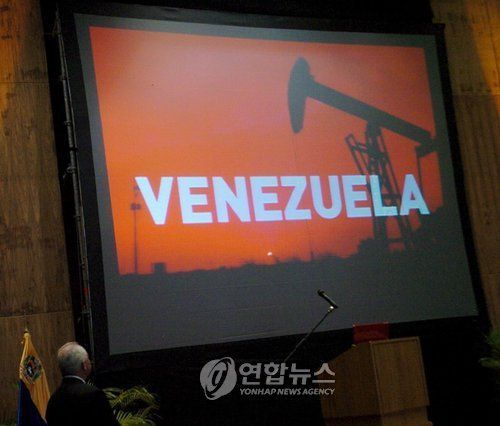
On the 26th (local time), President Trump wrote on his social media platform Truth Social, "I will revoke the November 26, 2022, oil transaction concession granted by Biden to Nicol?s Maduro of Venezuela," adding, "The related agreement will terminate as of March 1."
The Biden administration had, in November 2022, authorized Chevron to produce and sell oil in Venezuela, easing some of the sanctions broadly imposed on Venezuela's oil and gas sector during Trump's first term.
The remarks on Venezuela sanctions came less than a month after Richard Grenell, the U.S. special envoy for North Korea and Venezuela, met with Venezuelan President Maduro to sign an 'immigrant return' agreement. Due to economic contraction and political repression, nearly 8 million Venezuelans had fled the country, and Maduro had refused to accept deportees. However, breaking this tacit framework, an agreement was reached with the U.S. to accept all Venezuelan nationals who had been illegally immigrating since the 2nd of this month. This move was interpreted as aligning with President Trump's stance, who has shown an allergic reaction to illegal immigration.
However, the failure to promptly deport criminals residing illegally in the U.S. upset President Trump. He wrote, "This administration is not swiftly returning brutal criminals to Venezuela as promised."
Election manipulation by President Maduro was also a reason for the Trump administration to impose oil sanctions. Trump stated that the termination of the oil agreement "is also related to Maduro regime's election manipulation within Venezuela." Earlier, after the July presidential election last year, Maduro unilaterally declared a third-term victory, but the opposition revealed evidence that the Maduro regime rigged the election results and that the opposition candidate had actually won.
The U.S.'s tough stance against the Maduro regime was somewhat anticipated. President Trump assembled a cabinet with officials who took a hard line against Maduro, including U.S. Secretary of State Marco Rubio.
Experts predict that Chevron's loss of its license will deal a blow to Venezuela's oil industry. The Financial Times forecasted that Venezuela's GDP growth rate this year could drop from 3.2% to 2% due to Chevron's withdrawal. Delcy Rodr?guez, Venezuela's Vice President and concurrently Minister of Oil, claimed, "The U.S. has made a harmful and inexplicable decision," adding, "It is actually harming the U.S., the American people, and American companies."
As the U.S. withdraws from Venezuela's oil industry, there is a possibility that the Maduro regime will build closer relations with Russia and China. Despite facing successive economic sanctions from Western countries, Maduro has persistently endured with the support of Russia and China. Although there seemed to be a shift toward a pro-American diplomatic line with the easing of U.S. sanctions and Trump's return to the White House, Trump's sudden decision could revive anti-American sentiment.
Mike Wirth, CEO of Chevron, also said in an interview with the FT last month, "In Venezuela's case, as Western countries withdraw, Chinese and Russian companies have strengthened their positions."
© The Asia Business Daily(www.asiae.co.kr). All rights reserved.

















