As Land Purchases by Chinese Nationals Increase
Foreign Land Transactions Restricted in 17 Island Areas
First Designation in 10 Years Since 8 Uninhabited Islands in 2014
Local Government Approval Required Before Signing Contracts
Contracts Without Approval Are Invalid and Subject to Penalties
Ministry of Land, Infrastructure and Transport: "Strengthening Territorial Sovereignty and National Security"
As the domestic land ownership by Chinese nationals increases, raising concerns about potential distortions in the real estate market, foreign land transactions will be restricted in 12 island areas located along the baseline of territorial waters, including Baengnyeongdo, Daecheongdo, Socheongdo, Yeonpyeongdo, the five islands in the West Sea, and the outermost edges of the national territory.
On the 26th, the Ministry of Land, Infrastructure and Transport announced that 12 points along the baseline of territorial waters (the baseline connecting the outermost points of the national territory in a straight line) and the five islands in the West Sea will be designated as foreign land transaction permit zones.
The 12 baseline points of territorial waters include Hongdo in Tongyeong, Gyeongnam (0.1㎢), Habaekdo and Geomundo in Yeosu, Jeonnam (4.6㎢), Yeoseodo in Wando (4.1㎢), Hongdo and Goseo in Sinan (6.6㎢), and Sasudo in Jeju (6.1㎢). In these 12 baseline locations, foreign land transaction permit zones were designated at the smallest administrative unit, the ri level, while the entire islands of the five West Sea islands were designated considering their importance and special nature for national defense.
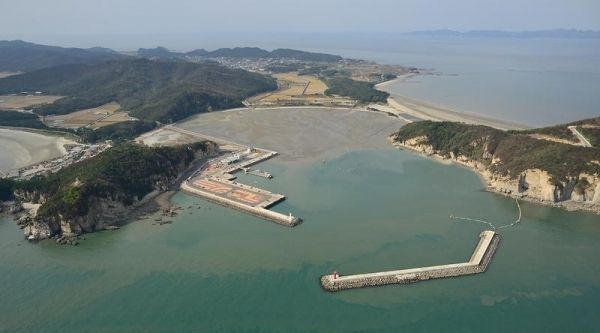
It has been 10 years and 2 months since the last time islands on the outer edges of the national territory were designated as land transaction permit zones, which was in December 2014. At that time, controversy arose when a Chinese investor attempted to purchase Seogeokryeolbido, an uninhabited island in Taean, Chungnam, for over 2 billion won. In response, the government designated eight uninhabited islands at the baseline of territorial waters as foreign land transaction permit zones in October of that year.
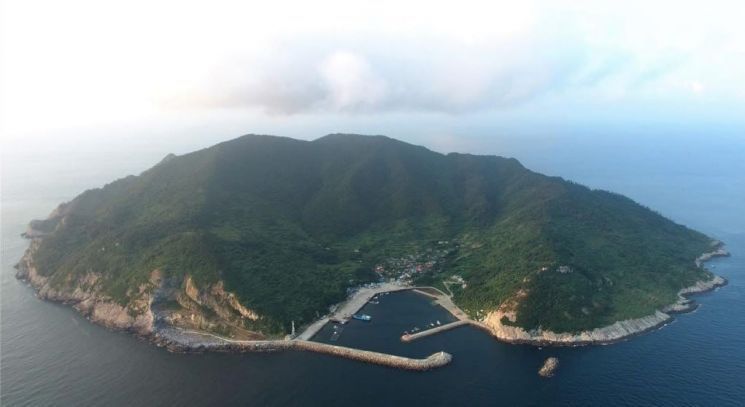
In October 2023, the Ministry of Land, Infrastructure and Transport strengthened the foreign land transaction permit system and granted the Ministry of National Defense and the National Intelligence Service the authority to request the designation of foreign land transaction permit zones for national defense purposes. Based on this, the National Intelligence Service collected opinions from security-related ministries and requested the designation of permit zones for 17 island areas, which was finalized after review by the Central Urban Planning Committee of the Ministry of Land, Infrastructure and Transport.
Going forward, foreigners intending to acquire land in the permit zones must obtain approval from the city, county, or district office before signing a contract. The local government will decide on the approval after consulting with the Ministry of National Defense and the National Intelligence Service. If a foreigner signs a land acquisition contract in a land transaction permit zone without approval, the contract will be invalid, and penalties of up to two years imprisonment or a fine of up to 20 million won will be imposed. The Ministry of Land, Infrastructure and Transport stated, "This will enable effective management of areas necessary for national defense purposes, strengthen territorial sovereignty, and greatly contribute to national security."
Meanwhile, as the number of Chinese investors in Jeju Island has recently increased, there have been repeated criticisms that "Jeju Island is turning into an island of Chinese nationals." In response, Jeju authorities rebutted last June, stating, "Of Jeju's total area of 1,850㎢, land owned by foreigners with Chinese nationality accounts for only 0.5%," and added, "The claim that it has become a 'Chinese island' is an exaggerated expression."
© The Asia Business Daily(www.asiae.co.kr). All rights reserved.


















