Mandatory Disclosure of Medical Costs for Hospitals and Insurers
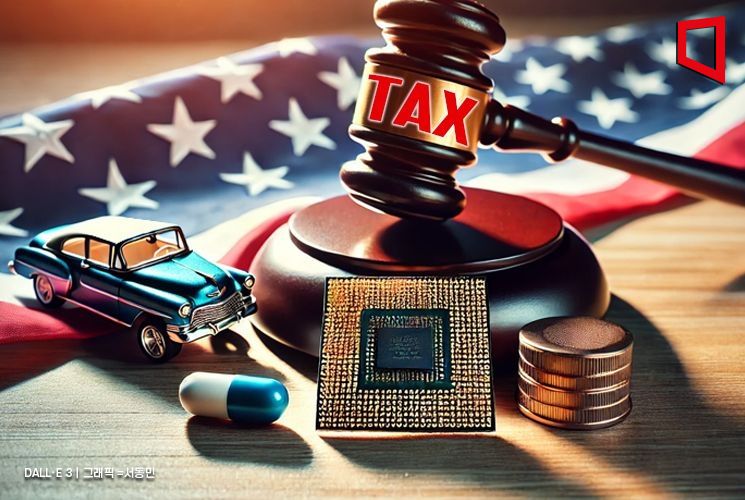
U.S. President Donald Trump identified 'transparency' as the core of the new administration's healthcare policy. The plan is to transparently disclose and allow comparison of prices for pharmaceuticals and medical services, which is seen as supporting the pre-election stance of 'drug price reduction.' This is expected to benefit Korean companies equipped with cost-effective pharmaceuticals such as biosimilars (biologic drug generics) and biobetters (improved new drugs) compared to original biologics.
On the 25th (local time), President Trump signed the 'Executive Order 3 on Improving Healthcare Cost Transparency.' According to this executive order, hospitals and insurers must disclose actual prices of pharmaceuticals and medical services within 90 days, not just estimates. Relevant departments plan to take measures to enable price comparisons between hospitals and insurers for prescription drugs and other services. The U.S. Treasury Secretary, Labor Secretary, and Health and Human Services Secretary are expected to promptly implement and enforce specific regulations on healthcare price transparency.
The U.S. healthcare system is primarily led by private entities such as insurers, hospitals, and pharmaceutical companies, which is a background factor for the 'exorbitantly high' medical costs. Particularly in the pharmaceutical sector, drug prices are high due to long patent protection periods for new drugs and the government's lack of price control. According to the RAND Corporation, a U.S. think tank, the price of prescription drugs in the U.S. is 2.56 times higher than the average of 32 OECD (Organization for Economic Cooperation and Development) countries.
This executive order by the Trump administration is interpreted as a strategy to promote competition through information disclosure and to guarantee consumers' right to choose. President Trump said, "Our goal is to provide patients with the necessary knowledge about the actual prices of healthcare services," adding, "(Healthcare consumers) can verify and compare healthcare costs to receive the highest quality medical services at the lowest cost." He also stated, "Meeting the best doctors at the lowest cost is a good thing."
There is thus a high potential for pharmaceuticals such as biosimilars, which are widely produced by domestic companies, to gain attention. Biosimilars are generally about 30% cheaper than the original products. Until now, the structure where sales increased only if listed as a priority on insurers' prescription drug lists imposed a heavy burden, including rebates. This executive order is expected to somewhat alleviate such a structure. A representative from the bio industry said, "While the scope of information disclosure needs to be confirmed once detailed, the fact that consumers' choice range can expand is positive."
President Trump has consistently maintained a policy stance on drug price reduction. His 'Agenda 47,' which served as his election manifesto, includes ▲strengthening domestic production of essential medicines ▲emphasizing biosecurity (promotion of the Biodefense Act) ▲promoting the use of generics and biosimilars to reduce drug prices. During his first term, President Trump attempted to control drug prices through somewhat coercive executive orders (MFN regulations), but these efforts failed after conflicts with the U.S. Pharmaceutical and Biotech Association and pharmaceutical companies.
Kim Hyuk-jung, a senior researcher of the North America and Europe team at the Korea Institute for International Economic Policy, said, "The demand for biosimilars and generic drugs will strengthen, positively affecting these sectors," adding, "Our government and companies should also establish lobbying and cooperation channels with the U.S. government and Congress to create a favorable policy environment."
© The Asia Business Daily(www.asiae.co.kr). All rights reserved.

















