"Subsidy Distribution Deemed Lawful," First Trial Verdict Overturned
"Although There Was No Association Approval, No Serious Illegality"
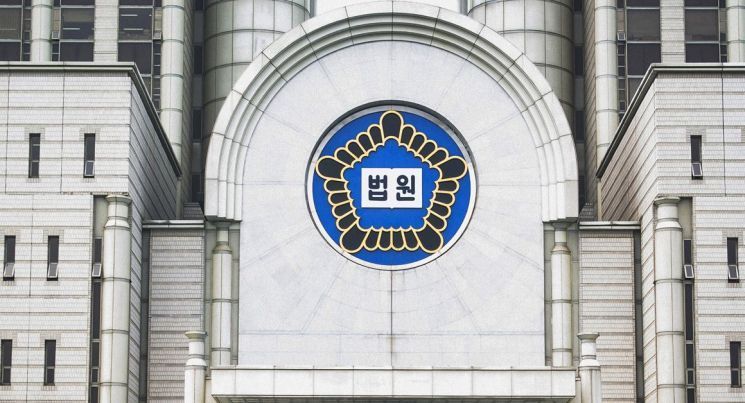
A court has ruled that Gwangju City's action to recover subsidies that were arbitrarily distributed by corporate taxi companies was unjust. The court overturned the first trial verdict and sided with the taxi association, determining that the association's method of distributing subsidies was in line with the purpose of the project.
On the 26th, the Administrative Division 1 of the Gwangju High Court (Presiding Judge Yang Younghee) announced that it had overturned the original verdict and ruled in favor of the plaintiff in the appeal filed by the Gwangju Taxi Transportation Business Association against Gwangju City for the 'cancellation of the subsidy recovery disposition.'
The taxi association filed this lawsuit in opposition to the city's decision to recover a total of 366 million won in subsidies from 50 corporations, out of the subsidies paid to 1,501 corporate taxis from the second half of 2016 to the first half of 2019, during the second phase of Gwangju City's taxi modernization project.
Gwangju City provided differentiated support to companies for vehicle replacement costs, ranging from as little as 2 million won to as much as 4 million won per vehicle, based on the semi-annual service evaluation results of corporate taxis. The taxi association, concerned that companies with concentrated vehicle replacements during certain periods would not receive support, arbitrarily distributed a portion of the subsidies. The association claimed that prior consultation had taken place with the city officials before the distribution of subsidies, but did not send any related official documents.
In response, the Gwangju City Audit Committee requested the city to recover the subsidies, stating that the association distributed the subsidies without approval from the city, resulting in cases of excess payment.
The first trial court stated, "There is insufficient evidence to recognize that it was promised that subsidies could be distributed without following the standards, and Gwangju City's semi-annual differentiated support plan cannot be seen as violating the principle of equality, as it is distributed according to the number of licensed vehicles per company."
However, the appellate court ruled, "Gwangju City implemented this project to compensate for losses in the taxi industry and intended for all corporate taxis in the area to receive subsidies," and "the association's act of distributing subsidies in excess of the standards to each company also stemmed from the intention to achieve the ultimate goal of this project," thereby overturning the first trial verdict.
The court further stated, "Although the association did not obtain approval from Gwangju City, the illegality cannot be considered serious," and "considering the use of the subsidies and the degree of illegality, the infringement of the association's private interests due to the recovery disposition appears to be significant."
© The Asia Business Daily(www.asiae.co.kr). All rights reserved.

















