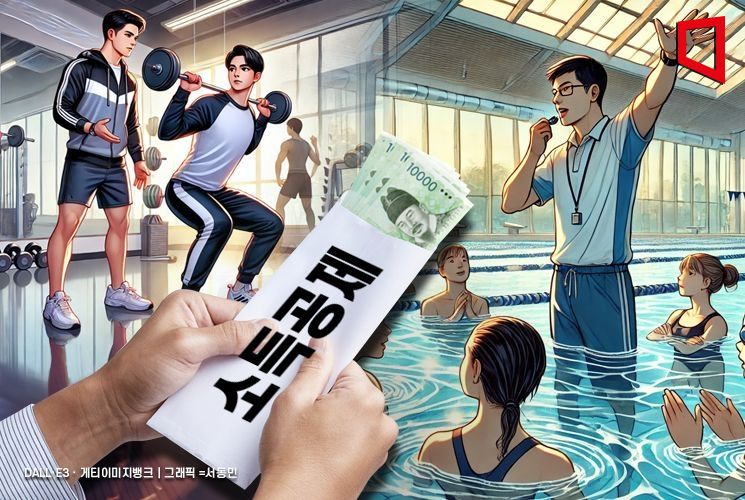
From now on, 50% of the costs for swimming pool lessons or personal training (PT) at fitness centers will be eligible for income tax deductions. The scope of tax credits for acquiring overseas subsidiaries in the materials, parts, and equipment (SoBuJang) sector will also be expanded.
On the 26th, the Ministry of Economy and Finance announced the details of the '2024 Tax Reform Follow-up Enforcement Rules.'
When announcing the amendment to the enforcement decree, the government specifically disclosed the criteria for applying income tax deductions to fees for using swimming pools and fitness centers (health clubs). The amendment planned to exclude costs other than facility usage fees from deductions and to consider only a certain percentage of the total expenditure as deductible expenses.
This enforcement rule set the standard at 50% of the total amount. If it is difficult to distinguish between facility usage fees and other amounts, 50% of the total cost will be deducted from income tax. For example, if PT fees include the cost of using the fitness center facilities, or if a swimming lesson fee includes a usage pass, 50% of the total amount will be eligible for income tax deduction.
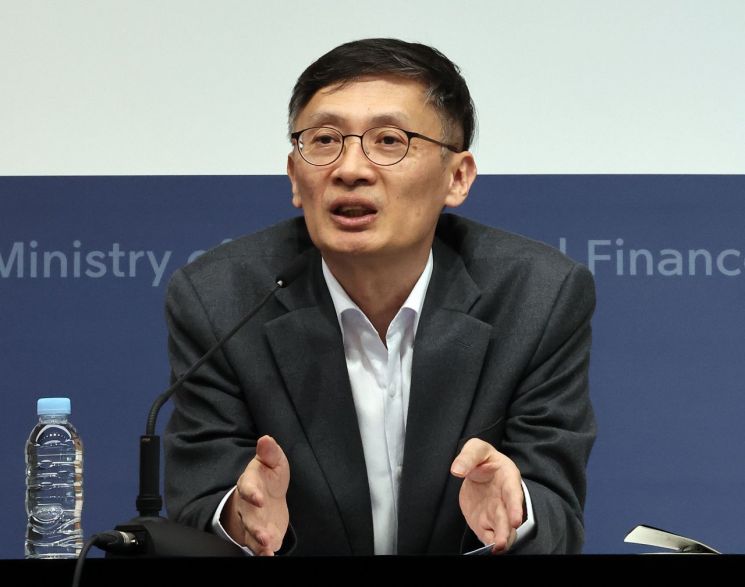 Park Geum-cheol, Director General of Tax Policy at the Ministry of Economy and Finance, is explaining the amendment to the enforcement rules following the 2024 tax law revision at the briefing room of the Ministry of Economy and Finance, Government Complex Sejong on the 25th. Photo by Yonhap News
The scope of tax credits provided when acquiring foreign subsidiaries in the SoBuJang sector will also increase. Currently, when acquiring a foreign subsidiary producing core strategic technology items, a tax credit of 5 to 10% of the acquisition amount is applied. In the future, the same tax benefits will be granted when acquiring foreign subsidiaries producing economic security items under the Supply Chain Stabilization Act.
Also, the exclusion period for the heavy taxation of capital gains tax on non-business land when demolishing or removing buildings will be extended from 2 years to 5 years. Under current law, if the land is sold within 2 years after demolition or removal of a building, the additional capital gains tax rate on land (10 percentage points) is exempted. In areas where land sales are not active, there have been many side effects of delaying building demolition and leaving vacant houses to avoid the application of the heavy tax rate.
The useful life of machinery and equipment for research and development will be shortened from 5 years to 3 years. Useful life refers to the economic usage period of non-consumable goods during which the function of the item can be maintained with minimal repair costs.
The Korea Food Safety Information Service will be added to the list of institutions eligible for customs duty exemptions on academic research supplies under the Customs Act, and transport carts imported together with display manufacturing equipment will also be added to the list of items exempt from re-export duties.
© The Asia Business Daily(www.asiae.co.kr). All rights reserved.


















