Third Chinese Spy Arrest This Year
Investigation Launched After Suspicious Vehicle Detected
Two Chinese spies attempting to eavesdrop on mobile phones around the Presidential Palace in the Philippines have been arrested. Amid ongoing tensions between China and the Philippines over sovereignty in the South China Sea, this marks the third case this year of Chinese spies being caught in the Philippines.
On the 26th (local time), according to AFP, Bloomberg, and the local daily Inquirer, the Philippine National Bureau of Investigation (NBI) arrested two Chinese nationals and three Filipino drivers on espionage charges the day before.
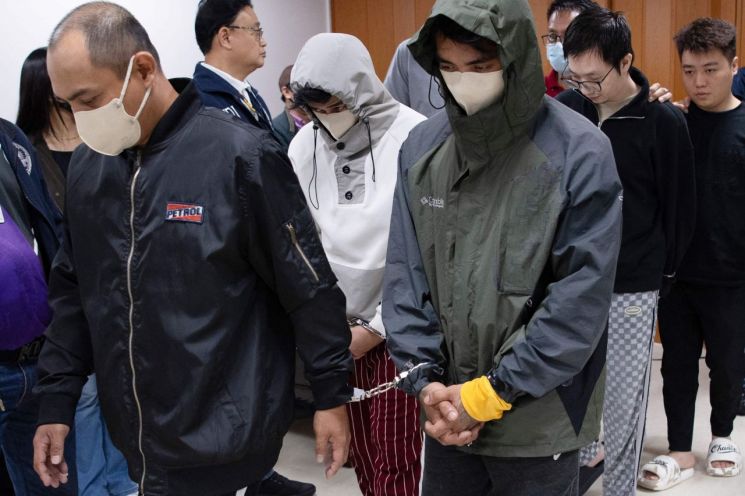
They are accused of operating a vehicle equipped with a mobile phone eavesdropping device called an 'IMSI (International Mobile Subscriber Identity) catcher' near sensitive locations in Manila, including the Presidential Palace, the U.S. Embassy in the Philippines, the Philippine National Police headquarters, and military bases, to intercept mobile phone communications.
One of the arrested Filipinos admitted to driving the vehicle around these locations since October last year, receiving up to 3,000 pesos (approximately 74,000 won) per day as compensation.
The NBI stated that the suspects collected thousands of data points through these activities. However, specific details such as whether the collected data included mobile phone call contents were not disclosed. An IMSI catcher acts as a fake mobile base station, intercepting data exchanged between mobile phones and base stations within a radius of about 1 to 3 kilometers.
Colonel Zethis Trinidad, the spokesperson for the Philippine military, told reporters, "They are conducting unauthorized information-gathering activities secretly, posing a threat to national security."
The NBI detected suspicious vehicles roaming around and launched an investigation that led to their arrest. This arrest is the third case this year of Chinese spies being caught in the Philippines.
Earlier last month, a Chinese spy was caught after conducting reconnaissance on military facilities in the Philippines, creating 3D images of the facilities, and passing the data to China.
Subsequently, five Chinese spies were arrested for using drones to film Philippine Air Force and Navy bases, Coast Guard vessels, and shipyards in Palawan Province adjacent to the Spratly Islands (called Nansha in Chinese), a disputed area in the South China Sea.
Regarding this, Philippine President Ferdinand Marcos recently expressed that he is "very alarmed" by the increasing number of Chinese spies targeting the Philippine military.
© The Asia Business Daily(www.asiae.co.kr). All rights reserved.

















