Third Lowest Birth Rate in the World... Sharp Decline in Military Manpower
Concerns Over Chinese Encirclement of Taiwan... Widening Power Gap
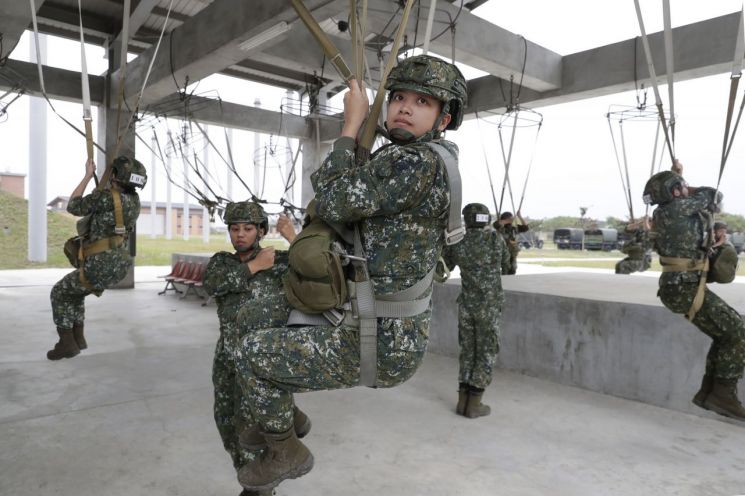 Female soldiers belonging to the Taiwanese Army Airborne Unit training at a military base in Pingtung County, southern Taiwan, last December. Photo by AP and Yonhap News
Local media in Taiwan have sparked controversy over the introduction of a female conscription system by repeatedly reporting on its consideration. Although the Taiwanese Ministry of National Defense has attempted to quell concerns by stating that no concrete plans have been made, the debate over female conscription is spreading due to Taiwan's geopolitical characteristics and fears of a Chinese invasion. Taiwan, along with Hong Kong and South Korea, is one of the regions with the lowest birth rates worldwide and is currently facing difficulties in recruiting military personnel.
Taiwan Ministry of National Defense: "No Plans for Female Conscription Yet"… Attempts to Calm Controversy
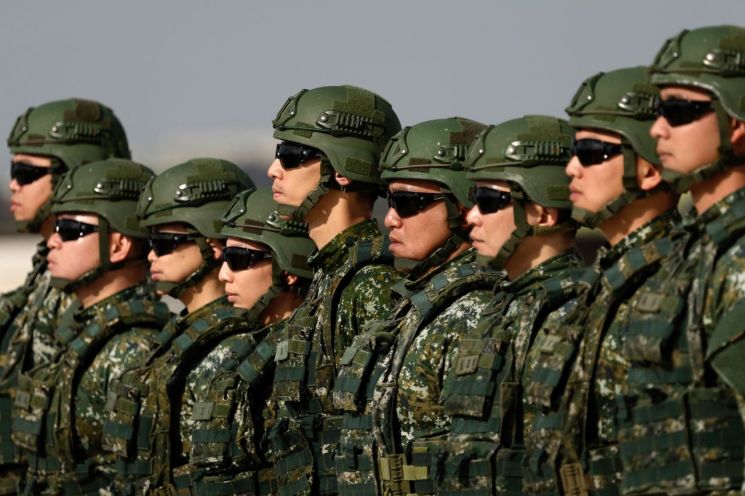
Recently, Sun Lifang, spokesperson for the Taiwanese Ministry of National Defense, stated, "There is room for discussion regarding mandatory female military service, but currently, there are no plans." She added, "Women currently make up 12-13% of Taiwan's military personnel. Many channels to utilize female personnel are already provided." She emphasized that no specific government measures for introducing female conscription have been proposed.
Earlier, major media outlets such as the Taiwan United Daily News reported that President Lai Ching-te had requested the Ministry of National Defense to study female conscription during recent discussions with defense officials to restructure the military personnel system. As a result, female conscription was included as a research topic for the Ministry of National Defense, which has been continuously collecting and organizing data on how advanced countries manage female military personnel.
As reports suggested the possible imminent introduction of female conscription, controversy spread, prompting the Ministry of National Defense to quickly respond. Spokesperson Sun dismissed reports that the president had received a briefing on mandatory female military service during a meeting and reiterated that there are no plans to introduce female conscription.
Taiwan's Total Fertility Rate Was 0.86 Last Year… Third Lowest in the World for Low Birth Rates
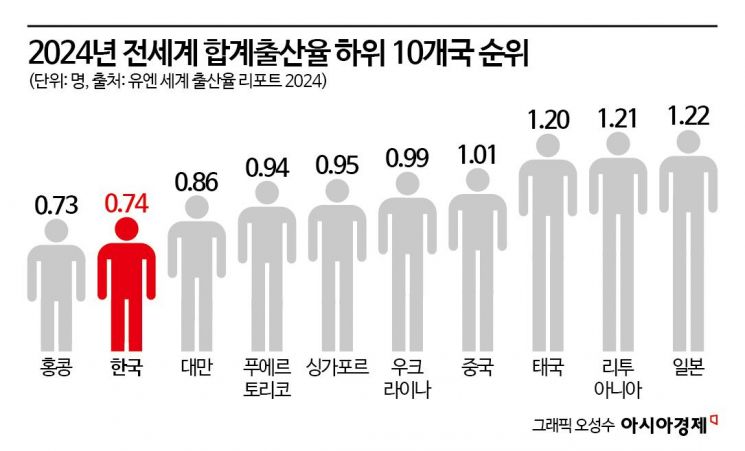
The issue of introducing female conscription has arisen due to Taiwan's severe low birth rate situation. There are concerns within Taiwan that military manpower resources will sharply decline in the future, making it difficult to maintain current troop levels.
According to the "World Fertility Report 2024" compiled by the United Nations (UN), Taiwan's total fertility rate in 2024 is 0.86, ranking third lowest among 238 countries worldwide, following Hong Kong (0.73) and South Korea (0.74). The number of newborns in Taiwan last year was 134,856, a decrease of over 70,000 compared to 208,440 in 2016, marking nine consecutive years of decline. Due to the decrease in newborns, the total population also dropped by 20,222 from the previous year to 23,402,200. If the fertility rate does not rebound, the problem of military manpower shortages will inevitably worsen.
Taiwan's military personnel numbers are currently declining. The Taiwanese military had 270,000 personnel in 2011 but recorded 169,000 last year. This is due to shortening the mandatory service period for adult males from three years in 2008 to one year, then further reducing it to four months in 2018, along with a decrease in manpower resources. In response, the Taiwanese government extended the mandatory military service period for males from four months back to one year starting January 1 of last year. Additionally, a reserve training system for female soldiers who voluntarily enlisted and retired was established to address the manpower decline.
Concerns Over Chinese Encirclement of Taiwan in Emergencies… Increasing Difficulty in Overcoming Power Gap
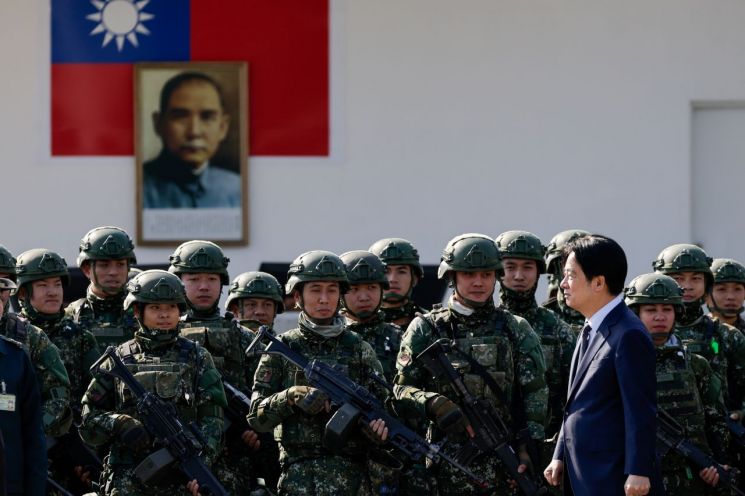
The reduction in Taiwan's military personnel has raised concerns that it will be difficult to respond militarily to a potential Chinese mainland invasion or encirclement of Taiwan in emergencies.
As of last year, the Chinese People's Liberation Army had 1.2 million personnel in the army alone, and when combined with the navy, air force, and missile units, the total reaches 2 million. The reserve force is estimated to be about 10 million. In comparison, Taiwan's standing military includes 169,000 personnel, including 100,000 in the army, and the reserve force is about 2.5 million. Taiwan is absolutely lacking the capability to defend independently until support from the United States and other allied countries arrives.
William Matthews, Senior Researcher of the Asia-Pacific Program at the UK think tank Chatham House, pointed out in a report, "China's military modernization is rapidly progressing with a focus on developing the capability to defeat strong adversaries," adding, "In fact, China has been preparing for decades to have the ability to overwhelm the United States in a Taiwan conflict, and the balance of power across the Taiwan Strait is gradually reaching an ambiguous state."
China is also significantly increasing the number of warships with a view to naval warfare around Taiwan. According to the Stockholm International Peace Research Institute (SIPRI), until 2000, the number of warships was about 318 for the United States and 110 for China, but last year, the numbers reversed to 297 for the United States and 370 for China. If the current trend continues until 2030, the United States is expected to have 304 ships, while China could have 435, further widening the gap.
© The Asia Business Daily(www.asiae.co.kr). All rights reserved.
![Clutching a Stolen Dior Bag, Saying "I Hate Being Poor but Real"... The Grotesque Con of a "Human Knockoff" [Slate]](https://cwcontent.asiae.co.kr/asiaresize/183/2026021902243444107_1771435474.jpg)


















