Remsima Achieves 1.2 Trillion KRW in Sales, Korea's First Blockbuster Drug
Merger Issues Resolved and Cost Ratio Reduced
Targeting Over 5 Trillion KRW in Sales This Year
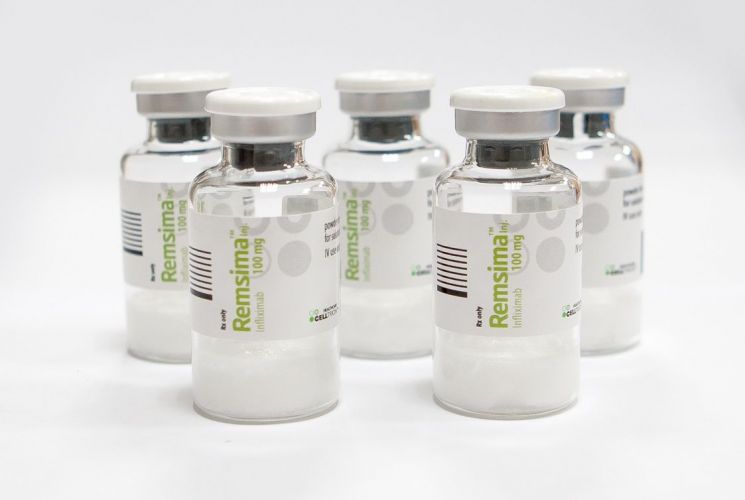
Celltrion recorded its highest-ever performance with sales of the autoimmune disease treatment 'Remsima' exceeding 1 trillion KRW. Remsima is the first single pharmaceutical product from a Korean company to surpass 1 trillion KRW in sales, making it a so-called 'global blockbuster drug.' Celltrion aims to achieve 5 trillion KRW in sales this year by expanding its product lineup.
According to Celltrion's management disclosure on the 26th, the company posted consolidated sales of 3.5573 trillion KRW and an operating profit of 492 billion KRW last year. Sales increased by 63.4% compared to the previous year, while operating profit decreased by 24.4%. The decline in operating profit is attributed to amortization costs such as purchase price allocation (PPA) related to the merger with Celltrion Healthcare and product development expenses. In the fourth quarter, sales reached 1.0636 trillion KRW, a 178% increase year-on-year, driven by steady growth in bio products and contract manufacturing organization (CMO) sales, marking the first time a single quarter exceeded 1 trillion KRW in sales. Operating profit for the same period grew by 967.4% to 196.4 billion KRW due to eased cost and expense burdens related to the merger.
Behind these results is Remsima, which became the first in Korea to surpass annual sales of 1 trillion KRW solely through its intravenous (IV) formulation. Remsima recorded sales of 1.268 trillion KRW, accounting for 35.6% of Celltrion's total sales. In the pharmaceutical and biotech industry, a blockbuster refers to a product generating massive revenue. In the domestic market, it means annual sales of 10 billion KRW, while globally, it refers to products with sales of 1 trillion KRW (approximately 10 billion USD).
Celltrion expects its cost of sales ratio (cost as a percentage of sales) to fall into the 20% range this year. This decline is anticipated due to the depletion of high-cost inventory, expanded production at the Incheon Songdo Plant 3, which began operations in December last year, and the end of amortization for development costs of existing products. Celltrion stated, "The cost of sales ratio, which was close to 63% in the fourth quarter of 2023 immediately after the merger, has decreased to around 45% within a year," adding, "With the increased proportion of new products with low manufacturing costs, the cost of sales ratio is expected to drop to the 20% range by the fourth quarter of this year." They further noted, "With the end of amortization related to merger rights and the leverage effect from scale growth, significant increases in both operating profit and operating profit margin are expected this year."
Sales are expected to increase further this year due to product expansion. The core biosimilars portfolio has grown to 11 products this year. The combined global market size for these products is approximately 150 trillion KRW. The annual sales target for this year is 5 trillion KRW. Seo Jung-jin, Chairman of the Celltrion Group, stated at an investor meeting held in Hong Kong last November, "The sales target of 5 trillion KRW for next year (2025) is likely to be achieved with over 90% probability," adding, "If we achieve 5 trillion KRW in sales, the target for 2026 is 7 to 8 trillion KRW, and the annual sales goal for 2027 is 10 trillion KRW."
© The Asia Business Daily(www.asiae.co.kr). All rights reserved.


















