Premium Fresh Launch
Offering Over 500 Top-Tier "Best" Grade Products
Offline Channels Also Strengthen Grocery Stores
Chosen as a Key Strategy for Boosting Sales and Customer Numbers
Coupang has ignited competition in the grocery sector with offline sales channels by launching a premium fresh food category. The company plans to supply a superior range of high-end products compared to those sold at large supermarkets and department stores. As these offline stores focus on food categories where consumers can directly check freshness before purchasing, the battle for customers both online and offline is expected to intensify.
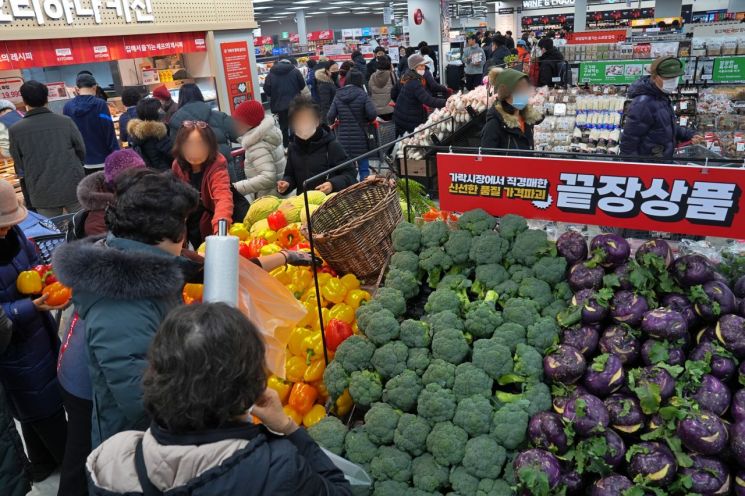 Customers are browsing the price-breaking "Final Deal" products at Lotte Mart Cheonho branch. Photo by Lotte Mart
According to the distribution industry on the 26th, Coupang recently launched 'Premium Fresh,' introducing a variety of premium fresh foods. Following the introduction of Rocket Fresh in 2018 for early morning delivery of fresh foods, Coupang aims to meet consumers' demanding needs by emphasizing premium products that prioritize freshness and quality.
Premium Fresh offers about 500 products across 12 categories including fruits, seafood, vegetables, meat, eggs, and dairy products, with plans to expand the product range further. The principle is to handle products rated 'Best,' which surpass the 'Good' grade typically sold in marts and the relatively high-quality 'Better' grade. The intention is to compete with offline rivals such as corporate supermarkets (SSMs), large marts, and department stores by offering superior quality.
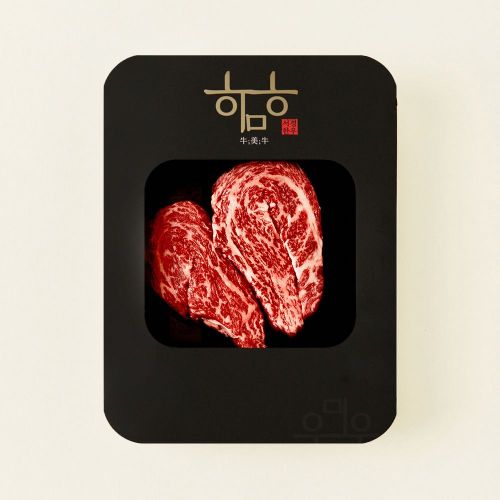
Representative products include top-tier high-end 1++ grade Hanwoo beef brand products, free-range No.1 egg brands, and organic milk from exclusive farms such as Jeju Seongisidolmokjang, Beomsan Farm, and Youngjun Farm. Coupang emphasized, "Premium Fresh is not just fresh food but a new standard to provide customers with the highest quality," adding, "We will lead innovation in the fresh food market through strict quality control and differentiated services."
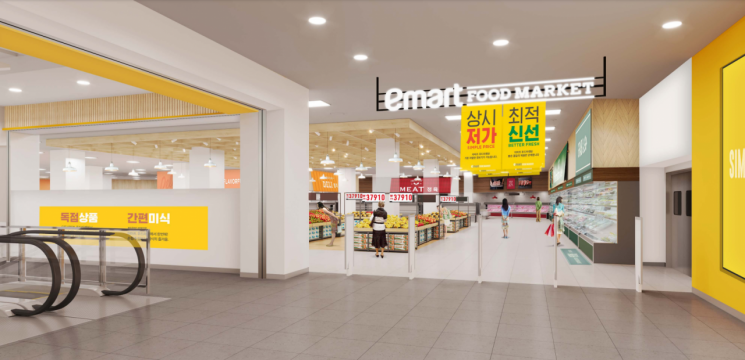
Offline sales channels have also chosen fresh foods, including groceries, as a weapon to counter online offensives. Accordingly, they are opening specialized stores or renovating existing ones. For example, Emart opened the Food Market Suseong branch in Daegu's Suseong District last December. The store concept is to sell food at affordable prices year-round, with 2,829㎡ (about 856 pyeong), which is 86% of the directly managed area, dedicated solely to grocery products. In the first half of this year, Emart plans to open the second Food Market branch, Godeok Gangil, in Gangdong District, Seoul, where 75% of the store area will be allocated to fresh and processed foods.
Lotte Mart also opened a 4,538㎡ (about 1,374 pyeong) store near Cheonho Station in Gangdong District, Seoul, last month. This is the first new store opening in six years since the Lotte Mart Suji branch in 2019, with 80% of the area dedicated to grocery products led by fresh and ready-to-eat foods and specialized stores. In December 2023, Lotte Mart renewed its Eunpyeong branch to launch 'Grand Grocery,' the first in the large mart industry to dedicate 90% of the store to food products. Lotte Mart plans to open another store with an increased grocery proportion in Guri in the first half of this year.
Additionally, Homeplus has been operating the mega food specialty store 'Homeplus Mega Food Market' since February 2022, and as of the 16th of this month, cumulative visitors over three years have surpassed 120 million. During this period, total sales increased by up to 84% year-on-year, and food sales rose by up to 31%. Currently, Homeplus is expanding its footprint by renovating 33 stores, accounting for more than 25% of its 127 nationwide stores, into Homeplus Mega Food Markets.
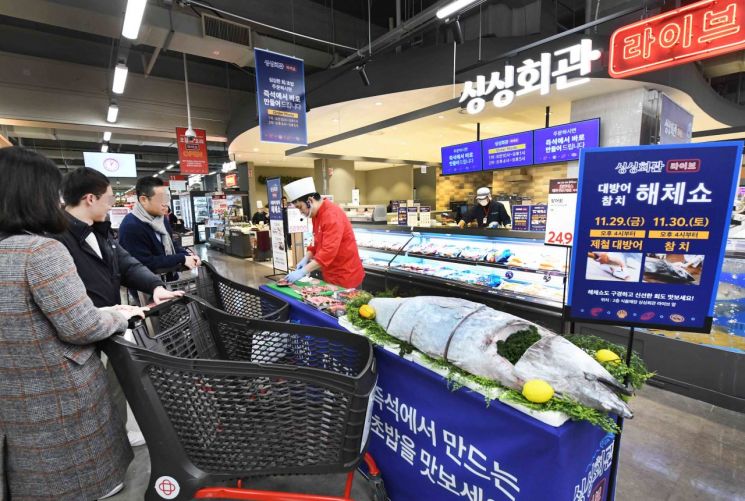 Customers are watching a tuna filleting show at Homeplus Mega Food Market Live Gangseo branch. Photo by Homeplus
An industry insider said, "As the online consumer market grows, offline stores are adopting strategies to strengthen fresh foods as a necessity to minimize customer attrition," adding, "Since e-commerce companies are also putting their lives on the line in grocery delivery, which is rapidly increasing in sales proportion, they will enhance benefits through pricing and services."
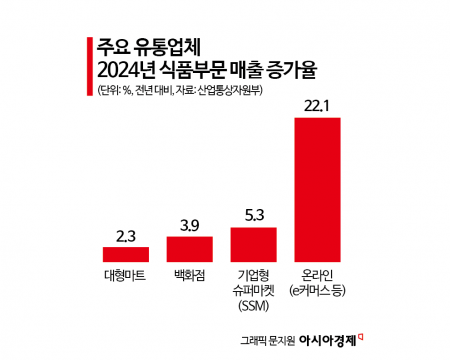
Meanwhile, according to the annual major distribution sales status announced by the Ministry of Trade, Industry and Energy, food sales in large marts increased by 2.3% year-on-year, while department stores and SSMs grew by 3.9% and 5.3%, respectively. Excluding TMON and WEMAKEPRICE, online distribution's food sales last year rose by 22.1% year-on-year, showing a remarkable increase.
© The Asia Business Daily(www.asiae.co.kr). All rights reserved.



















