Red Road at Hongdae Entrance Station Sees 150,369 Daily Passengers
Mapo-gu Revitalizes Alleyway Commercial Districts with Mapo Circular Train Bus
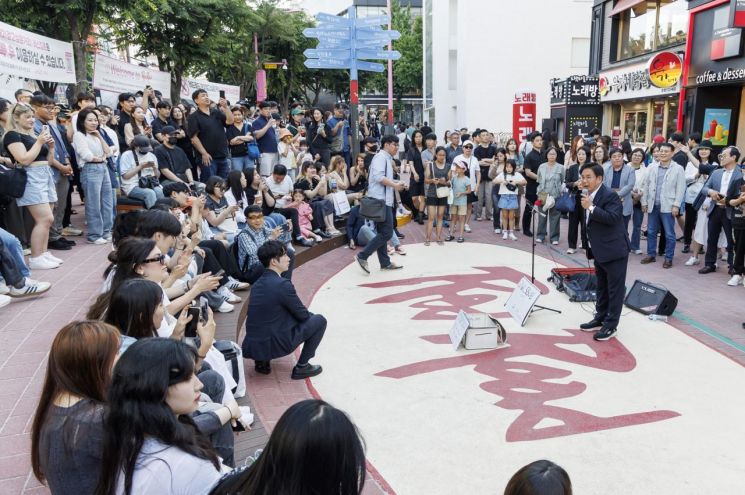
Mapo-gu (Mayor Park Gang-su)'s representative commercial district, 'Red Road,' has once again solidified its strong position as a 'hot place' in South Korea.
According to the '2024 Seoul Subway Lines 1-8 Transportation Statistics' recently announced by Seoul Metro, the average daily number of passengers boarding and alighting at Hongdae Entrance Station reached an impressive 150,369.
This figure is overwhelmingly higher compared to the average daily ridership of 31,979 across Seoul's subway system, indicating that numerous domestic and international visitors are flocking to Red Road.
A district official analyzed that the creation of Red Road, symbolized by a red background representing youth and passion around the Hongdae area, along with various projects, has significantly increased the number of tourists.
Moreover, Red Road has been recognized as an exemplary case not only for tourism but also for its outstanding advantages in culture and safety.
Mapo-gu developed Red Road as a distinctive themed street connecting the Gyeongui Line Forest Trail to Hongdae and the Han River, and to ensure safety, the sidewalks were painted with anti-slip coating.
Additionally, to prevent safety accidents caused by large crowds, the district introduced an 'AI Crowd Density Analysis System' and a 'Disaster Text Message Electronic Display.' To make Red Road itself a cultural space, 'Busking Zones' and the 'Red Road Road Gallery' were installed. As a result, Red Road was selected as an excellent case in the Manifesto Awards and won the main prize at the 'Asia Urban Landscape Awards' and the excellence award at the '2024 Local Government Policy Awards.'
Furthermore, to provide convenience to tourists visiting Red Road, since April last year, 24-hour public restrooms have been installed and operated starting from the Red Road Power Plant restroom, followed by the Seogyo Art Experiment Center, R2 section, and R6 section.
Mapo-gu has selected 11 major commercial districts and operates the 'Mapo Circular Train Bus' connecting them to further revitalize unique alleyway commercial areas throughout the district.
Starting from 'Red Road,' passengers can use 17 stops including Mangwon Market, Sky Road, Dohwa Galmaegi Alley, and more. The train bus allows unlimited rides and transfers on the same day for 5,500 KRW per adult (one-day pass), enabling visitors to explore hidden restaurants and unique spaces throughout the district's alleyway commercial areas. This service is expected to promote the local economy by linking major tourist attractions and commercial districts in Mapo-gu.
Mapo-gu plans to develop a mobile app guiding visitors through the district's unique alleyways to bring smiles to local businesses. The app will include information on commercial facilities and major tourist spots, as well as a walking navigation feature to help tourists find small alley shops. Park Gang-su, Mayor of Mapo-gu, said, "The Mapo Circular Train Bus will serve as a catalyst not only for boosting consumption but also for revitalizing alleyway commercial districts and ultimately creating jobs. Mapo-gu will do its best to make Mapo a place where visitors' footsteps never cease in every alley."
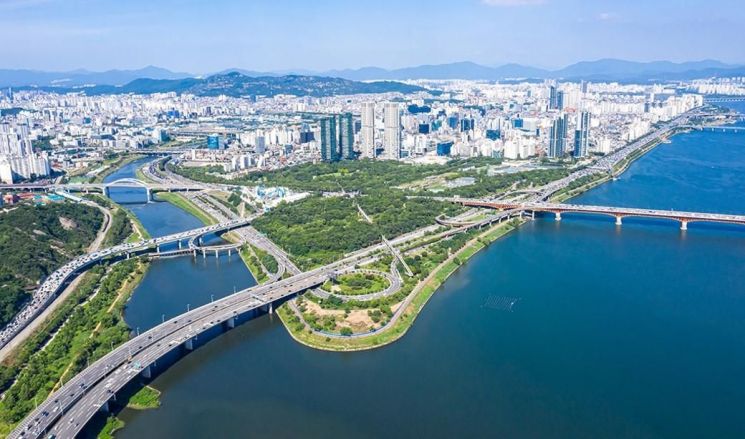
Seongdong-gu, Seongsu-dong Emerges as ‘Culture Hub’… Large Multipurpose Performance Hall Anticipated
February 19: Preliminary Negotiations Completed for Demolition Site of Sampyo Ready-Mixed Concrete Factory, a Long-Standing Wish of Residents; Creation of a Global Future Business District up to 77 Floors along the Han River
Aiming to Expand Large-Scale Cultural Complex Facilities in the Northeast Area, Establishing a Large Multipurpose Performance Hall ‘Culture Hub’ and Rebirth as the Premier High-Tech Industry and Cultural Tourism Hub along the Han River
Seongdong-gu Mayor Jung Won-oh Welcomes Major Redevelopment of Seoul Forest Area, Expects Synergistic Development by Driving High-Tech and Cultural Industry Activation through Cultural Facility Creation
Seongdong-gu (Mayor Jung Won-oh) announced that with the final completion of preliminary negotiations for the 'Sampyo Ready-Mixed Concrete Site' development project, Seongsu-dong is poised for a new leap as a culture hub.
Seoul City initiated the 'Preliminary Negotiation for Urban Planning Change of Sampyo Ready-Mixed Concrete Site' in December 2023 as the first case of private sector 'Architectural Innovation-Type Preliminary Negotiation,' reaching a final agreement on February 19 after about a year.
The site had been operated as the Sampyo Ready-Mixed Concrete factory for about 45 years since 1977, and residents had long wished for its demolition due to traffic congestion and dust it caused. Since 2015, a 'Factory Relocation Promotion Committee' was voluntarily formed, public hearings and district-wide citizen rallies were held, and over 150,000 residents, including those from Seongsu-dong, signed petitions urging the factory's relocation, demonstrating strong will for its removal.
In 2017, Seongdong-gu led an agreement on the demolition of existing facilities through a business agreement among Seoul City, Sampyo Industry, and Hyundai Steel, and finally, the long-awaited demolition was completed in August 2022.
Immediately after demolition in September 2022, Seongdong-gu began a study on the 'Comprehensive Development Plan for the Seoul Forest Area.' The study, conducted until December 2023, reviewed strategies and plans to develop Seoul Forest and adjacent waterfront areas (Han River confluence, Jungnangcheon, etc.) into representative cultural and tourist attractions of Seoul. It also included plans for public contribution utilization from the Sampyo site development and the creation of a cultural and tourism town linked to it.
Notably, the study predicted that establishing cultural facilities around Seoul Forest would drive the activation of various high-tech and cultural industries such as technology, advertising, media, and information industries (TAMI) in Seongsu-dong, and promote cultural and educational tourism linked to K-Culture education.
Additionally, the district has temporarily opened the site as the 'Seongsu Arts and Culture Square,' where the first performance, 'Fuerza Bruta,' was successfully held in November 2023. This fulfilled the residents' demand for large-scale cultural infrastructure like professional performance halls and laid the foundation for developing Seoul Forest into a cultural hub in the northeast area.
With the long-standing wish of residents fulfilled by the demolition and the finalization of preliminary negotiations in February, the zoning of the Sampyo site was upgraded from Type 1 General Residential Area to General Commercial Area. Accordingly, a complex facility with a total floor area of 447,913㎡, including office, accommodation, cultural and assembly, and retail facilities, will be constructed up to 77 floors above ground.
To naturally connect Seoul Forest and the Sampyo site, a three-dimensional pedestrian park (covered park) and underground pedestrian passage will be newly established, and public spaces and shared areas will be created at major connection nodes, greatly improving accessibility between Seoul Forest, Sampyo site, Jungnangcheon, and Eungbong Station. Additionally, green spaces on the lower floors and an observation deck on the top floor will be opened, expected to become a new scenic spot.
The public contribution from the increased floor area ratio amounts to approximately 604.5 billion KRW. Of this, about 442.4 billion KRW will be invested in infrastructure expansion to alleviate chronic traffic congestion around Seoul Forest, including the construction of new ramps on the Dongbu Expressway to Gangbyeonbuk-ro and the northern ramp of Seongsu Bridge, as well as the creation of the world's largest 'Unicorn Startup Hub.'
The remaining public contribution of about 162.9 billion KRW (Seongdong-gu about 48.9 billion KRW, Seoul City about 114 billion KRW) will be used to redevelop the Seoul Forest area into a representative waterfront green space of Seoul. As part of this, Seoul City plans to hold a 'Seoul Forest Area Renewal Master Plan Competition' in the first half of this year. The district will actively cooperate with Seoul City to explore plans for expanding cultural and performance facilities in Seongsu-dong.
In particular, aiming to expand large-scale cultural complex facilities in the northeast area, efforts will be made to establish a large multipurpose performance hall, known as the 'Culture Hub.' It is expected that with Seoul Forest transformed into a cultural hub, Seongsu-dong and the surrounding area will be reborn as the premier high-tech industry and cultural tourism hub along the Han River.
To this end, since September last year, Seongdong-gu has been conducting a 'Culture Hub Construction Plan and Management Plan Study,' scheduled to be completed by October this year, with meaningful results anticipated upon completion.
Mayor Jung Won-oh of Seongdong-gu stated, "Having long pursued a comprehensive vision for the development of Seongsu-dong and Seoul Forest area and the creation of a complex cultural district, I welcome the completion of preliminary negotiations for the Sampyo site and the major redevelopment plan for Seoul Forest. I appreciate that many residents' opinions were reflected." He added, "Seongsu-dong is recognized as a charming city representing Seoul with infinite potential and global competitiveness, and it will leap forward as a 'Culture Hub' leading the cultural industry based on waterfront and green resources, becoming a greater Seongsu on the world stage."
Jungnang-gu Begins Vibration Reduction Construction on Jungnangcheon Access Footbridge
Three Reinforced Bridge Piers Added near Ihwa Bridge in Jungnangcheon Riverside
Re-paving of Bicycle Paths and Walkways and Maintenance of Embankment Walkways Also Underway
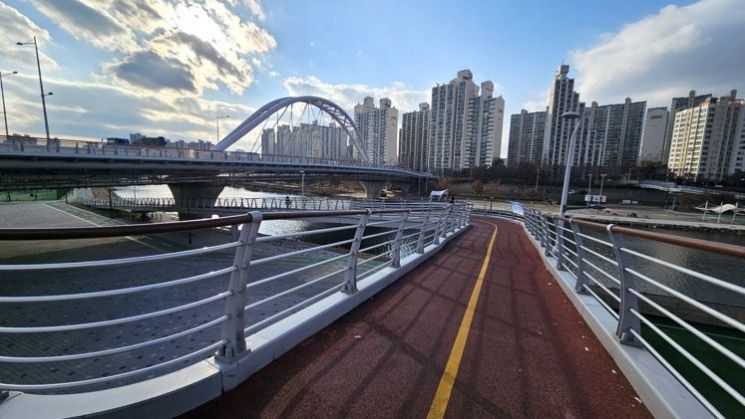
Jungnang-gu (Mayor Ryu Kyung-gi) has commenced the 'Jungnangcheon Access Footbridge Vibration Reduction Construction' to create a safe walking environment for residents and improve convenience in using the river.
The construction is taking place near Jungnangcheon Riverside (382-2 Junghwa-dong, around Ihwa Bridge), where three reinforced bridge piers will be added to reduce vibrations experienced during walking, and 178㎡ of existing bicycle paths and walkways will be repaved.
The ramp connecting to Ihwa Bridge is frequently used by pedestrians and cyclists utilizing Jungnangcheon. There have been ongoing complaints about slight shaking during walking. This section is also a main route for the 'Jungnang Seoul Rose Festival,' a representative event of the district. Therefore, the district plans to reinforce the existing structure and complete the construction before the festival to provide a safer walking environment for residents and visitors.
Additionally, the district is promoting maintenance projects for the embankment walkways and riverside areas. Old elastic pavement and sunken paving blocks will be removed and replaced with new materials to reduce safety risks and improve walking convenience for river users. This is expected to make the Jungnangcheon area a more pleasant space. Mayor Ryu Kyung-gi said, "Since Jungnangcheon is an important space frequently visited by many residents, we will continue to improve it to create a safe and convenient environment. Through this construction, we aim to reduce pedestrians' anxiety and make the river space a place where residents can use with peace of mind."
Exciting New Semester, Safe School Commute!... Yeongdeungpo-gu Focuses on School Route Maintenance
Maintenance Around 44 Elementary, Middle, and High Schools until March 7
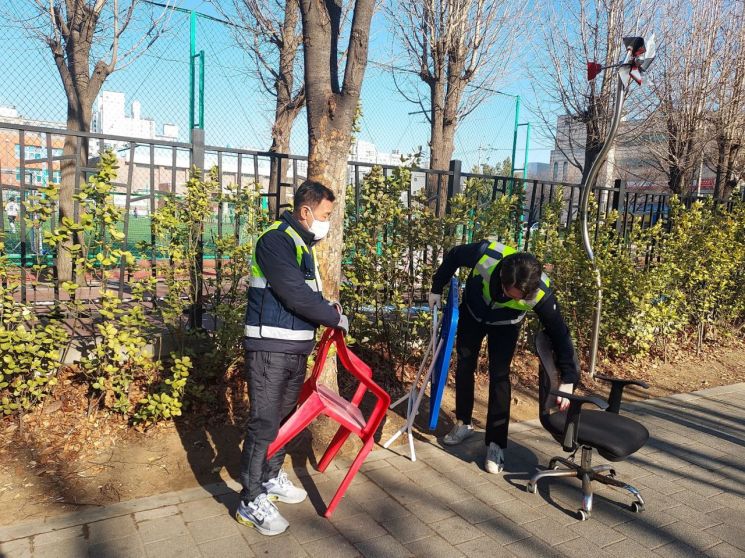
Complete Removal of Unauthorized Street Vendors, Illegal Storage, and Illegal Advertisements Obstructing Pedestrian Traffic
Operation of Task Forces by Area, Intensive Inspections during School Commute Hours... Student Safety Priority
Yeongdeungpo-gu (Mayor Choi Ho-kwon) announced that it will carry out focused maintenance around schools to ensure safe commuting routes for students in the new semester.
The maintenance will be conducted from February 27 to March 7, focusing on 44 elementary, middle, and high schools, specifically within 300 meters of main entrances designated as Child Protection Zones and within 200 meters of boundaries designated as Educational Environment Protection Zones.
Additionally, areas where students may be exposed to harmful environments or where school route safety management is necessary will also be maintained.
The maintenance targets include unauthorized street vendors (street stalls), illegal storage, and hazardous or harmful advertisements that obstruct pedestrian traffic or may cause safety accidents.
The district will organize task forces by area and conduct intensive inspections aligned with students' commuting times.
If violations are found during inspections, business owners or property owners will be informed in advance that administrative actions such as forced removal and fines may be imposed, encouraging voluntary compliance.
Even after the maintenance period, the district will continue patrols and inspections to maintain clean street environments around schools. Mayor Choi Ho-kwon said, "We will proactively remove elements that threaten student safety and continuously improve the walking environment. We will do our best to ensure students can grow up in a safe environment through ongoing patrols and maintenance."
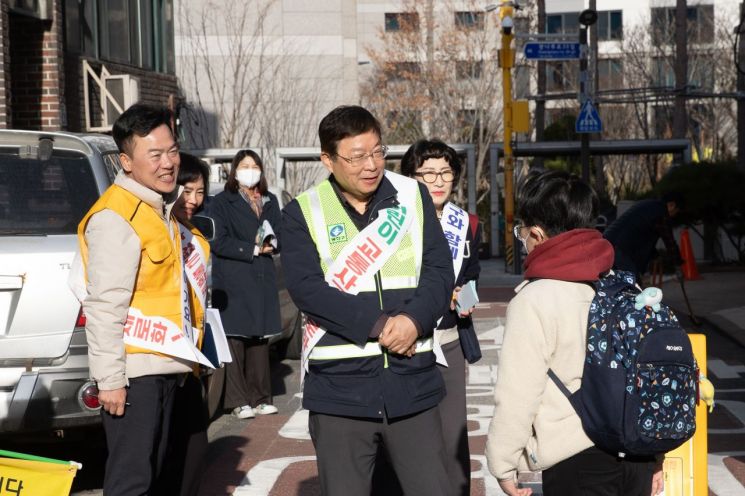
Gwangjin-gu Ensures Safety on Elementary Students' Commute
Focused Safety Inspection of School Routes at 21 Elementary Schools for the New Semester
Checking Child Protection Zone Management, Road and Traffic Facilities, and Safety Hazards
Prioritizing Children's Safety, Leading the Creation of a Safe Commute Environment
Gwangjin-gu (Mayor Kim Kyung-ho) conducted urgent inspections of school routes around elementary schools in preparation for the spring new semester.
To prevent traffic accidents and ensure safe commuting, 21 elementary schools and 66 child protection zones in the district were inspected.
Main inspection items included road and walkway conditions, traffic signals and signs, child protection zone management, and safety hazards around schools. Night inspections were also conducted to check the operation of streetlights, security lights, and signs to prepare for accidents that may occur during evening hours.
Through this inspection, 39 improvement and review items such as adjusting traffic sign angles, repairing malfunctioning facilities, and maintaining safety fences were immediately addressed to ensure student safety. Mayor Kim Kyung-ho said, "Safety is the top priority. We conducted focused inspections around elementary schools to ensure students can commute safely for the new semester." He added, "We will continue to do our best to create safe commuting routes where both parents and children can feel secure."
Last year, Gwangjin-gu was recognized for its efforts in preventing safety accidents through projects like the 'Gwangjin-type Child Protection Zone Improvement Project,' receiving the Presidential Award at the 14th Children's Safety Awards hosted by the Ministry of the Interior and Safety.
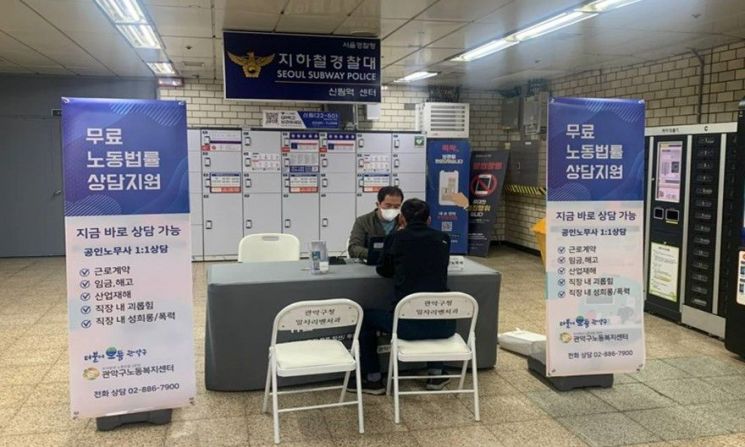
Gwanak-gu Selected as Seoul's First Autonomous District for the ‘2025 Labor Condition Voluntary Improvement Support Project’
Agreement with Gwanak-gu Labor Welfare Center, 12 Labor Attorneys Provide Consulting for Small Businesses
Small Businesses Account for 96% of All Businesses in Gwanak-gu, Expected to Prevent Various Labor Disputes
Gwanak-gu (Mayor Park Jun-hee) has been selected as the first autonomous district among Seoul's autonomous districts for the '2025 Labor Condition Voluntary Improvement Support Project' conducted by the Ministry of Employment and Labor.
This project supports small businesses in voluntarily checking for violations of labor-related laws and improving their workplaces by having certified labor attorneys visit and provide consulting free of charge.
Accordingly, on the 14th, the district signed an agreement with the Seoul Gwanak Employment and Labor Office, and 12 certified labor attorneys at the Gwanak-gu Labor Welfare Center will visit small businesses directly to provide consulting on labor contracts, wages, and related matters based on the Ministry of Employment and Labor's voluntary inspection checklist.
The consortium institution, Gwanak-gu Labor Welfare Center (located on the 3rd floor of Deokjin Senior Center, 37 Nambusunhwan-ro 234-gil, Gwanak-gu), leads efforts to improve workers' rights through professional counseling and education.
The center offers free professional consultations and labor rights education related to labor laws such as wage arrears and severance pay from 2 PM to 6 PM on weekdays, available to anyone. Mayor Park Jun-hee said, "Since 96% of all businesses in Gwanak-gu are small businesses, this project is expected to be effective in preventing various labor disputes in the district. We will continue to cooperate with the Gwanak-gu Labor Welfare Center to protect workers' rights and expand a culture of voluntary compliance with labor conditions among employers."
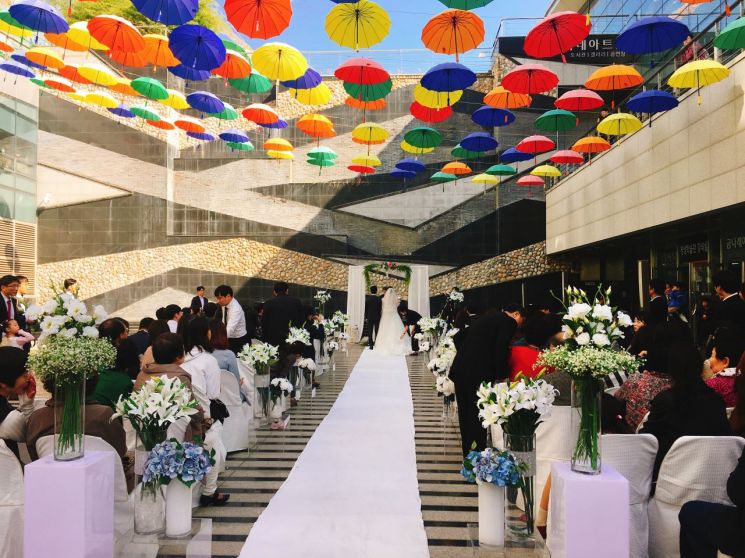
How About an Economical Wedding with a Great View at Geumcheon-gu Office?... Geumcheon-gu Supports Public Wedding Hall Rentals
Supporting Rental of Public Facilities as Wedding Venues to Reduce Financial Burden and Provide Convenience
Available Venues Include Geumcheon-gu Office Auditorium, Sunken Plaza, and Geumnae Culture and Sports Center
Geumcheon-gu (Mayor Yoo Sung-hoon) announced that public facilities such as the district office auditorium, Sunken Plaza, and Geumnae Culture and Sports Center are open for use as wedding venues.
The district opens public facilities as wedding halls to reduce residents' financial burden for weddings and alleviate the difficulty of booking wedding venues. Currently, public wedding halls are available at three locations: ▲ Geumcheon-gu Office Auditorium (indoor) ▲ Geumcheon-gu Office Sunken Plaza (outdoor) ▲ Geumnae Culture and Sports Center (indoor).
The 12th-floor auditorium in the district office is spacious indoors, offers excellent high-floor views, and includes a lobby lounge, waiting room, and a restaurant for receptions, making it convenient to use auxiliary facilities. The Sunken Plaza outdoors at Geumcheon-gu Office provides a wide landscaped space as a backdrop for unique outdoor weddings, with a restaurant also available.
At Geumnae Culture and Sports Center, couples can hold distinctive weddings in the first-floor book caf? suitable for small weddings or the second-floor gymnasium suitable for large-scale ceremonies, according to their preferences.
Rental fees range from 80,000 KRW to 230,000 KRW for two hours, which is cheaper than general wedding halls. The venues are open year-round, and parking at Geumcheon-gu Office is free on weekends and holidays.
Any engaged couple residing or working in Geumcheon-gu can apply for rental. Inquiries can be made to the Geumcheon-gu Office Administrative Support Division (for auditorium and Sunken Plaza) or Geumcheon-gu Facilities Management Corporation (for Geumnae Culture and Sports Center).
The district is also creating outdoor wedding spaces set against beautiful natural backdrops such as Geumbit Park, Omi Ecological Park, and the Gallery Garden (tentative name) in Geumnae Central Park, a famous spot in Geumcheon-gu. Mayor Yoo Sung-hoon said, "We hope the public wedding hall rental project will help resolve issues caused by the shortage of wedding venues. We will do our best to provide diverse and practical support for engaged couples."
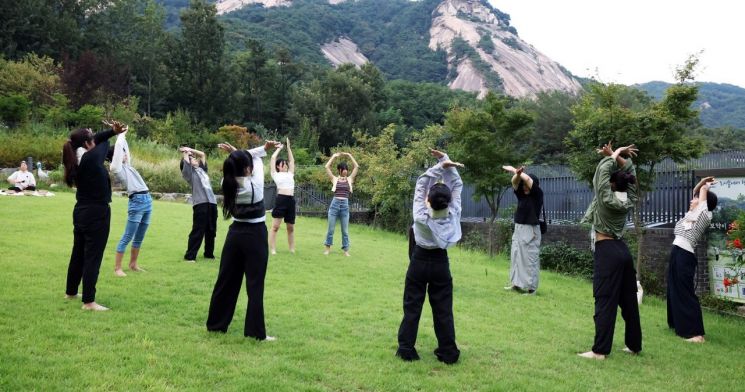
Nowon-gu Launches ‘Nowon-style Green Prescription’ Program for Addicts and Their Families
High Satisfaction from Participants in Last Year’s Pilot Program… Program Expansion Planned for This Year
Forest Healing Program for Addicts and Families to Run from March to December
February 26: MOU Signed between Bulamsan Forest Healing Center and Nowon-gu Addiction Management Integrated Support Center
Nowon-gu (Mayor Oh Seung-rok) announced the full-scale operation of the ‘Nowon-style Green Prescription’ program to support the psychological and emotional stability and recovery of addicts and their families.
The ‘Bulamsan Forest Healing Center,’ which will operate the program, is Seoul’s first urban forest healing center opened in 2020. It has developed and provided various healing programs, including life-tailored programs, atopy programs for children, emotional support for infertile couples, and PTSD relief programs for firefighters and police officers.
Last year, in cooperation with the Nowon-gu Addiction Management Integrated Support Center, a pilot forest healing program for addicts and their families was conducted four times from August to November. The program focused on relieving stress and tension experienced during recovery and promoting psychological stability.
Participants experienced various healing activities such as relaxation breathing, herbal water therapy, and landscape healing, expressing positive feedback like, “Herbal water therapy improved my blood circulation and made me feel lighter,” and “Relaxation breathing was very effective in daily life.”
Due to the high satisfaction confirmed through the pilot, the Bulamsan Forest Healing Center and Nowon-gu Addiction Management Integrated Support Center will jointly expand and operate customized forest healing programs this year.
The ‘Nowon-style Green Prescription’ program, starting from late March to December, will be held regularly every month. Participants will experience the healing power of greenery at Bulamsan Forest Healing Center and Bulamsan Healing Forest Trail and cultivate healing gardens to promote emotional stability. Kim Ju-yeon, Director of Bulamsan Forest Healing Center, said, “The forest is a green health center and a space for self-care, especially essential for vulnerable groups. Through this agreement, we want to maximize the effects of forest healing and provide healing opportunities to more people.”
The MOU signing ceremony between Bulamsan Forest Healing Center and Nowon-gu Addiction Management Support Center will be held at Bulamsan Forest Healing Center on February 26 at 11 AM. Mayor Oh Seung-rok said, “The ‘Nowon-style Green Prescription’ program utilizing the healing power of nature will provide psychological stability and emotional recovery opportunities for addicts and their families. We will continue to support professional and sustainable healing programs for many who need healing.”
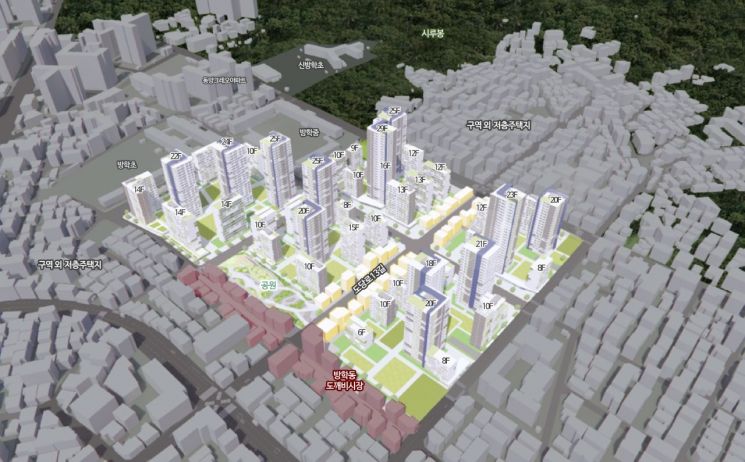
Dobong-gu’s Moa Town Projects at Banghak-dong 618 and Ssangmun-dong 460 Pass Integrated Review
Two Sites at Banghak-dong 618 and Ssangmun-dong 460 Pass Integrated Review, Total of 3,715 Units Planned
Development of 190,000㎡ of Aging Low-Rise Residential Areas… 1,949 Units in Banghak-dong and 1,766 Units in Ssangmun-dong
Zoning Upgraded to Type 2 General Residential Area, Benefits Include Relaxed Floor Limits and Floor Area Ratios
Dobong-gu (Mayor Oh Eon-seok) announced that two Moa Town management plans for Banghak-dong 618 (98,116㎡) and Ssangmun-dong 460 (87,774㎡) passed the 4th Seoul Small Housing Maintenance Integrated Review held on the 21st.
The area adjacent to Banghak-dokkaebi Market at Banghak-dong 618 will have its zoning upgraded from Type 2 General Residential (up to 7 floors) to Type 2 General Residential Area, supply rental housing, and apply the legal maximum floor area ratio (up to 250%), providing a total of 1,949 units (including 371 rental units).
The current 6-meter-wide side roads will be widened to 12 meters, and sidewalks will be created using open spaces to improve poor traffic and pedestrian environments. Open shared facilities, parks, and parking lots will be installed above and below ground as essential local infrastructure, expected to contribute to revitalizing the adjacent Banghak-dokkaebi Market commercial district.
The Ssangmun-dong 460 area will have its zoning upgraded from Type 1 and Type 2 General Residential (up to 7 floors) to Type 2 General Residential Area, supply rental housing, and apply the legal maximum floor area ratio (up to 250%), providing a total of 1,766 units (including 438 rental units).
The existing roads, ranging from 4 to 8 meters wide, will be widened to 12 meters, and street activation and community facilities will be installed along the access roads. A new park will be created, and a public pedestrian path connecting to Ssangmun Neighborhood Park will be arranged. A notable feature of this plan is the stepwise land development plan and height plan that harmonize with the approximately 55-meter elevation difference of the sloped terrain and surrounding landscape.
Mayor Oh Eon-seok said, “I am very pleased that the Moa Town management plans, which actively reflected the opinions of Dobong residents, have safely passed the review. We will continue to communicate closely with residents and provide administrative support for swift project implementation.”
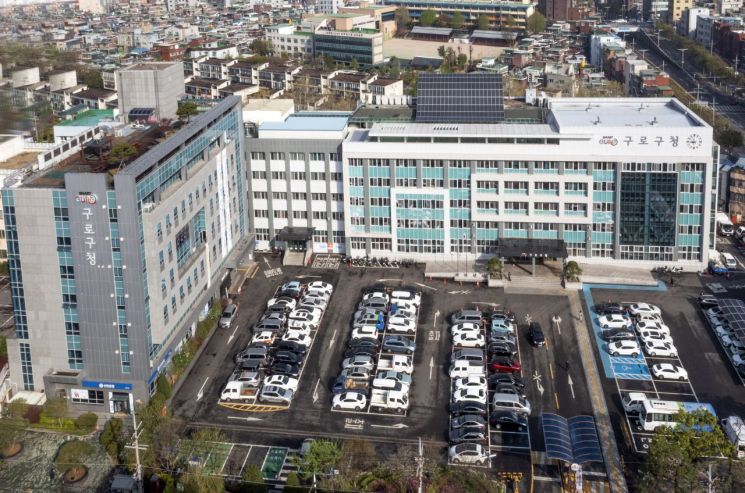
“Curbing Sewage Odors” Guro-gu Launches ‘Sewage Odor Reduction Measures Study’
Investigation and Analysis of Major Odor Sources, Creation of Odor Map
Guro-gu has decided to actively tackle sewage odors by creating an 'odor map' that will serve as a foundational resource for odor reduction measures.
On the 25th, Guro-gu announced the launch of a ‘Sewage Odor Reduction Measures Study’ aimed at alleviating residents' discomfort caused by sewage odors and creating a pleasant urban environment.
The study will run from February to December this year, with a budget of 200 million KRW from the district.
Through this study, the district will thoroughly investigate major odor sources within Guro-gu, identify root causes, and create an odor map to establish systematic odor reduction strategies.
Focus areas include locations with frequent sewage odor complaints such as private sewage treatment facilities and discharge tanks, sewage box start and end points, traditional markets and subway station surroundings, and other high-traffic areas with odor complaints.
The odor map will visually differentiate areas by color according to odor levels, allowing easy identification of odor sources and severity by region.
Odor levels will be classified into five grades?pleasant, good, moderate, poor, and unpleasant?based on hydrogen sulfide (H2S) concentrations in air and water.
Alongside, the study will propose facility improvement measures such as installing odor reduction devices, upgrading sewage facilities, and correcting faulty septic tank structures according to odor causes. A Guro-gu official said, “We hope this study will be an opportunity to establish practical measures to alleviate residents’ discomfort caused by sewage odors. We will do our best to provide a pleasant living environment for residents.”
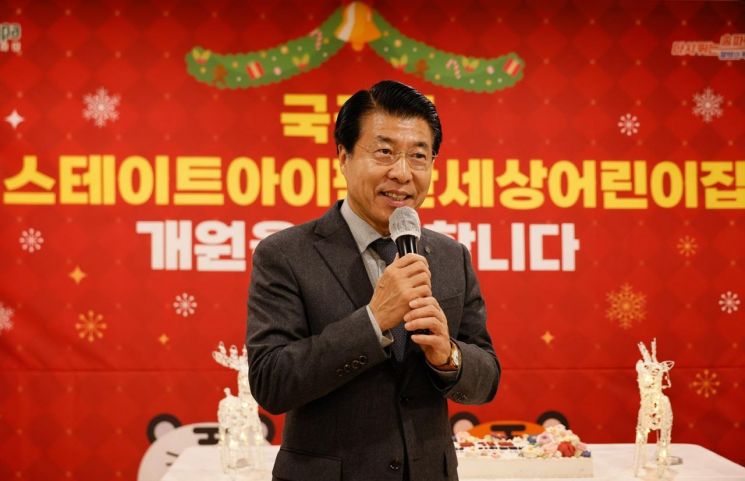
Songpa-gu Begins Inspection and Guidance of Daycare Centers for the New Semester!… Creating a Trustworthy Childcare Environment
All 296 Daycare Centers Targeted… 11 Inspectors Conduct Year-Round Guidance and Inspections
Focus on Support Rather Than Punishment to Improve Childcare Quality, Intensive Inspection of ‘Safe Childcare’s Three Key Areas’ Including Child Abuse
Songpa-gu (Mayor Seo Gang-seok) announced the full-scale start of operational inspections and guidance for all daycare centers in the district for the new semester.
The inspection targets all 296 daycare centers of various types including public, private, workplace, home, and corporate or organizational daycare centers. Eleven inspectors will operate as a guidance and inspection team throughout the year, examining over 10 operational areas such as finance, accounting, facility safety, CCTV, meals, and school buses to identify and address improvement points.
A district official said, “The inspections are not for punitive purposes but to provide practical support tailored to each daycare center’s circumstances through consulting. We plan to encourage daycare centers to improve independently through case studies and explanations of shortcomings.” The district plans to share various cases including frequently detected violations and cautionary complaints to strengthen daycare centers’ operational capabilities and prevent similar complaints.
Additionally, to create a trustworthy childcare environment, strict management and supervision will be conducted on three key areas of safe childcare: subsidy fraud, poor meals, and child abuse. Daycare centers suspected of violations will be subject to unannounced inspections, and serious violations will result in administrative sanctions according to principles.
The inspection team began with playground facility inspections on the 20th and will conduct regular, special, and ad hoc inspections throughout the year. Last year, the district conducted a total of 934 inspections, identifying 55 violations and taking follow-up actions such as administrative guidance and sanctions. Mayor Seo Gang-seok said, “Through thorough inspections and guidance, we will enhance the quality of childcare services in all daycare centers in the district. We will carefully oversee the childcare system to create an environment where parents can trust and entrust their children.”
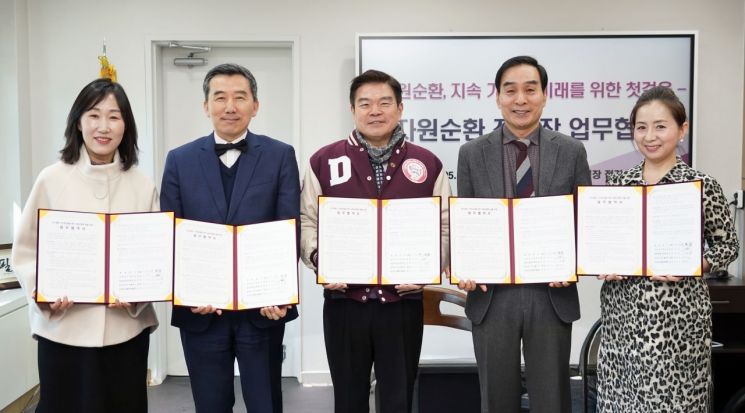
Dongdaemun-gu Builds Sustainable Village Centered on ‘Resource Circulation Stations’
Signs Agreement with Four Institutions Including Samyook Health University to Establish Paper Carton Recycling System
Resource Circulation Education for Children in Daycare Centers and Kindergartens Starting in May
Dongdaemun-gu (Mayor Lee Pil-hyung) signed a business agreement on the 24th with four institutions including Samyook Health University to establish a resource circulation system within the district.
The participating institutions are Samyook Health University, Dongdaemun Comprehensive Social Welfare Center, Dongdaemun Regional Self-Support Center, and Korea Upcycling Craft Association. Each institution will share roles for the efficient operation of ‘Resource Circulation Stations.’
Through this agreement, Dongdaemun-gu will provide the old Hoegi-dong Village Vitalization Center building (3 Hoegiro 18-gil) as a ‘Resource Circulation Station’ to increase the collection rate of paper cartons generated in cafes and households. Together with the partner institutions, the district plans to build a paper carton recycling system centered on this space and spread a culture of resource circulation.
Samyook Health University will oversee budget support and operation. Dongdaemun Comprehensive Social Welfare Center will establish the paper carton resource circulation system, Dongdaemun Regional Self-Support Center will provide manpower for collection and washing, and Korea Upcycling Craft Association will handle education and promotion related to resource circulation.
This project focuses not only on spreading resource circulation culture but also on realizing social value. Dongdaemun-gu plans to create jobs by enabling vulnerable groups such as low-income residents to participate in paper carton collection and washing, and to expand social entry opportunities for youth and career-interrupted women through participation in resource circulation education and promotional activities.
Starting in May, the district will also launch ‘Child-Friendly Dongdaemun, Children’s Resource Circulation Education’ for children in kindergartens and daycare centers. Professional instructors will visit educational institutions to conduct programs including watching videos on resource circulation processes and proper sorting, hands-on sorting experiences using educational tools, and practical sorting exercises using recyclables brought from home, all tailored to children’s levels.
Institutions wishing to participate can contact Dongdaemun-gu Cleaning Administration Division for detailed information. The district will conduct a demand survey targeting kindergartens and daycare centers. Mayor Lee Pil-hyung said, “Resource circulation is the first step toward a sustainable future. We will work closely with partner institutions to spread resource circulation culture so that children can play freely in a clean environment.”
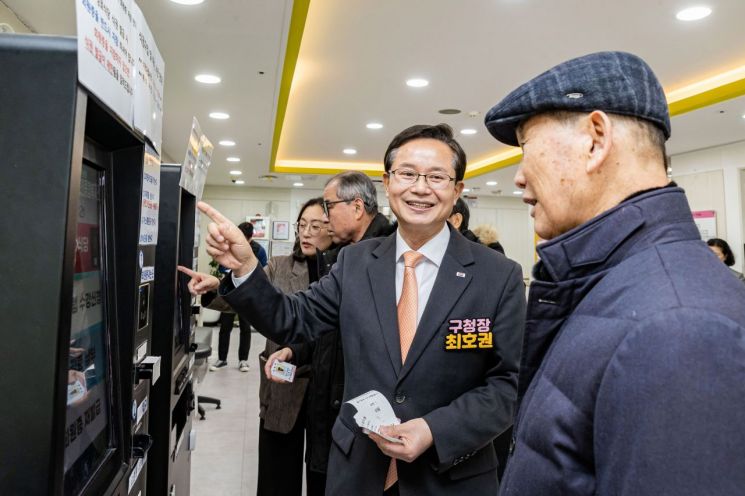
Yeongdeungpo-gu Mayor Choi Ho-kwon Attends Kiosk Education with Seniors
On February 24, Yeongdeungpo-gu Mayor Choi Ho-kwon attended a kiosk education session at Yeongdeungpo Senior Welfare Center and practiced with senior citizens.
Seniors who have difficulty using digital devices improved their digital accessibility through customized kiosk practice.
Last year, the district operated the ‘Digital Practical Table’ program by visiting local senior centers to enhance seniors’ digital skills. This year, the program will expand to more senior centers to help more seniors adapt to the digital environment. Mayor Choi Ho-kwon said, “We will continue to provide various educational programs to help seniors adapt to the digital environment without difficulty and enjoy easy and convenient lives.”
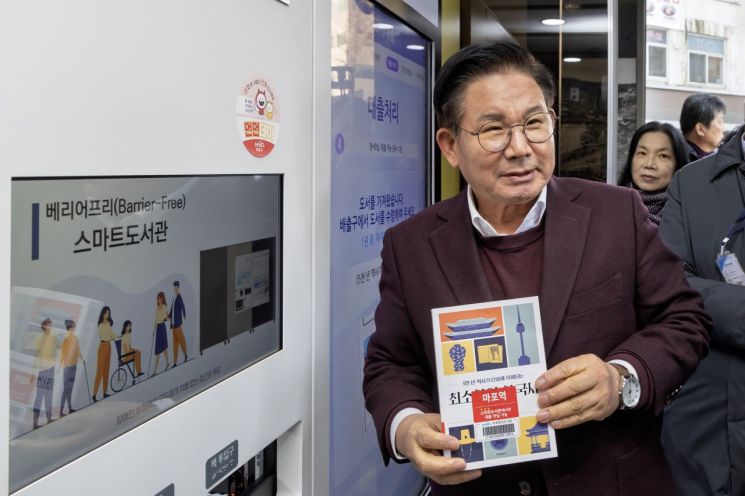
Mapo-gu Holds Opening Ceremony for ‘Mapo Station Smart Library’ Welcoming Residents 24/7
Mapo-gu (Mayor Park Gang-su) held the opening ceremony for the ‘Mapo Station Smart Library’ in front of Exit 3 of Mapo Station on February 24 in the afternoon.
The ‘Smart Library’ installed by Mapo-gu is an unmanned automated system that allows residents to borrow and return books 24 hours a day without face-to-face interaction.
About 40 people, including Mayor Park Gang-su and local residents, attended the ceremony to celebrate the birth of the ‘Mapo Station Smart Library.’
The event began with a Nanta performance at Dohwa-dong Community Center hosted by the ‘Very Small Concert’ series.
Following this, reports on the installation process of the smart library, a commemorative speech by Mayor Park Gang-su, congratulatory speeches by guests, and a unveiling ceremony were held. Mayor Park Gang-su emphasized, “We installed the smart library so that residents can conveniently find, borrow, and return books anytime amid their busy daily lives. Mapo-gu will continue to prepare various cultural facilities and programs to enhance residents’ quality of life and promote book culture.”
© The Asia Business Daily(www.asiae.co.kr). All rights reserved.
![Clutching a Stolen Dior Bag, Saying "I Hate Being Poor but Real"... The Grotesque Con of a "Human Knockoff" [Slate]](https://cwcontent.asiae.co.kr/asiaresize/183/2026021902243444107_1771435474.jpg)


















