6 Out of 10 Self-Employed Say "Business Performance Will Continue to Worsen This Year"
Korea Economic Association Urges "Urgent Need for Stronger Financial Support and Consumption Promotion"
As household consumption freezes, the business performance of self-employed individuals has significantly deteriorated.
The Korea Economic Association announced on the 25th that it conducted a survey titled '2024 Performance and 2025 Outlook' targeting 500 self-employed individuals in sectors such as restaurants, lodging, wholesale and retail, and other services through the market research firm Monoresearch. The survey revealed that 72.6% responded that their sales decreased compared to the previous year.
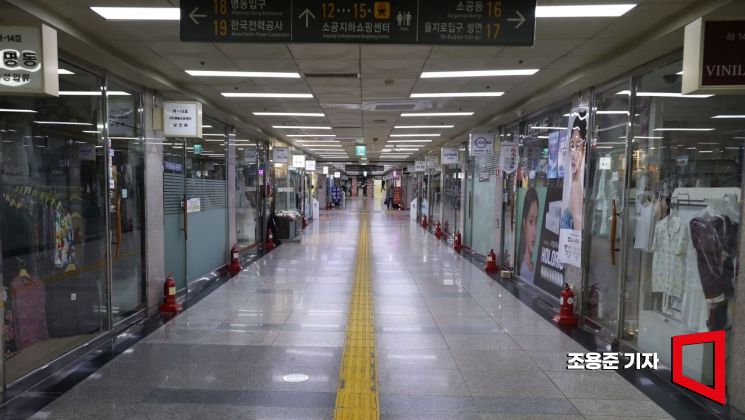 The underground shopping mall in Sogong-dong, Jung-gu, Seoul is showing a quiet scene. Photo by Jo Yong-jun
The average sales decline was recorded at 12.8%. Additionally, 72.0% reported that their net profit decreased compared to 2023. The average decrease in net profit was 13.3%, exceeding the 10% mark.
More than half of the self-employed expect their performance to worsen this year as well. The proportion of respondents who forecast a decrease in sales compared to last year was 61.2%, significantly exceeding half. Regarding net profit outlook, 62.2% anticipated a decline compared to the previous year. The expected average decrease in sales and net profit for this year was 6.5% and 7.2%, respectively.
The average loan amount for self-employed individuals was recorded at 120 million KRW as of last year. The monthly interest burden was 843,000 KRW, reflecting an annual average interest rate burden of 8.4%. Considering that the average loan interest rate at deposit banks is 4.7% and the interest rate for small loans is 6.9%, the Korea Economic Association estimated that a significant number of self-employed individuals are obtaining loans through secondary financial institutions outside of banks.
Given this situation, 43.6% of self-employed individuals are considering closing their businesses within the next three years. The main reasons for considering closure included ▲continued deterioration of business performance (28.2%) ▲uncertain economic recovery prospects (18.1%) ▲worsening financial conditions and loan repayment burdens (18.1%) ▲rising rent and labor costs (11.9%) ▲increased raw material prices (11.9%).
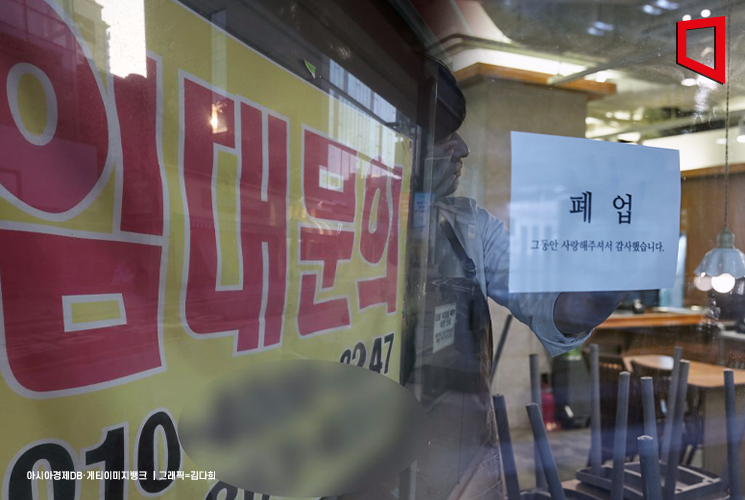
The management costs that self-employed individuals feel most burdened by were surveyed as ▲raw materials and supplies (22.2%) ▲labor costs (21.2%) ▲rent (18.7%) ▲loan principal and interest repayments (14.2%) in that order.
The government support measures that self-employed individuals require include ▲expanded financial support such as loan repayment deferrals (22.1%) ▲expanded consumption promotion measures (20.9%) ▲stabilization of prices for raw materials and supplies (14.0%) ▲strengthened rent support (11.7%) ▲suppression or reduction of public utility fee increases (10.5%).
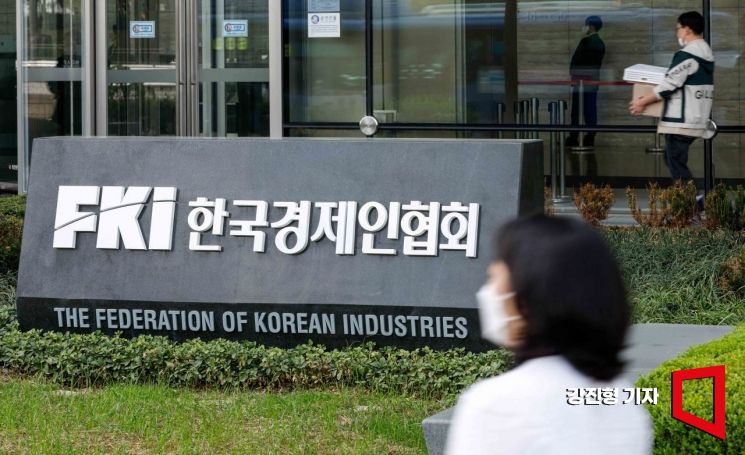 Employees of tenant companies are moving at the Korea Economic Association in Yeouido, Seoul. Photo by Kang Jin-hyung
Lee Sang-ho, Head of the Economic and Industrial Division at the Korea Economic Association, stated, "As our economy enters a low-growth structure, household consumption fundamentals are deteriorating and domestic demand is freezing, deepening the worries of numerous self-employed individuals. If the difficulties faced by the self-employed continue, the crisis in the low-income economy could intensify. Therefore, financial support must be strengthened, and measures to stabilize raw material prices and promote consumption should be enhanced to relieve the burdens on small business owners."
© The Asia Business Daily(www.asiae.co.kr). All rights reserved.
![Clutching a Stolen Dior Bag, Saying "I Hate Being Poor but Real"... The Grotesque Con of a "Human Knockoff" [Slate]](https://cwcontent.asiae.co.kr/asiaresize/183/2026021902243444107_1771435474.jpg)


















