Exploring Youth Anxiety and Its Causes Through Comments
High Competition, Low Achievement: Growing Dissatisfaction
"Spreading Anxiety Over Old Age and Distrust in the Pension System"
Youth are experiencing stress and gender conflicts in the process of family formation such as marriage, and they feel anxiety and helplessness regarding future preparedness. It has been analyzed that the high level of competition in Korean society and the dual structure of the labor market are fueling these issues. Experts point out that these problems not only lower the quality of life for young individuals but also reduce the potential for solidarity across society and innovation necessary for economic growth.
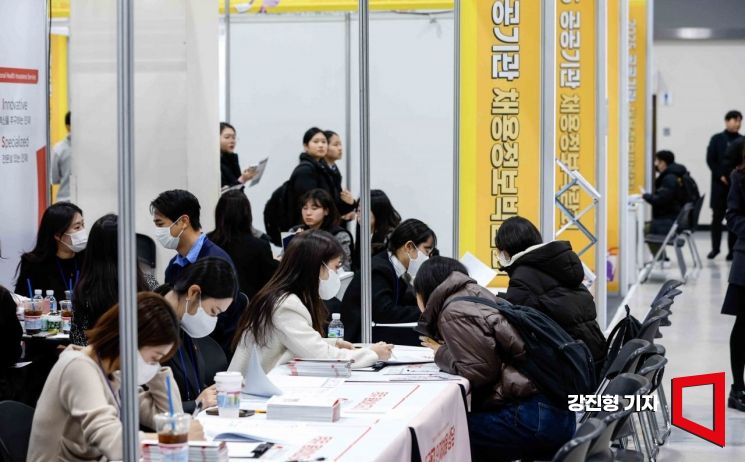 Job seekers participating in the '2025 Public Institution Recruitment Information Fair' held last month at aT Center in Seocho-gu, Seoul, receiving recruitment consultations
The 'Quality of Life of the People 2024' report released by Statistics Korea on the 24th includes an issue analysis titled 'Exploring Youth Anxiety and Its Causes through Data: Focusing on Comment Analysis' written by Professor Noh Beom-rae of the Department of Social Welfare at Pukyong National University.
Professor Noh analyzed data mainly from online comments to examine what issues affect youth happiness. He collected comments by reviewing YouTube content lists from the past two years (June 2022 to June 2024) that appeared when searching for 'youth issues,' 'youth life,' and 'youth happiness,' then analyzed the presence or absence of associations between words to decompose the semantic structure and verify detailed content.
The analysis revealed that family formation and gender conflicts, anxiety about future life, and low current hope were important issues. Fatigue caused by intense competition and dissatisfaction with relatively low achievements, perceptions of a stratified labor market, and heightened expectations for good jobs were also major topics. Issues such as infrastructure disparities and mobility problems due to regional gaps were also found to significantly affect the quality of life for youth.
Specifically, words like 'retirement,' 'pension,' and 'retirement' clustered with terms such as 'recluse type,' 'elimination,' and 'youth,' revealing concerns of young people who find it difficult to expect a hopeful future. Professor Noh explained, "Two dimensions constituting low expectations for the future appeared: future anxiety symbolized by poverty and unstable old age, and current dissatisfaction stemming from feelings of isolation due to failure to actively integrate into society." He analyzed, "There is a spreading anxiety among young people about economic security in old age caused by early retirement and distrust in the current pension system."
Another cluster included words like 'academy,' 'exam,' and 'university' alongside 'real estate,' 'land,' and 'price.' This reflects the helplessness and anger of living in a highly competitive society yet struggling to even secure their own home. Professor Noh noted, "Words implying death, such as 'suicide(rate)' and 'life,' appear as connecting terms in this cluster expressing competition and helplessness." He expressed concern, "This reflects the process where stress from Korea’s high competition level and experiences of damaged self-esteem, combined with difficulties in independence, transfer into thoughts about death."
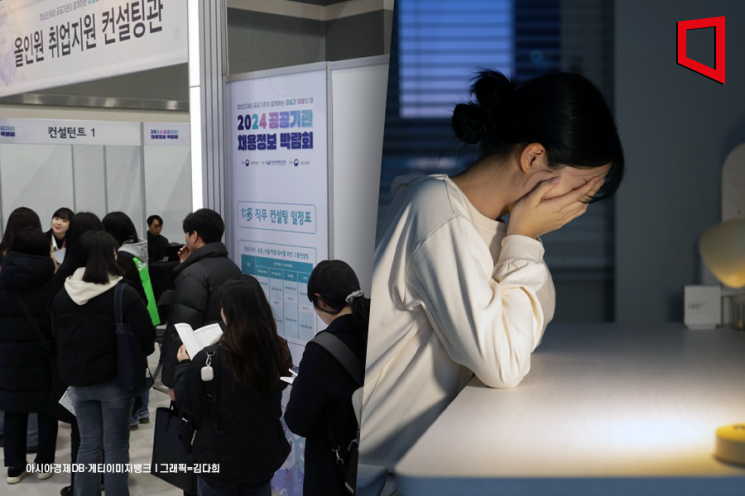
Professor Noh stated, "Low expectations for family formation, segmented labor markets, and regional disparities seem to act as obstacles blocking growth experiences during youth challenges and life transitions." He explained, "The analysis partially shows that anxiety about the future and helplessness experienced amid widening disparities are spreading widely, especially among young people."
He continued, "This situation can lead to negative outcomes not only concerning the quality of life for young individuals but also reducing social solidarity necessary for the maturation of democracy and the potential for innovation required for stable economic growth across society." He added, "It is noteworthy that dissatisfaction is growing over the difficulty of achieving sufficient independence within a competitive system created by the older generation, in addition to the high competitive stress throughout society."
Professor Noh emphasized, "In the future, measuring youth happiness should include aspects such as future expectations, self-efficacy necessary for independence, and the structure of disparities along with their perceptions." He also pointed out, "It is meaningful to examine important regional disparity perceptions and the recognition of the need for migration within the unique context of Korean society." He then proposed, "If youth policies are established based on empathy and empirical evidence, the sense of community interest and effort felt by young people will increase further."
© The Asia Business Daily(www.asiae.co.kr). All rights reserved.
![Clutching a Stolen Dior Bag, Saying "I Hate Being Poor but Real"... The Grotesque Con of a "Human Knockoff" [Slate]](https://cwcontent.asiae.co.kr/asiaresize/183/2026021902243444107_1771435474.jpg)

















