No Waiting at the Bank, Yet Urged to Use Mobile Banking
Struggled with Smartphone Operations Before Collapsing
In China, a man in his 70s visited a bank to carry out an overseas remittance, but following the bank staff's instructions, he was forced to use mobile banking excessively. After struggling for two hours without being able to send the money, he collapsed and died two days later.
On the 22nd, the Chinese-language media Da Ji Yuan (大紀元), headquartered in the United States, reported that Mr. Li filed a lawsuit on the 12th against a branch of the Bank of China in Nanjing at the Nanjing Qinhuai District People's Court.
Mr. Li's father visited the bank with his wife on the morning of October 22 last year around 9 a.m. to remit money to Mr. Li, who lives overseas. The number ticket Mr. Li's father took was number 1, and there were no people waiting ahead of him.
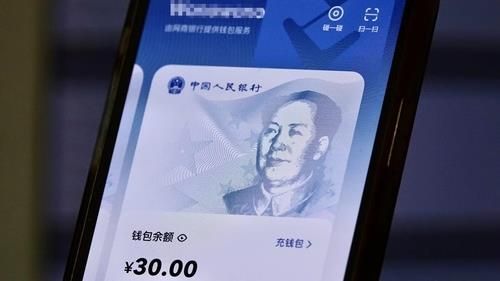
At around 10:42 a.m., Mr. Li had a video call with his parents at the bank, and at that time, his father had still not completed the remittance process. About 10 minutes later, Mr. Li's father suddenly collapsed and died two days later. The cause of death was brain herniation, which occurs when the brain is pushed out of its original position due to severe external pressure.
Mr. Li checked the bank's closed-circuit television (CCTV) and confirmed that his father had only been at the bank counter for the first few minutes. The CCTV footage showed Mr. Li's father using the ATM machine and his mobile phone in the lobby for about two hours following the staff's instructions, then returning to the bank waiting area, moving around the bank, taking multiple photos of his face with his phone for identity verification, and his mother assisting him with operating the phone.
During this time, his father began to show abnormal symptoms. His hands started trembling, and saliva dripped from his crooked mouth. At around 10:49 a.m., a bank employee asked if Mr. Li's father needed water, and about four minutes later, he collapsed. He was immediately transported to the hospital after the bank staff reported the incident, but ultimately passed away.
Mr. Li criticized the bank staff for forcing his father to use mobile banking and pointed out that his father spent about 40 minutes only in the lobby. In the lawsuit, Mr. Li stated, "As a professional financial institution, they failed to provide appropriate service methods based on the customer's actual age and physical condition," and "In requiring the customer to handle the transaction via mobile phone, they neglected their duty to guide him properly, which ultimately led to my father's death."
Local netizens voiced criticism, saying, "Why force customers to use mobile banking for transactions that can be handled at the bank counter?" and "This incident highlights not only the protection of individual customer rights but also the lack of elderly-friendly services in the digital age."
The China Banking and Insurance Regulatory Commission recommended in 2021 that banks improve service procedures at counters and maintain or expand related personnel to assist elderly customers unfamiliar with digital finance. However, Chinese media pointed out that banks still guide elderly customers to use mobile banking and do not operate dedicated counters for seniors.
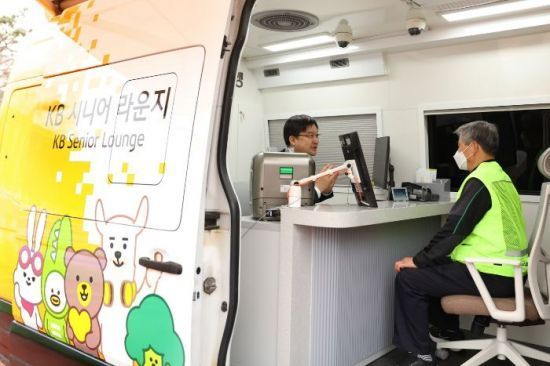 KB Kookmin Bank plans to expand the operation of the 'KB Senior Lounge' to alleviate financial exclusion among the elderly caused by rapid digitalization. KB Kookmin Bank
In South Korea as well, as banks reduce the number of branches and shift services to mobile banking and other digital platforms, elderly people are increasingly excluded from financial services. According to the Ministry of Science and ICT's '2022 Digital Information Gap Survey,' the usage rates of internet financial transaction services among the elderly are 53.4% and 49.2%, respectively, significantly lower than the general population's 68.2%. Because of this, some banks are reportedly considering policies such as operating mobile branches and expanding video consultation services to support financially vulnerable groups, including the elderly, disabled, and residents in non-urban areas.
© The Asia Business Daily(www.asiae.co.kr). All rights reserved.


















