16,700 People Agree to National Petition
"100,000 Will Face Income Gaps by 2032"
Japan Implements Gradual Statutory Retirement Age Extension
Last year, as the retirement age for some departments and local government public service positions increased from 60 to a maximum of 65, sparking a debate on 'retirement age extension,' calls to extend the retirement age for public officials are growing louder.
According to the National Assembly Legislative Information System on the 21st, the Korean Government Employees' Union and the Federation of Korean Government Employees' Unions launched a national petition on the 18th to extend the retirement age of public officials from 60 to 65 to address income gaps. As of 8 a.m. that day, 16,737 people (33%) had agreed.
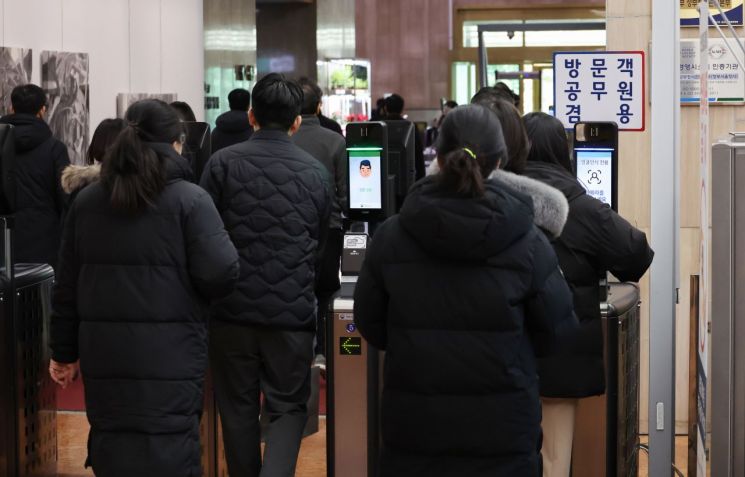
With the 2015 amendment to the Government Employees Pension Act, the starting age for receiving government employee pensions changed to 65, causing an income gap when public officials retire after reaching the statutory retirement age of 60. Retirees in 2022 will receive pensions starting at age 61, those retiring between 2024 and 2026 at age 62, retirees from 2027 to 2029 at age 63, those retiring between 2030 and 2032 at age 64, and retirees from 2033 onward at age 65. The unions stated, "By 2032, 100,000 retirees will experience income gaps, and from 2033, most retirees will face a five-year income gap, threatening stable old-age security."
The rapid increase in the elderly population in Korea is another factor fueling the debate on extending the retirement age. Last year, the population aged 65 and over exceeded 20% based on resident registration data, marking Korea's entry into a 'super-aged society.' In this National Assembly session, eight bills were proposed to amend the 'Act on Prohibition of Age Discrimination in Employment and Promotion of Employment of Older Persons,' which includes extending the statutory retirement age in the private sector.
In Japan, where the situation is similar to Korea, discussions on extending the retirement age for both the private sector and public service have been ongoing for a long time. In the private sector, employers are required to choose one of the following: reemployment, retirement age extension, or abolition of retirement age, ensuring employment up to age 65. Efforts to secure employment opportunities are mandated up to age 70. For public officials, the law was amended in 2021 to raise the statutory retirement age by one year every two years, extending it to 65 by 2031.

Experts see a high necessity for extending the retirement age but suggest careful consideration of detailed methodologies. Professor Kim Seong-hee of Korea University’s Labor Issues Research Institute said, "Formalizing income gaps is not an attitude a society should take. The gap must be eliminated quickly," but added, "However, details such as legally extending the retirement age, reemployment, and how to design and support these stages are important."
There are also claims that job categories with no demand for retirement age extension due to physical limitations after age 60 should be considered. Park Jung-bae, spokesperson for the Korean Government Employees' Union, emphasized, "For firefighters, police officers, and other public officials, if physical and bodily requirements are not met to perform field duties after age 60, many prefer to receive pension benefits earlier rather than extend the retirement age," adding, "Measures addressing these aspects are also necessary."
© The Asia Business Daily(www.asiae.co.kr). All rights reserved.


















