BSI Barely Holds Above 90...
Record-Long Slump Continues
Concerns Over Dual Burden on Domestic Demand and Exports
Urgent Need for Public-Private Cooperation
Corporate economic sentiment remains sluggish. With inflation concerns and the 'tariff war' triggered by the Trump administration increasing export uncertainties, there are concerns about a dual burden on domestic demand and exports.
The Korea Economic Association announced on the 20th that, based on a survey of the top 600 companies by sales, the Business Survey Index (BSI) outlook for March this year recorded 90.8. The BSI uses 100 as the baseline; a figure above 100 indicates a 'positive economy' compared to the previous month, while a figure below 100 indicates a 'negative economy' outlook.
The BSI outlook has remained below the baseline for three consecutive years since recording 99.1 in April 2022, marking the longest continuous slump in history. When combining the BSI outlooks from January to March this year into the first quarter BSI outlook, it stands at 87.5, which is the lowest figure since the first quarter of 2009 during the global financial crisis, when it was 64.7.
By industry, the March economic outlook predicts simultaneous downturns in manufacturing (95.1) and non-manufacturing (86.3). The manufacturing BSI (95.1) has remained below the baseline for a year since April last year (98.4), and the non-manufacturing BSI (86.3) has stayed below the baseline for three consecutive months since January this year (84.9). Among the 10 detailed manufacturing sectors, general and precision machinery and equipment (110.5), including semiconductor equipment, and electronic and communication equipment (105.6), including semiconductors, showed positive outlooks. With the semiconductor industry performing well, non-metallic materials and products (108.3) are also expected to see business improvements.
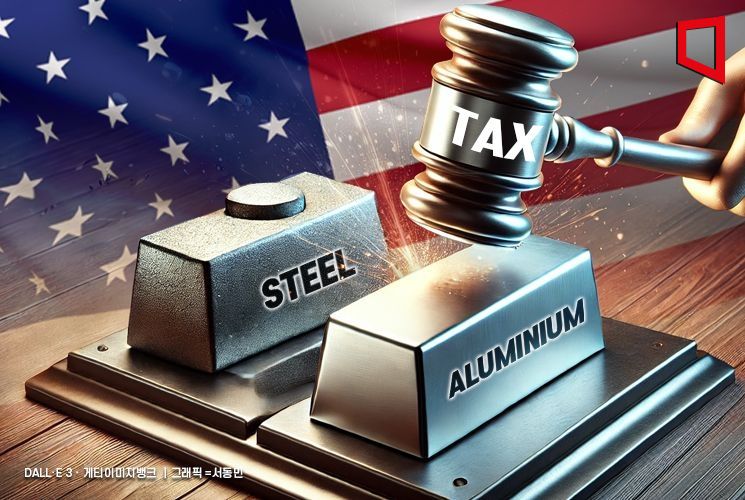
On the other hand, ▲textiles, clothing, leather, and footwear (73.3), ▲automobiles and other transportation equipment (88.2), ▲metal and metal processing products (89.7), ▲food, beverages, and tobacco (94.7), and ▲petroleum refining and chemicals (96.3) hovered below the baseline. The Korea Economic Association analyzed that negative sentiment was dominant particularly in sectors expected to face tariffs from the Trump administration, such as ▲metal and metal processing products and ▲automobiles and other transportation equipment. Notably, metal and metal processing products, including steel, have remained below the baseline for 10 consecutive months since June last year.
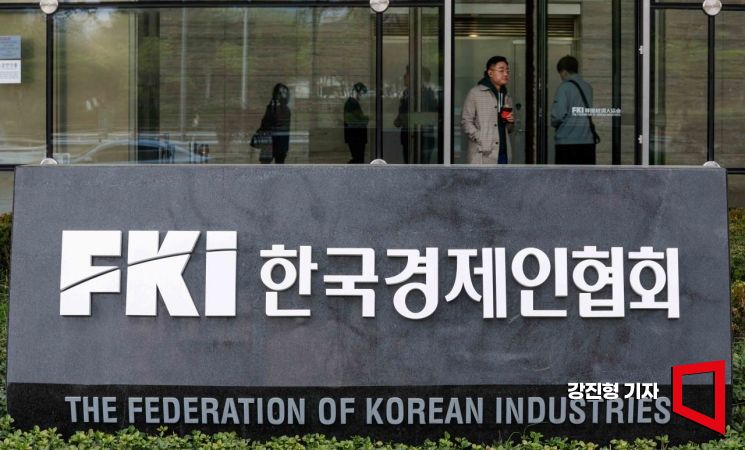 Employees of tenant companies are moving at the Korea Economic Association in Yeouido, Seoul. Photo by Kang Jin-hyung
Among the seven detailed non-manufacturing sectors, business conditions are expected to worsen in ▲information and communications (66.7), ▲electricity, gas, and water supply (70.6), ▲transportation and warehousing (73.9), and ▲construction (81.0). In particular, the construction BSI has been sluggish for two years and six months since September 2022 (102.7). The Korea Economic Association evaluated that the prolonged slump in construction investment, combined with weakened consumer sentiment, is negatively impacting the recovery of the domestic market.
Lee Sang-ho, head of the Economic and Industrial Division at the Korea Economic Association, said, "In a situation where consumption and investment stagnation are prolonged, concerns about a dual burden on domestic demand and exports are rising due to inflation instability and increased external uncertainties," and advised, "It is necessary to closely establish a public-private joint cooperation system to reduce trade risks such as tariffs, along with domestic demand stimulation measures that promote domestic investment, including expanding the scope of temporary investment tax credits (including large corporations)."
© The Asia Business Daily(www.asiae.co.kr). All rights reserved.


















