Singapore to Provide Subsidies Through Vouchers
Criticism Mounts Over "Populist Policy Ahead of General Election"
Singapore, facing a general election, is set to provide subsidies worth up to 860,000 KRW per person. Although in the form of vouchers, they are essentially cash-like, sparking controversy.
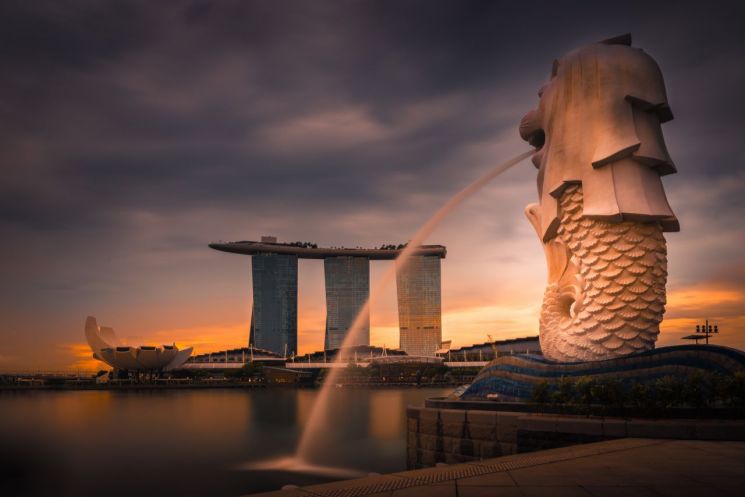 Singapore, with the general election approaching, is set to provide subsidies worth up to 860,000 KRW per person. Pixabay
On the 19th, local media including The Straits Times focused on the 2025 budget speech by Lawrence Wong, Singapore’s Prime Minister and Finance Minister. He announced that by July, citizens aged 21 and over would receive vouchers worth 600 Singapore dollars (about 640,000 KRW), and those aged 80 and above would receive 800 Singapore dollars (about 860,000 KRW). The number of recipients is as high as 3 million, with the budget approaching 2.02 billion Singapore dollars (about 2.1679 trillion KRW). This was justified under the pretext of Singapore’s 60th independence anniversary. The vouchers can be used for purchasing food and daily necessities.
In addition, households will receive a separate 'CDC voucher' worth 800 Singapore dollars. This involves a budget of 1.06 billion Singapore dollars (1.1376 trillion KRW). Furthermore, there are plans to provide subsidies worth 500 Singapore dollars (about 530,000 KRW) for education expenses to families with children under 12 and families with youths aged 13 to 20.
Prime Minister Wong stated, "This is to commemorate Singapore’s 60th independence anniversary, honor the contributions of all Singaporeans, and share the benefits of national development," adding, "We expect this budget to help mitigate the impact of rising prices." However, he also said, "The best long-term path is to develop the economy and improve productivity."
This is Prime Minister Wong’s first budget announcement since taking office in May last year. Given that a general election must be held before November, the decision is widely seen as a "populist policy aimed at the election." Maybank economist Chua Hak Bin described it as a "purely election budget," while OCBC Bank economist Selena Ling criticized it as a "policy to win public favor ahead of the election."
© The Asia Business Daily(www.asiae.co.kr). All rights reserved.
![From Hostess to Organ Seller to High Society... The Grotesque Scam of a "Human Counterfeit" Shaking the Korean Psyche [Slate]](https://cwcontent.asiae.co.kr/asiaresize/183/2026021902243444107_1771435474.jpg)
















