Seoul Metro Announces 2024 Transportation Statistics
Jamsil Station Ranks First... Influenced by Byeollae Line Extension and Baseball Popularity
March 28 Sees Total Passenger Count Reach 8.46 Million
Among the 273 stations on Seoul Subway Lines 1 to 8 last year, the station with the highest number of passengers was Jamsil Station on Line 2, with an average of 156,177 passengers per day. Jamsil Station, which has a metropolitan transfer center, saw an increase in passenger inflow following the extension and opening of the Byeollae Line on Line 8 last year, and it is analyzed that the record number of boardings and alightings was also supported by the popularity of professional baseball. Yonhap News reported this on the 19th, citing the 2024 transportation statistics from Seoul Metro.
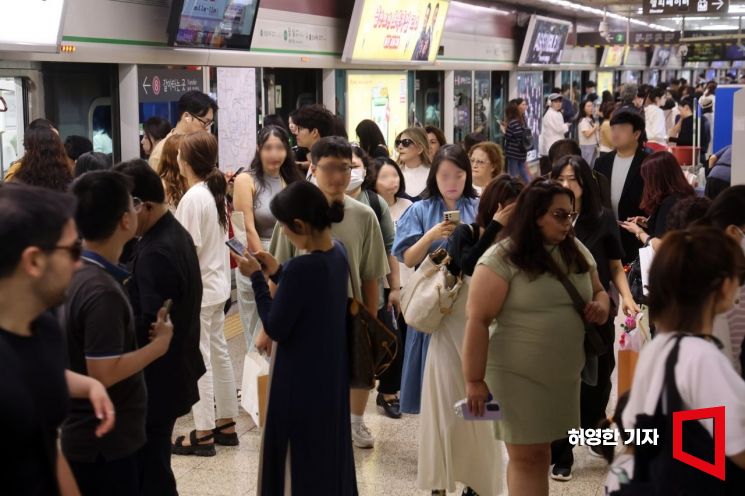 Passengers who got off at Jamsil Station on Seoul Subway Line 2 are leaving the platform. Photo by Heo Yeonghan
The second highest number of boardings and alightings was at Hongdaeipgu Station (150,369), followed by Gangnam Station (149,757). Gangnam Station had held the undisputed first place for 26 years from 1997 to 2022, but in 2023 it was overtaken by Jamsil Station and dropped to second place, then fell to third place last year. Seongsu Station, newly popular among young people, recorded an average of 80,859 daily users last year, ranking 13th. It was ranked 42nd in 2018 but showed a rising trend as the number of users rapidly increased, ranking 17th in 2022, 15th in 2023, and 13th last year. Conversely, the station with the fewest boardings and alightings was Dorimcheon Station on the Sinjeong Branch Line of Line 2, with an average of only 2,615 passengers per day.
Seoul Subway Lines 1 to 8 operated a total of 1,600,499 trips last year, covering a distance of 42,049,170 km. This is equivalent to circling the Earth’s circumference (40,075 km) 1,049 times, or making 52,551 round trips between Seoul and Busan (400 km). The number of train operations increased by 9,096 compared to the previous year, and the transportation distance also increased by 873,826.4 km. This was the result of increased train frequency to alleviate congestion on Lines 4, 5, and 7, combined with the extension and opening of the Byeollae Line on Line 8.
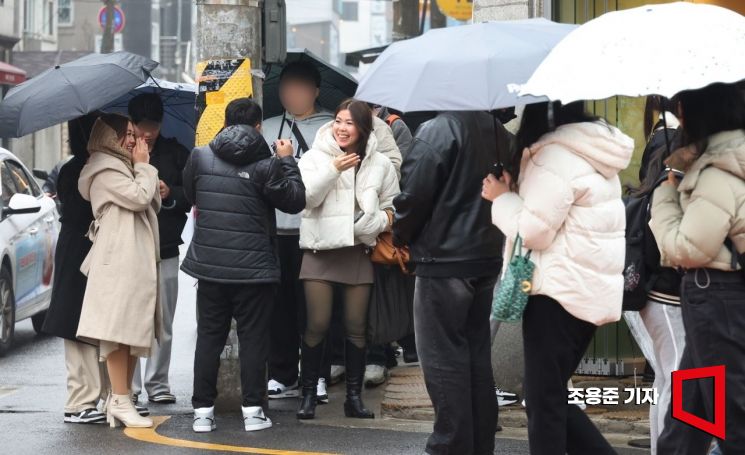
The number of passengers transported increased by 2.5% from the previous year to a total of 2,417.52 million, with an average of 6,605,250 passengers per day. May, when spring excursionists increase, had the highest number of passengers (211,594,259). By day of the week, Friday had the most passengers, and the highest number of boardings and alightings during the day occurred between 6 p.m. and 7 p.m.
The day with the highest number of passengers throughout the year was Thursday, March 28 (8.46 million). The Seoul Metro analyzed that this was due to a large influx of visitors to spring flower festivals held in various parts of Seoul, such as Yeouido and Seokchon Lake. On that day, the Seoul City Bus Labor Union conducted a strike for about 12 hours, causing 97.6% of all city buses in Seoul to stop, which likely influenced subway usage.
By line, Line 2 transported the most passengers among Lines 1 to 8, carrying an average of 1,964,128 passengers per day. The average daily number of passengers by line was as follows: Line 5 (944,969), Line 7 (852,631), Line 3 (812,778), Line 4 (790,915), Line 6 (522,260), Line 1 (405,564), and Line 8 (312,005).
© The Asia Business Daily(www.asiae.co.kr). All rights reserved.


















